
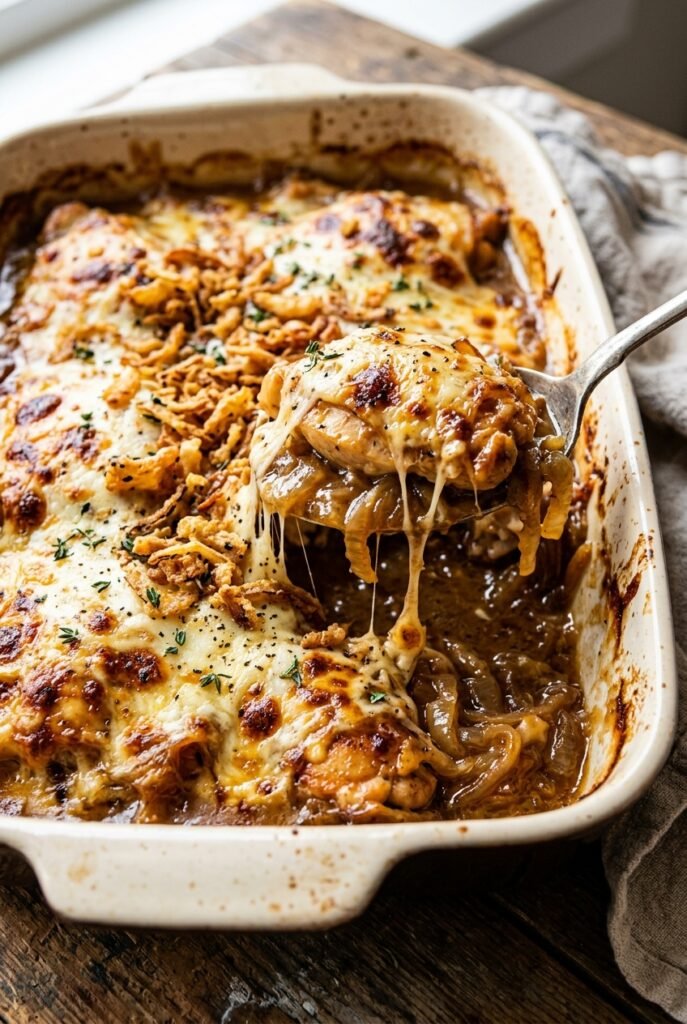
Creamy French Onion Chicken Casserole
Creamy French Onion Chicken Casserole brings together deeply caramelized onions, tender chicken, and a glossy, savory sauce that bakes into one bubbling dish. The onions turn jammy and sweet, the…
Tip: save now, read later.
Creamy French Onion Chicken Casserole brings together deeply caramelized onions, tender chicken, and a glossy, savory sauce that bakes into one bubbling dish. The onions turn jammy and sweet, the Gruyère melts into the sauce, and the French-fried onion topping adds the kind of crunch that keeps every bite interesting. It’s the sort of casserole that tastes like it took all day, even though most of the work is patient stovetop time and a short bake.
The part that makes this version work is the layering. Browning the chicken first gives the casserole a little more depth, but the real payoff comes from cooking the onions slowly enough for their natural sweetness to come forward before the broth and cream go in. A spoonful of Dijon and Worcestershire keeps the sauce from tasting flat, and the flour gets cooked in the onions before the liquid is added so it thickens cleanly instead of turning pasty.
Below, I’ve included the spots where this casserole can go sideways and how to keep the sauce silky, the onions soft, and the topping crisp. If you’ve ever had French onion-inspired dishes that tasted heavy instead of rich, the little details here will help.
The onions cooked down into this jammy, sweet layer and the sauce thickened perfectly without getting grainy. My husband went back for seconds and asked if I could make it again next week.
Save this Creamy French Onion Chicken Casserole for the nights when you want caramelized onion comfort with a crisp, cheesy top.
The Reason the Onions Have to Go Deeply Golden Before Anything Else
The biggest mistake in French onion-style casseroles is rushing the onions until they are just soft and calling it done. Soft onions taste like cooked onions. Deeply caramelized onions taste sweet, savory, and concentrated, which is what gives this casserole its signature flavor. That’s the difference between a creamy chicken bake and something that actually tastes like French onion soup tucked under cheese.
Adding the brown sugar helps the onions move along, but it doesn’t replace time. You still need enough heat to encourage browning and enough patience to keep stirring so the sugars don’t scorch. The onions should collapse, darken, and turn glossy and jammy before the garlic and thyme go in.
- Low and slow wins here — medium-low heat gives the onions time to brown without burning. If the pan gets too hot, the edges will go bitter before the center softens.
- The brown sugar is a nudge, not a shortcut — it helps with color and flavor, but the real sweetness comes from the onions themselves.
- Flour goes in after the onions are ready — that lets it cook briefly in the fat and onions, which keeps the sauce smooth later.
What Each Ingredient Is Actually Doing in This Dish
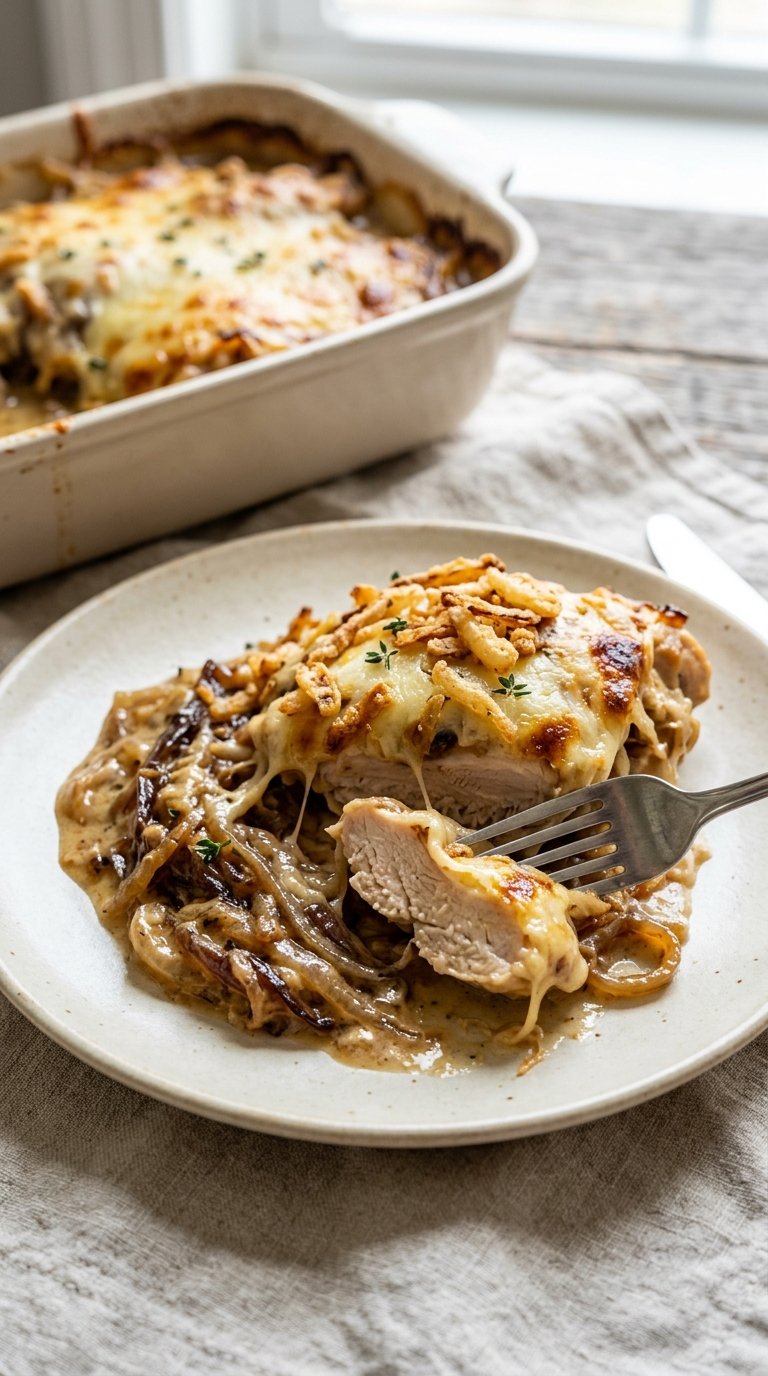
The chicken breasts are cut into pieces so they cook quickly and stay tucked into the sauce instead of drying out in a large slab. Breasts work well because the casserole is rich; a darker cut would be good too, but it would change the texture and make the dish heavier. If you use chicken thighs, keep the same browning and bake time, but don’t expect the same lean, tidy bite.
Gruyère is the cheese that gives this casserole its French onion character. It melts smoothly and has enough nutty depth to carry the onion flavor, while the mozzarella softens the top without making it overly sharp. If you swap the Gruyère, choose another good melting cheese with some character, not just plain mild cheddar.
- Low-sodium broth keeps the sauce from getting too salty once the cheese and French-fried onions go on. Regular broth can push it over the edge fast.
- Heavy cream gives the sauce its body and keeps it from breaking during baking. Half-and-half will work in a pinch, but the sauce will be thinner and less stable.
- Dijon and Worcestershire add the savory backbone that makes the onion flavor taste fuller. You won’t taste either one on its own.
- French-fried onions belong at the end. If they go in too early, they lose their crunch and the casserole loses one of its best textures.
Building the Sauce Without a Lumpy, Broken Finish
Browning the Chicken First
Heat the chicken in a skillet until the outside turns lightly golden but the center is still underdone. You’re not cooking it through yet; you’re building flavor and giving the pieces a head start so they finish gently in the oven. If the pan is crowded, the chicken will steam instead of brown, so work in batches if needed.
Turning the Onions Jammy
Lower the heat before the butter and onions go in. Stir every few minutes and let the onions go from sharp and opaque to soft, amber, and almost spreadable. If they start sticking hard and threatening to burn, a splash of broth or a little water loosens the pan and keeps the browning moving in the right direction.
Making the Sauce Smooth
Sprinkle the flour over the onions and stir it for a full minute so the raw taste cooks off. Then add the broth slowly while stirring, because dumping it in all at once is the fastest way to get floury clumps. Once the cream goes in, keep the heat at a gentle simmer; a hard boil can make the dairy separate and leave you with a grainy sauce.
Finishing in the Oven
Pour the sauce over the chicken, top with the cheese, and bake until the edges bubble and the chicken reaches 165°F. Add the French-fried onions only near the end so they stay crisp instead of soaking into the cheese. Let the casserole rest for a few minutes before serving so the sauce settles instead of running all over the plate.
How to Adapt This for a Bigger Crowd or a Different Pantry
Make it gluten-free with one smart swap
Use a good gluten-free all-purpose flour blend in place of the regular flour and check that your Worcestershire sauce and French-fried onions are gluten-free. The texture stays close to the original as long as the sauce still simmers long enough to thicken before baking.
Use chicken thighs for a richer casserole
Boneless, skinless thighs give you a juicier result and a slightly richer bite. They are a little more forgiving in the oven, which helps if you’re worried about overcooking, but they also make the dish feel a touch heavier.
Swap the cheese if Gruyère is hard to find
Swiss, Fontina, or a mellow Provolone can stand in for some or all of the Gruyère. The casserole will still melt well, but you’ll lose a little of that nutty French onion depth, so keep the Dijon and thyme in place to help carry the flavor.
Storage and Reheating
- Refrigerator: Store covered for up to 4 days. The sauce thickens as it chills, which is normal.
- Freezer: It freezes well, though the cream sauce may loosen slightly after thawing. Freeze in portions and wrap tightly for up to 2 months.
- Reheating: Reheat covered in a 325°F oven until hot in the center, then uncover for a few minutes so the topping wakes back up. The mistake to avoid is blasting it in the microwave for too long, which can make the chicken rubbery and the sauce split.
Answers to the Questions Worth Asking
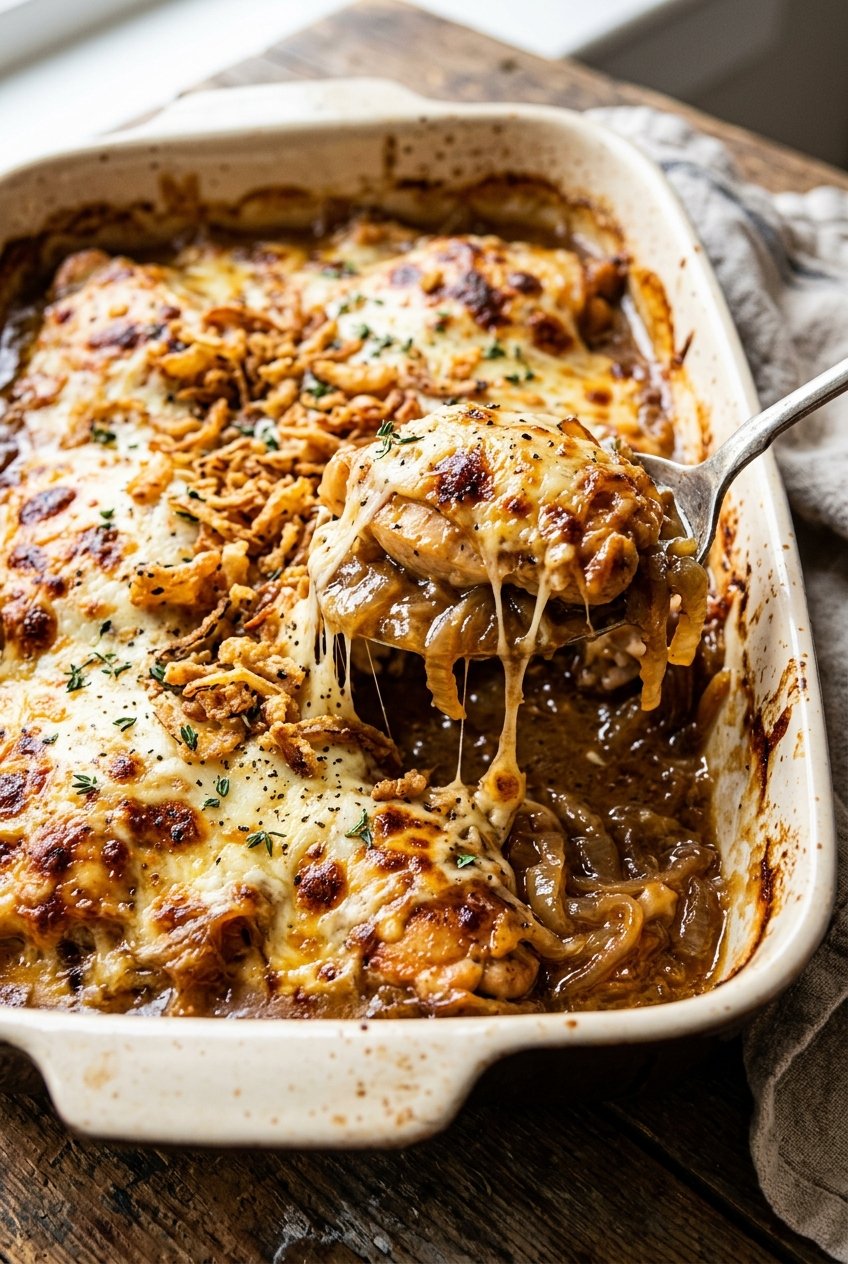
Creamy French Onion Chicken Casserole
Ingredients
Equipment
Method
- Preheat the oven to 375°F (190°C) and lightly grease a 9 × 13-inch baking dish. Make sure the dish is ready so you can transfer the chicken quickly after browning.
- Pat the chicken dry, then toss it with kosher salt, black pepper, garlic powder, and dried thyme. The pieces should look evenly coated.
- Heat olive oil in a large skillet over medium-high heat, then add the chicken and cook for 4–5 minutes, turning occasionally, until lightly golden. Transfer to the prepared baking dish without fully cooking through.
- Reduce heat to medium-low and melt the butter in the same skillet. Let it melt and foam slightly before adding onions.
- Add the sliced onions, kosher salt, and brown sugar, then cook for 20–25 minutes, stirring every few minutes, until deeply golden, soft, and jammy. Keep the heat at medium-low to avoid scorching.
- Add the minced garlic and fresh thyme leaves, then cook for 30–60 seconds. The mixture should smell fragrant and look glossy.
- Sprinkle the flour over the onions and stir for about 1 minute. The flour should lose its raw look.
- Slowly pour in the chicken broth while stirring to prevent lumps. The sauce should smooth out as it thickens.
- Add the heavy cream, Worcestershire sauce, Dijon mustard, and black pepper, then simmer for 3–5 minutes until thickened slightly. Stir occasionally so it stays creamy.
- Pour the creamy caramelized onion sauce evenly over the chicken. Covering the chicken helps everything cook through evenly.
- Sprinkle the Gruyère and mozzarella across the top. The cheese should form a visible layer.
- Bake uncovered for 20–25 minutes until the casserole is bubbling and the chicken reaches 165°F (74°C) internally. Look for steady bubbling around the edges.
- Sprinkle the French-fried onions over the cheese during the final 5 minutes of baking. They should turn lightly golden and stay crisp.
- Let the casserole rest for 5–10 minutes. This helps the sauce set so it slices and serves cleanly.
- Finish with fresh thyme or parsley (optional). Add it right before serving for fresh color.
