
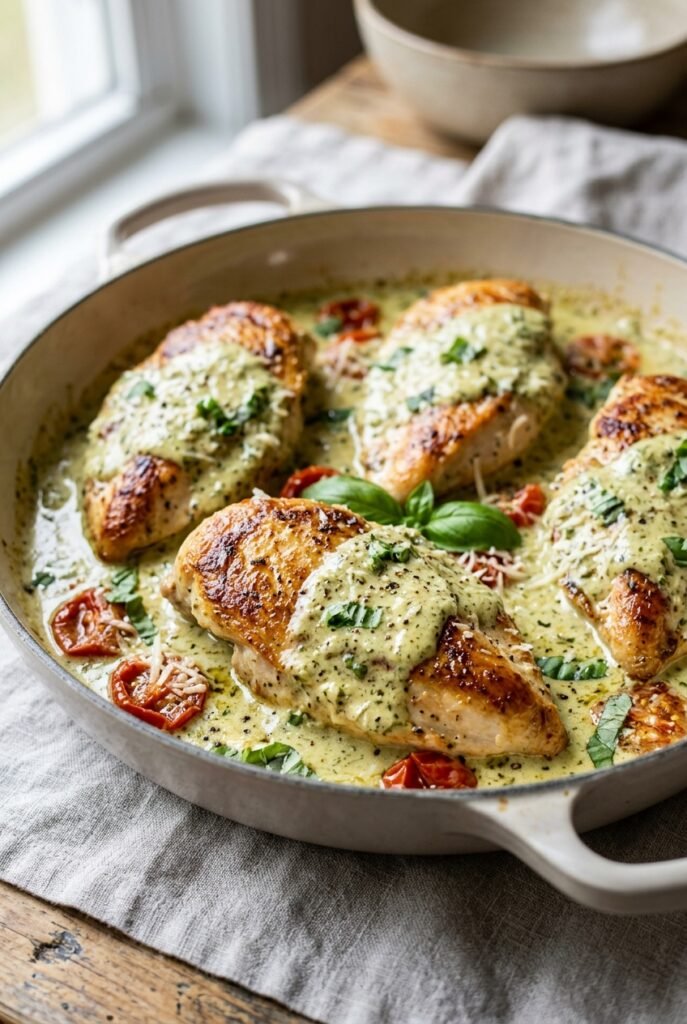
Creamy Pesto Chicken Skillet
Golden chicken nestled in a creamy basil pesto sauce is the kind of skillet dinner that earns repeat status fast. The chicken stays juicy, the sauce clings to every slice,…
Tip: save now, read later.
Golden chicken nestled in a creamy basil pesto sauce is the kind of skillet dinner that earns repeat status fast. The chicken stays juicy, the sauce clings to every slice, and the tomatoes cut through the richness with a burst of freshness that keeps each bite from feeling heavy. It looks like a restaurant dinner, but it cooks in one pan and lands on the table without a lot of fuss.
What makes this version work is the order. The chicken gets a hard sear first, which leaves the browned bits behind for the sauce, and that base matters more than most people think. The pesto goes in near the end over low heat so it keeps its bright color and basil flavor instead of turning dull and flat. Parmesan goes in gradually, off the hottest part of the burner, so the sauce turns smooth instead of grainy.
Below, you’ll find the exact cues that tell you when the sauce is ready, how to keep the garlic from taking over, and what to do if you want to make this with thighs or lighten it up a little.
The sauce thickened up perfectly and stayed silky, and the pesto still tasted fresh instead of muddy. I used the tomatoes at the end like you said, and they kept the whole skillet from feeling too rich.
Creamy Pesto Chicken Skillet with golden seared chicken, silky sauce, and fresh tomatoes is a weeknight keeper
The Secret to Keeping the Pesto Bright Instead of Dull
Pesto is the part of this dish that can go from vibrant to flat in a minute. High heat cooks the basil too aggressively and turns the sauce darker and heavier than it should be. The fix is simple: build the cream sauce first, then stir in the pesto at the end over low heat so it keeps its fresh green color and clean basil taste.
The other trap is the Parmesan. If it goes into a boiling sauce, it can clump or turn grainy. Pull the pan down to a gentle simmer before adding it, and stir it in gradually so the sauce stays smooth. The same goes for the chicken; once it goes back into the pan, you want a soft simmer, not a hard boil, so the meat stays tender while it finishes cooking.
What Each Ingredient Is Actually Doing in This Skillet
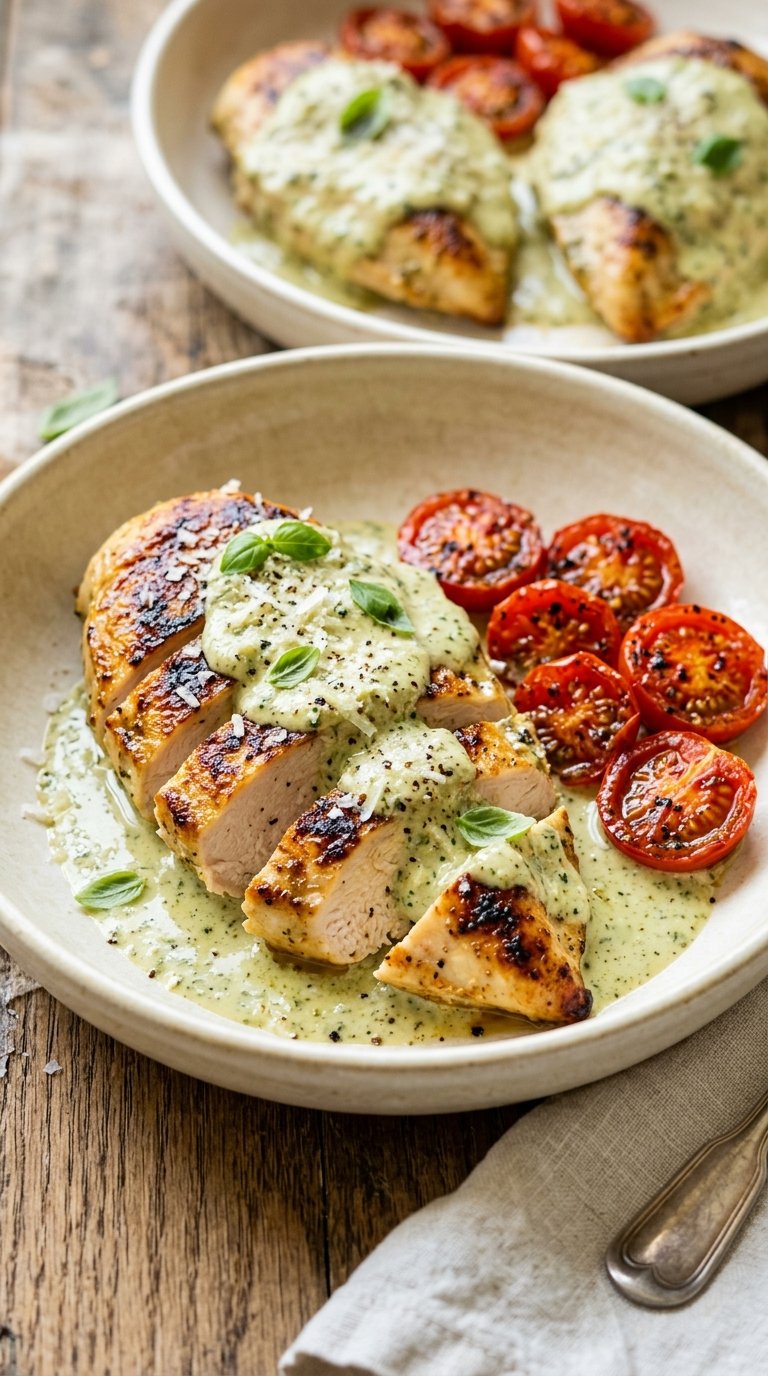
The chicken breasts need to be pounded to an even thickness if they’re thick on one end. That’s what keeps the cutlets from drying out before the center cooks through. If you’d rather use chicken thighs, use boneless, skinless thighs and cook them a little longer in the sauce until they hit temperature.
The basil pesto does the heavy lifting on flavor, so use one you actually like eating on its own. A homemade pesto will taste brighter, but a good jarred pesto works fine here. The heavy cream gives you the body that milk can’t, and if you swap it for half-and-half the sauce will be thinner and need a little more reduction.
Freshly grated Parmesan matters because the pre-shredded kind often has anti-caking agents that can make the sauce less smooth. The broth adds enough salt and depth to loosen the pan without making the sauce feel overly rich. Cherry tomatoes aren’t just garnish; they bring acidity and a little sweetness that balance the cream and pesto.
Building the Skillet in the Right Order
Seasoning and Flattening the Chicken
Pat the chicken dry first. Moisture on the surface steals browning, and a pale chicken breast will not give you the same flavor in the pan. Season both sides evenly, then pound the thicker pieces to about 3/4 inch so they cook at the same speed. If one side is much thicker, that piece will need extra time and the outside will overcook before the center is done.
Getting a Deep Sear
Heat the oil until it shimmers, then lay the chicken in and leave it alone for the first few minutes. That undisturbed time is what gives you the crust. If you move it too soon, it sticks and tears instead of releasing cleanly. Flip only when the underside is a deep golden brown and the chicken lifts without resistance.
Making the Sauce in the Same Pan
Lower the heat before the garlic goes in. Garlic burns fast, and once it turns bitter there is no fixing it. After the broth goes in, scrape the bottom of the pan well; those browned bits dissolve into the sauce and carry the flavor of the seared chicken. Let the broth reduce a little before adding the cream so the final sauce tastes concentrated instead of watery.
Finishing Without Breaking the Sauce
Add the Parmesan gradually over medium-low heat, stirring until it melts before adding more. That keeps the sauce smooth. Once the pesto goes in, keep the heat gentle and don’t let it boil hard. Return the chicken, spoon sauce over the top, and cook just until the center reaches 165°F. The sauce should coat the back of a spoon and the tomatoes should soften without collapsing.
Three Ways to Make This Skillet Fit Your Table
Use chicken thighs for a richer result
Boneless skinless thighs stay juicy and give the skillet a deeper, slightly more savory bite. They take a few extra minutes to cook through, but the sauce actually helps them stay tender, so this is an easy swap if you prefer dark meat.
Make it gluten-free without changing the texture
This recipe is naturally gluten-free as written as long as your pesto and broth are certified gluten-free. The sauce thickens from cream, Parmesan, and reduction, so you don’t need flour or any other binder.
Lighten it with half-and-half, with one tradeoff
Half-and-half will work if that’s what you have, but the sauce will be thinner and a little less luxurious. Let it reduce a bit longer before adding the chicken back, and keep the heat low so it doesn’t split.
Swap the tomatoes for spinach
A handful or two of baby spinach wilts into the sauce fast and gives you a softer, less acidic finish than tomatoes. Stir it in at the very end so it just collapses into the cream instead of going olive-drab.
Storage and Reheating
- Refrigerator: Store leftovers in an airtight container for up to 3 days. The sauce thickens as it chills.
- Freezer: I don’t recommend freezing this one. Cream sauces can separate and the tomatoes lose their texture after thawing.
- Reheating: Warm gently on the stove over low heat with a splash of broth or cream. High heat can split the sauce and overcook the chicken, so keep it slow and steady.
Answers to the Questions Worth Asking
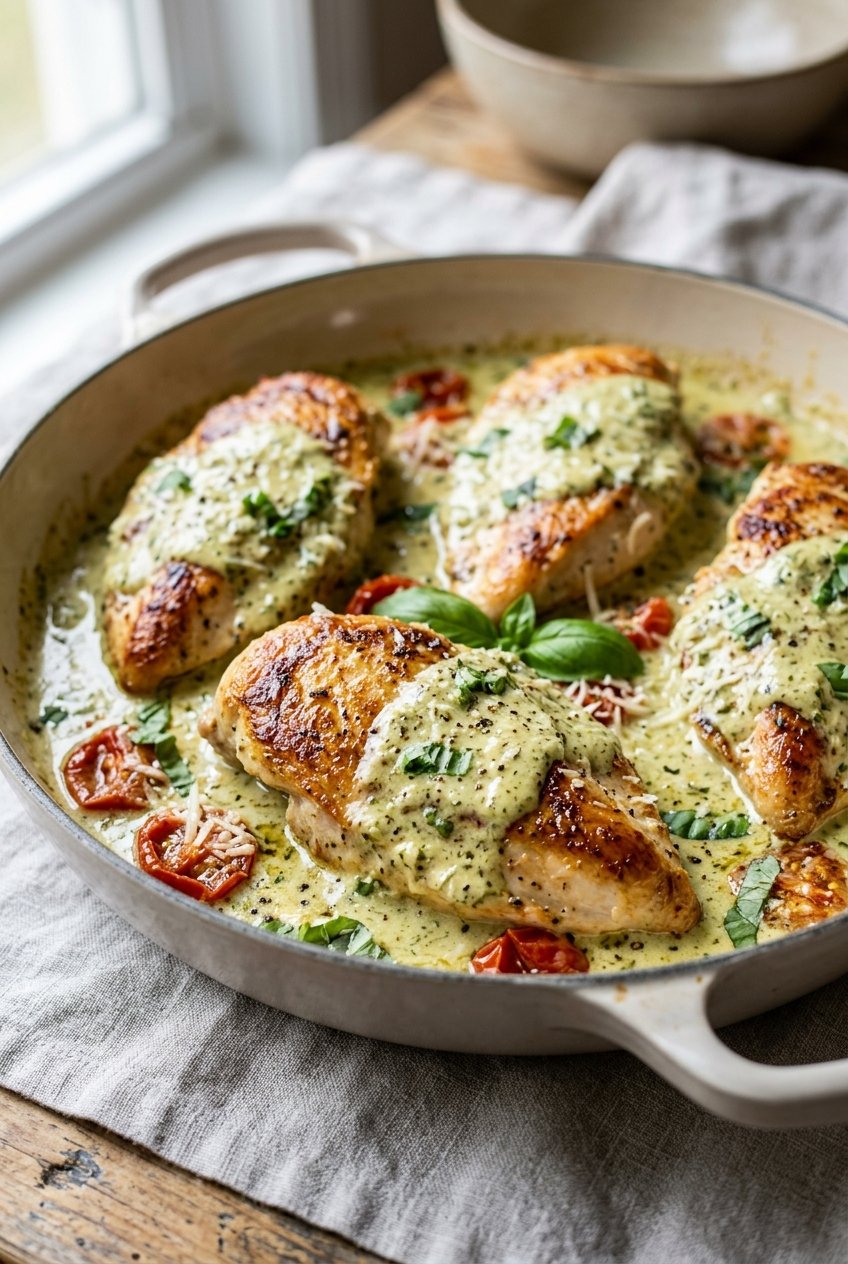
Creamy Pesto Chicken Skillet
Ingredients
Equipment
Method
- Pat the chicken breasts dry and, if they are very thick, gently pound them to approximately ¾-inch thickness so they cook evenly.
- Season both sides with kosher salt, black pepper, garlic powder, and Italian seasoning.
- Heat olive oil in a large skillet over medium-high heat until shimmering.
- Add the chicken breasts and cook for approximately 4–5 minutes on the first side without moving them, until a deep golden crust develops.
- Flip the chicken and cook for another 3–4 minutes.
- Transfer the chicken to a plate; it doesn't need to be fully cooked yet.
- Reduce the heat to medium, then add butter to the same skillet.
- Add minced garlic and cook for approximately 30 seconds, just until fragrant, without allowing it to brown heavily.
- Pour in the chicken broth, scrape the browned chicken bits from the bottom, and simmer for 2–3 minutes so the broth reduces slightly.
- Reduce the heat to medium-low and stir in the heavy cream, then simmer gently for approximately 2 minutes.
- Add the Parmesan gradually, stirring until melted and the sauce becomes smooth.
- Reduce the heat to low before stirring in the basil pesto, then add fresh lemon juice, black pepper, and optional red pepper flakes; avoid aggressively boiling to preserve a fresher green color and basil flavor.
- Stir in the halved cherry tomatoes and cook for about 2 minutes, just until they soften slightly while retaining their shape and bright color.
- Nestle the chicken breasts back into the skillet and spoon creamy pesto sauce over the top.
- Simmer gently for approximately 5–7 minutes, or until the thickest part of the chicken reaches 165°F (74°C).
- Remove from the heat and sprinkle with Parmesan and fresh basil.
- Allow the skillet to rest for 3–5 minutes before serving so the sauce clings to the chicken.
