
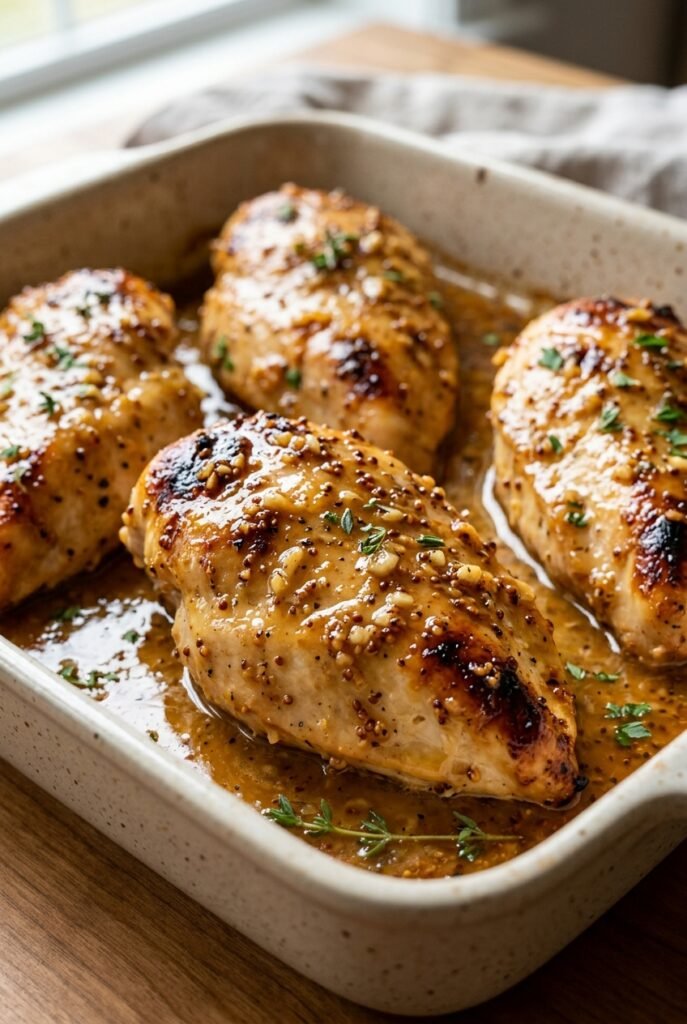
Juicy Baked Honey Mustard Chicken
Juicy baked honey mustard chicken lands with that rare combination of sticky, tangy, and savory that keeps pulling people back for one more slice. The chicken stays tender because the…
Tip: save now, read later.
Juicy baked honey mustard chicken lands with that rare combination of sticky, tangy, and savory that keeps pulling people back for one more slice. The chicken stays tender because the breasts are pounded to an even thickness, then baked just long enough to finish at 165°F without drying out. The glaze turns glossy in the oven and picks up little caramelized edges that taste like the best part of a roast pan sauce.
What makes this version work is the balance in the sauce. Dijon brings sharpness, whole-grain mustard adds texture and depth, and a little honey rounds everything out without turning the chicken cloying. Lemon juice and Worcestershire keep the sauce from tasting flat, while the garlic and thyme give it enough backbone to hold up to the oven.
Below, I’ll walk through the part that matters most: getting the chicken evenly baked, keeping the sauce from burning, and finishing it so it looks as good as it tastes. There’s also a quick note on substitutions, because this is one of those dinners that should work with what you already have.
The glaze thickened up in the oven and never turned watery, and pounding the chicken to even thickness kept the thicker end from drying out. My husband scraped the baking dish clean.
Save this baked honey mustard chicken for a glossy, oven-baked dinner with a tangy-sweet glaze and juicy chicken breasts.
The Trick to Keeping Honey Mustard Chicken Juicy Instead of Dry
Chicken breasts dry out for one main reason: uneven thickness. The thin end hits temperature long before the thick end catches up, which is how you end up with one dry bite and one underdone one on the same plate. Pounding the breasts to about 3/4 inch gives you a more even cook and a better surface for the glaze to cling to.
The other place people lose this dish is the oven timing. Honey burns faster than plain mustard, so the sauce needs to go on before baking, but the broiler needs only a minute or two at the end, not a long blast. Pull the chicken as soon as the center reaches 165°F and the glaze looks lacquered with small browned spots around the edges.
What Each Ingredient Is Doing in This Dish
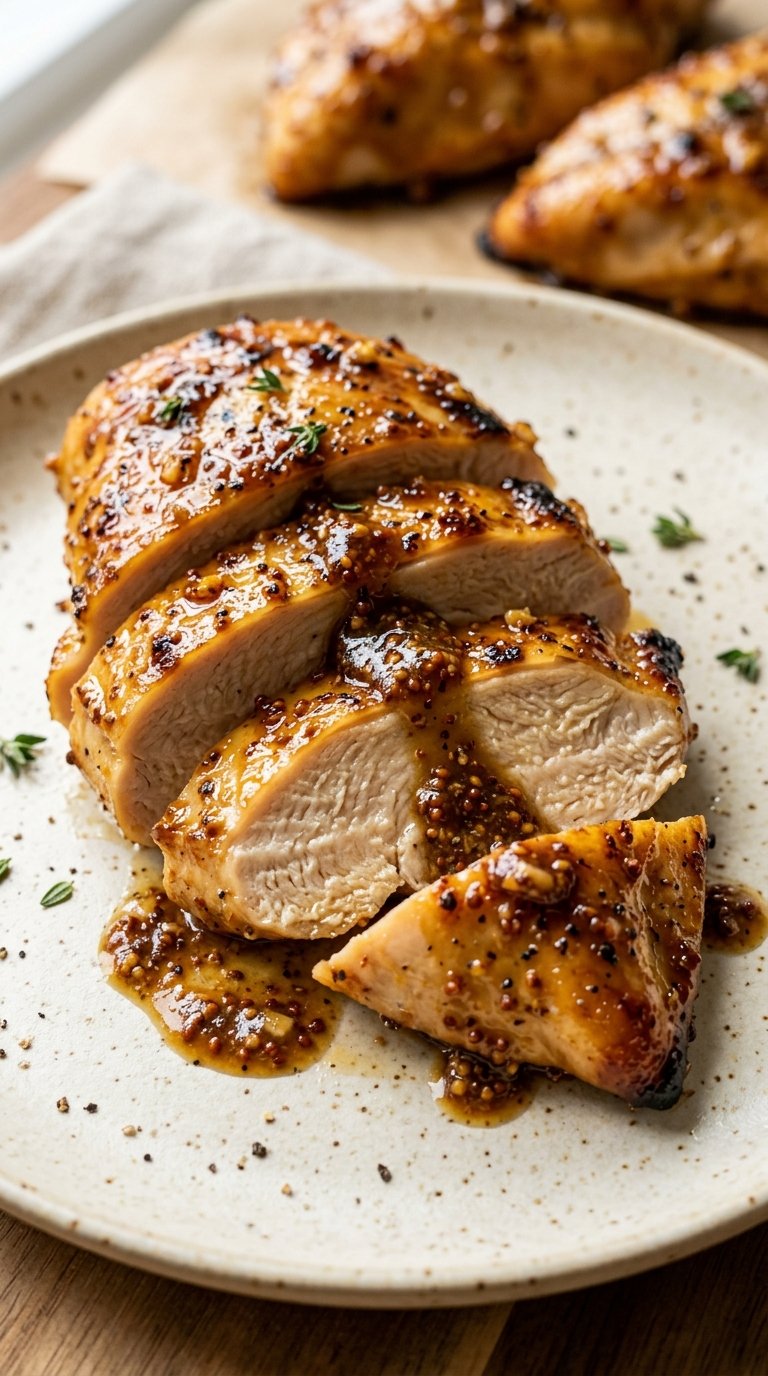
- Chicken breasts — Boneless, skinless breasts are lean, so they need the even thickness step more than fattier cuts do. If you want to swap in thighs, use boneless thighs and bake a little longer until they’re tender and well coated.
- Dijon mustard — This is the sharp, emulsifying backbone of the sauce. A smooth Dijon gives the glaze structure and keeps it from tasting one-note.
- Whole-grain mustard — The mustard seeds add texture and a deeper mustard flavor that reads as more layered after baking. If you only have Dijon, the recipe still works, but the finished sauce will be smoother and a little less rustic.
- Honey — Honey is what gives the glaze its shine and gentle caramelization. Maple syrup works in a pinch, but it tastes softer and less classic here.
- Lemon juice and Worcestershire — These keep the sauce from turning sweet and heavy. Lemon brightens it up, and Worcestershire adds that savory base note that makes the glaze taste cooked, not mixed.
- Smoked paprika and thyme — These are quiet background flavors, but they matter. The paprika gives warmth and color, while the thyme keeps the chicken from tasting flat once it comes out of the oven.
Building the Glaze and Baking It to a Glossy Finish
Evening Out the Chicken
Pat the chicken dry first so the oil and seasoning stick instead of sliding around on the surface. If one end is thicker, pound the breast between pieces of parchment or plastic until it’s roughly even from end to end. That small step keeps the chicken from overcooking at the edges while the center catches up.
Mixing the Sauce
Whisk the mustard, honey, oil, lemon juice, garlic, Worcestershire, thyme, paprika, and pepper until the sauce looks smooth and slightly thick. It should cling to a spoon instead of running off like a vinaigrette. If it tastes too sharp, the honey will mellow it in the oven; if it tastes too sweet, the Dijon and lemon should still be present.
Baking Without Drying It Out
Spoon most of the sauce over the chicken before it goes into the oven, then bake uncovered so the glaze can set. Around the 20-minute mark, spoon some of the pan sauce back over the chicken and continue until the thickest part reaches 165°F. If the glaze starts darkening too fast, tent loosely with foil and finish the chicken without the broiler for the last few minutes.
The Quick Broil and Rest
The broiler is for color, not cooking. One to two minutes is enough to create those caramelized spots that make the dish look finished, and any longer risks turning the honey bitter. Let the chicken rest for 5 minutes before slicing so the juices settle instead of running onto the cutting board.
Three Ways to Adapt This Honey Mustard Chicken
Dairy-Free and Naturally Gluten-Free
This recipe already skips dairy, and it can stay gluten-free if your Worcestershire sauce is certified gluten-free. The flavor doesn’t change much, which is one reason this dinner works for a lot of households without extra effort.
Using Chicken Thighs Instead
Boneless thighs give you a richer, more forgiving result and stay juicy even if they go a minute long. Bake until they’re cooked through and the glaze is bubbling around the edges; they usually need a few extra minutes compared with breasts.
Making It a Little Milder
If you want less mustard bite, reduce the Dijon slightly and add a touch more honey. The sauce will taste rounder and sweeter, but it won’t have quite the same sharp edge that makes the original so good with chicken.
Storage and Reheating
- Refrigerator: Store leftovers in an airtight container for up to 4 days. The glaze may thicken and look a little darker after chilling.
- Freezer: This freezes well for up to 2 months, though the sauce will lose a bit of its glossy finish after thawing. Slice the chicken before freezing for easier reheating.
- Reheating: Warm gently in a covered baking dish at 325°F until heated through, or use the microwave at medium power in short bursts. High heat dries out the chicken fast and can make the honey in the sauce taste scorched.
The Questions That Come Up With Baked Honey Mustard Chicken
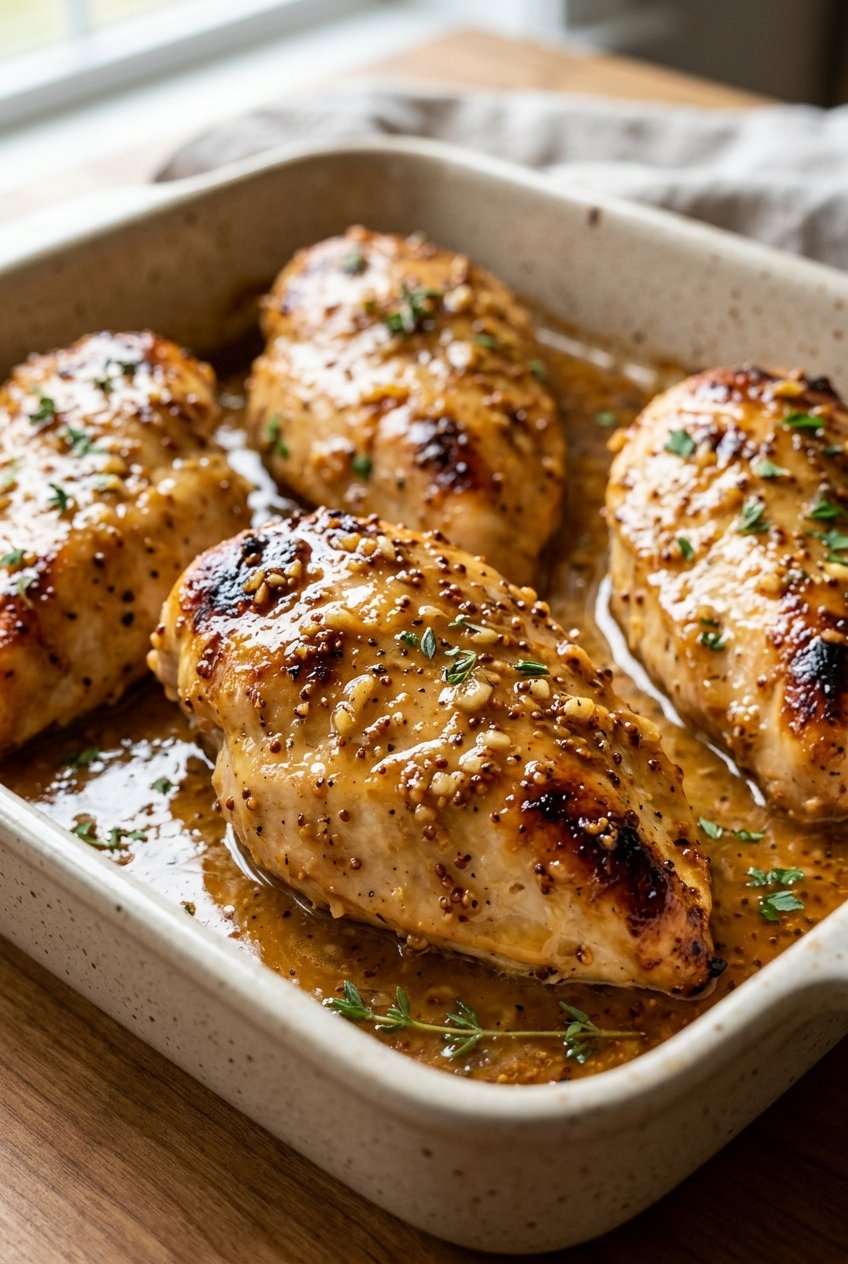
Juicy Baked Honey Mustard Chicken
Ingredients
Equipment
Method
- Preheat the oven to 400°F (205°C) and lightly grease a medium baking dish.
- Pat the chicken breasts dry and gently pound the thicker ends to about ¾ inch thickness.
- Rub the chicken with 1 tbsp olive oil, then season both sides with kosher salt, black pepper, garlic powder, and smoked paprika.
- Whisk together Dijon mustard, honey, whole-grain mustard, olive oil, lemon juice, minced garlic, Worcestershire sauce, dried thyme, smoked paprika, and black pepper until thick enough to cling to the chicken.
- Arrange the chicken with a little space between pieces in the baking dish.
- Spoon about two-thirds of the honey mustard sauce over the chicken, coating the tops and sides, and reserve the rest for finishing.
- Bake uncovered for about 20 minutes.
- Spoon some sauce from the baking dish over the chicken, then bake 5–10 minutes more until the center of the thickest breast reaches 165°F (74°C).
- Broil for 1–2 minutes until the honey mustard glaze develops lightly caramelized golden-brown spots, watching carefully for quick browning.
- Remove from the oven and let the chicken rest for 5 minutes.
- Brush or spoon the reserved honey mustard sauce over each chicken breast, then finish with parsley and optional fresh thyme leaves and a restrained sprinkle of freshly ground black pepper.
