
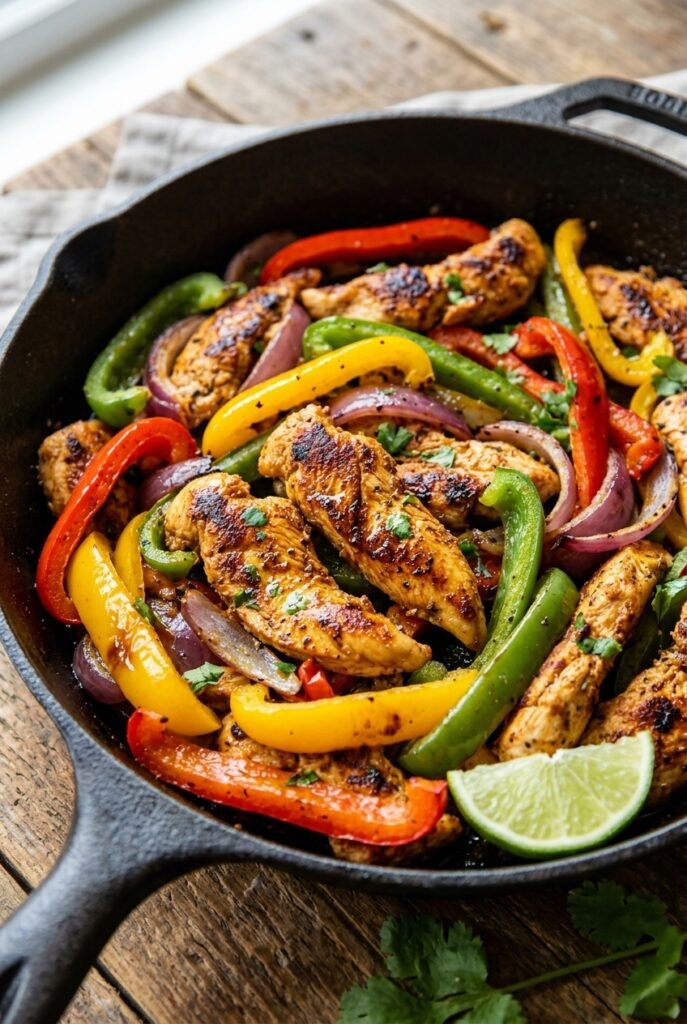
Easy Chicken Fajita Skillet
Juicy chicken, blistered peppers, and onions with a smoky fajita crust make this skillet dinner the kind of meal that disappears fast. The chicken stays tender because it’s sliced before…
Tip: save now, read later.
Juicy chicken, blistered peppers, and onions with a smoky fajita crust make this skillet dinner the kind of meal that disappears fast. The chicken stays tender because it’s sliced before cooking, then seared in a hot pan instead of being left in thick pieces that need extra time and end up dry. The vegetables keep their shape and a little bite, which matters here — fajita skillet dinner should taste lively, not soft and steamed.
The seasoning gets split between the chicken and the vegetables, so every layer tastes intentional. Lime goes in off the heat at the end, which keeps the flavor bright instead of muddy. If you’ve had skillet fajitas turn watery or bland before, the fix is in the order: high heat, space in the pan, and seasoning that actually hits the food while it cooks.
Below, I’ve included the little details that make this one work on a weeknight: how to cut the chicken so it cooks evenly, how long to leave the peppers alone so they char, and what to change if you want a dairy-free or low-carb dinner that still feels complete.
The chicken stayed juicy, and the peppers had that little char on the edges without turning soft. I loved that the lime went in at the end — it made the whole pan taste fresh instead of heavy.
Save these smoky chicken fajitas for the nights when you want a fast skillet dinner with crisp-tender peppers and a bright lime finish.
The Trick to Fajitas That Sear Instead of Steam
The difference between fajitas with browned edges and fajitas that turn watery usually comes down to two things: how dry the chicken is before it hits the pan, and whether the skillet stays uncrowded. Moisture is the enemy of browning. If the chicken goes in damp or piled on top of itself, it releases steam before it can develop those crisp, savory edges that make this dish worth making.
Cutting the chicken into even strips helps it cook fast without overcooking the outside. The vegetables need the same respect. If they’re sliced too thin, they collapse before they ever get a chance to char. Keep them substantial and use medium-high heat so they blister in spots while staying bright and a little crisp in the center.
What Each Ingredient Is Actually Doing in This Skillet
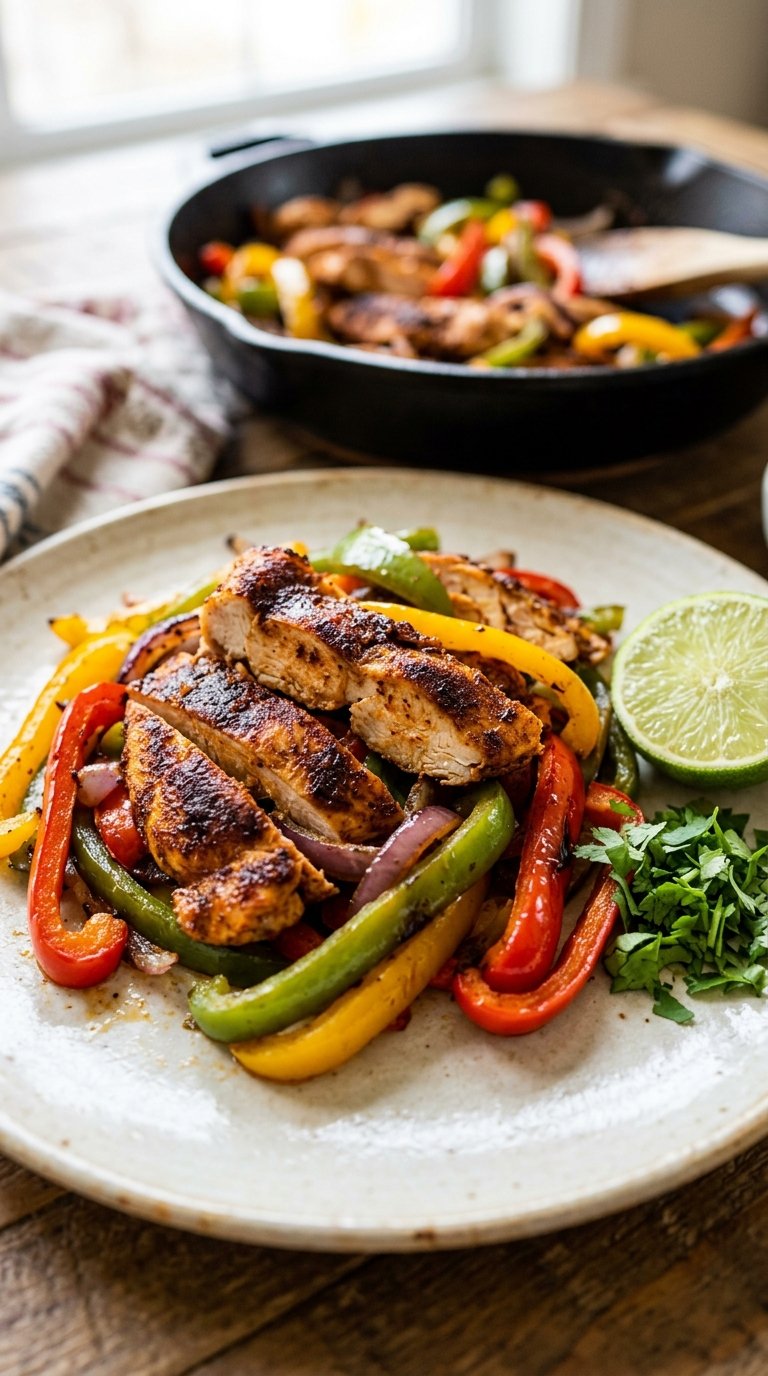
- Chicken breasts — Slicing them into strips before cooking gives you faster, more even browning. Chicken thighs work too if you want a richer result; they stay a touch juicier and are more forgiving if you leave them in the pan a minute too long.
- Olive oil — Just enough oil helps the seasoning cling and encourages searing. You don’t need a lot here; too much oil softens the vegetables and leaves the pan greasy instead of hot.
- Chili powder, cumin, smoked paprika, garlic powder, onion powder, oregano, and cayenne — This blend builds the fajita flavor without needing a store-bought packet. Smoked paprika is especially useful because it gives the skillet that cooked-over-fire taste even if you’re using a standard stove.
- Bell peppers and red onion — These are not just filler. Their sweetness balances the spice, and their structure holds up well in a hot pan. Slice them thick enough that they stay recognizable after cooking.
- Fresh lime juice and cilantro — These go in at the end for a reason. Heat dulls both, and fajitas need that sharp, fresh finish to cut through the smoky chicken.
- Jalapeño — Optional, but useful if you want a fresher kind of heat at the finish instead of more dried spice in the seasoning mix.
Building the Skillet in the Right Order
Dry and Slice the Chicken First
Pat the chicken dry before you cut it. That one step helps the seasoning stick and gives the meat a better chance to brown instead of steam. Slice across the grain into strips that are about the same thickness so they cook at the same rate. If some pieces are thick and others are thin, the thin ones will dry out before the thicker ones are done.
Season Before the Pan Gets Hot
Toss the chicken with salt, pepper, and most of the spice mix before it goes into the skillet. The seasoning needs direct contact with the meat, not just the sauce at the end. If the spices go into the pan too late, they can taste dusty instead of toasted. The chicken should look evenly coated, with the paprika and cumin clinging to the surface.
Sear in Batches if the Pan Is Crowded
Heat the oil until it shimmers, then add the chicken in a single layer. You should hear an immediate sizzle. If the pieces are crowded, pull some out and cook them in a second batch. Let the first side sit undisturbed long enough to pick up browned edges; moving it too early is how you lose the crust.
Cook the Vegetables Until They Char in Spots
Add the peppers and onion to the same pan so they pick up the flavor left behind by the chicken. Stir only occasionally. You want a few dark edges and softened centers, not mush. Once the garlic goes in, the clock is short — 30 seconds is enough, because garlic burns fast and burned garlic turns the whole skillet bitter.
Finish with Lime Off the Heat
Return the chicken and any juices to the pan, then cook just until it reaches 165°F. Pull the skillet off the heat before adding lime juice and cilantro. Acid added over heat can taste flat, and herbs lose their freshness fast in a hot pan. A final toss at the end wakes everything up.
Three Ways to Make This Skillet Fit the Night
Dairy-Free and Naturally Gluten-Free Serving
The skillet itself is already dairy-free and gluten-free, which makes this an easy base meal. Serve it in corn tortillas, over rice, or with cauliflower rice if you want to keep it lighter. The main thing to watch is what you pair it with — some store-bought tortillas and seasoning blends sneak in gluten, so read labels if that matters for your kitchen.
Use Chicken Thighs for a Richer Result
Boneless thighs work well if you want a little more forgiveness and a deeper chicken flavor. They brown beautifully and stay juicy, even if the pan runs a bit hot. Expect a slightly richer finish and a little more rendered fat in the skillet, which can actually help the vegetables pick up more flavor.
Make It Milder or Hotter
Leave out the cayenne and jalapeño for a milder pan, or add extra jalapeño with a pinch of red pepper flakes if you want more heat. The important part is keeping the smoky seasoning balanced. Too much heat can cover up the lime and paprika, which are doing important work here.
Storage and Reheating
- Refrigerator: Store leftovers in an airtight container for up to 4 days. The peppers soften a little as they sit, but the flavor stays strong.
- Freezer: It freezes, but the peppers lose some of their crispness after thawing. Freeze in a sealed container for up to 2 months if texture matters less than convenience.
- Reheating: Warm in a skillet over medium heat with a small splash of water or oil just until heated through. Microwaving works in a pinch, but it tends to push the chicken from juicy to rubbery if you overdo it.
Answers to the Questions Worth Asking
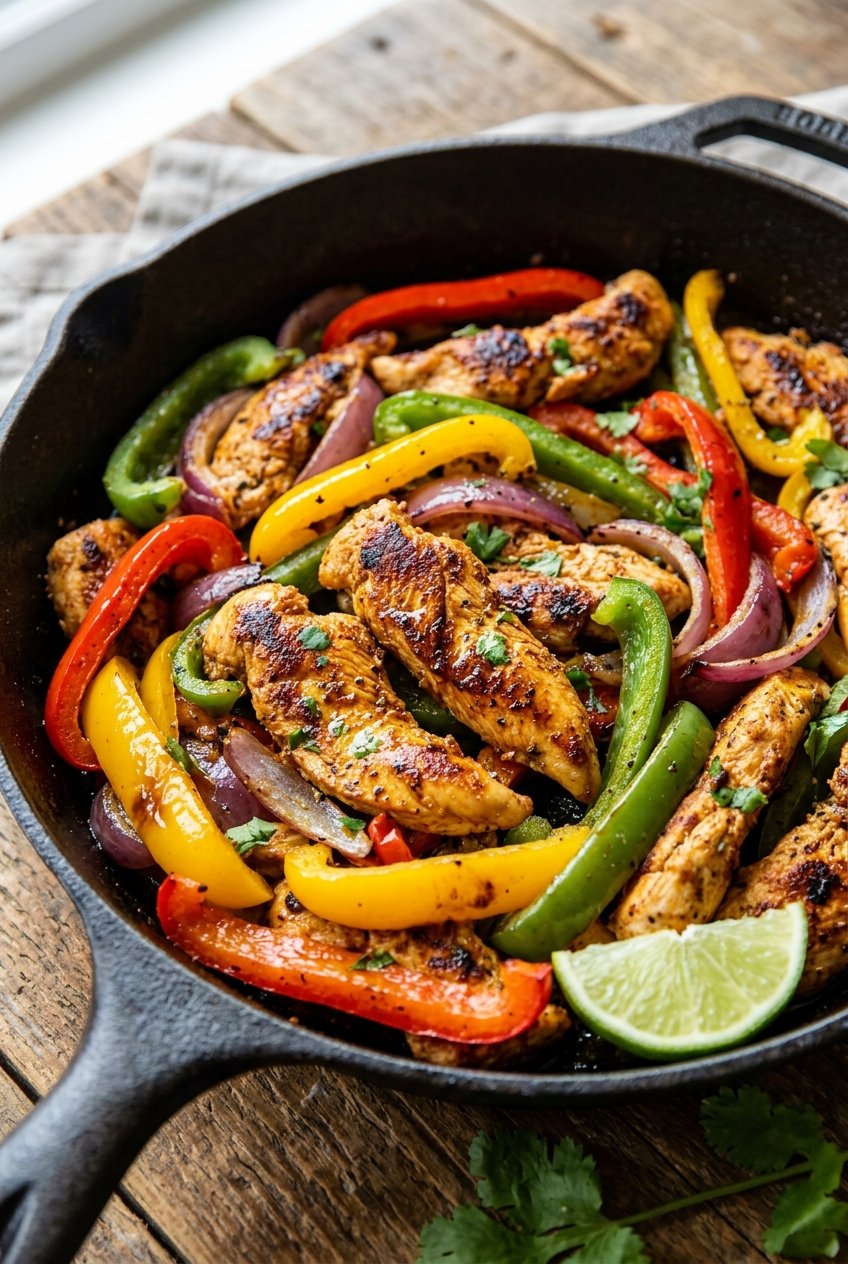
Easy Chicken Fajita Skillet
Ingredients
Equipment
Method
- Pat the chicken breasts dry, then slice them across the grain into strips about ½ inch thick so they cook evenly.
- Slice the red, yellow, and green bell peppers into roughly ¼-inch strips and cut the red onion into thin wedges so the vegetables stay recognizable after cooking.
- Mix the chili powder, ground cumin, smoked paprika, garlic powder, onion powder, dried oregano, and optional cayenne to make the fajita seasoning.
- Place the chicken strips in a bowl, add kosher salt, black pepper, and about two-thirds of the fajita seasoning, then toss until evenly coated.
- Heat 1 tablespoon olive oil in a large skillet over medium-high heat until hot.
- Add the chicken in a single layer (cook in batches if needed) and cook for 3–4 minutes without disturbing, until browned edges form.
- Turn the chicken and cook for another 2–3 minutes until nearly cooked through, then transfer to a plate.
- Add the remaining ½ tablespoon olive oil to the same skillet.
- Add the bell peppers and red onion, then cook over medium-high heat for 4–5 minutes, stirring occasionally, until you see some charred edges while peppers remain colorful and slightly crisp.
- Add the minced garlic and the remaining fajita seasoning, then cook for about 30 seconds while stirring constantly.
- Return the chicken and any accumulated juices to the skillet, toss everything together, and cook for 2–3 minutes until the chicken reaches 165°F (74°C).
- Remove the skillet from the heat and immediately drizzle fresh lime juice over the chicken and vegetables, then toss gently.
- Stir in chopped fresh cilantro and scatter over optional jalapeño slices, then serve with lime wedges.
