
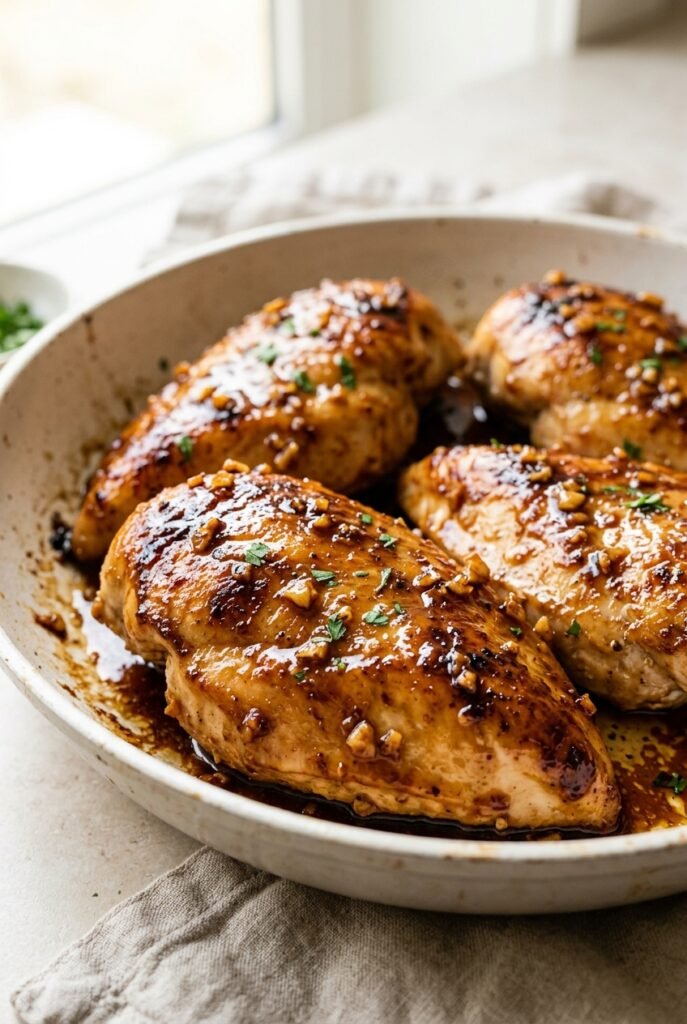
Sticky Brown Sugar Garlic Chicken Breast
Sticky brown sugar garlic chicken breast lands in that sweet spot between weeknight simple and dinner-party worthy. The chicken sears up with a deep golden crust, then finishes in a…
Tip: save now, read later.
Sticky brown sugar garlic chicken breast lands in that sweet spot between weeknight simple and dinner-party worthy. The chicken sears up with a deep golden crust, then finishes in a glossy glaze that clings to every slice without tasting heavy or one-note. You get sweet, savory, garlicky, and just enough tang from the vinegar and Dijon to keep the whole pan from turning flat.
What makes this version work is the way the sauce is built. The garlic gets a short, gentle cook in butter so it stays fragrant instead of bitter, and the brown sugar is balanced with soy sauce, Worcestershire, and a little apple cider vinegar. That mix gives you a glaze that reduces into something shiny and sticky, not thin and syrupy. Searing the chicken first also gives the oven a head start, which means you get color on the outside before the breast meat has time to dry out.
Below, I’ll walk you through the exact moment to pull the pan off the heat, how to keep the glaze from over-reducing, and the swaps that still give you a proper sticky finish.
The glaze thickened up beautifully in the skillet, and the chicken stayed juicy all the way through. I loved how the garlic stayed mellow and the sauce wasn’t overly sweet.
Sticky brown sugar garlic chicken with a glossy pan sauce that clings to every bite
The Reason the Glaze Stays Sticky Instead of Sliding Off
The biggest mistake with a brown sugar glaze is cooking it like a sauce you plan to serve by the spoonful. It needs to be concentrated enough to coat the chicken, which means the balance of sugar, acid, and broth matters. Too much liquid and it stays thin. Too much heat and the sugar tightens up before the chicken finishes, leaving you with a pan of sticky bits instead of a usable glaze.
This method solves both problems by building flavor in layers. The chicken gets a dry seasoning first, then a quick sear for color, then the glaze goes into the same pan so the browned bits dissolve into the sauce. That fond is part of the finished flavor, and it saves the glaze from tasting like melted brown sugar alone.
- Chicken breasts — Boneless, skinless breasts work best here because they cook fast and take on the glaze well. If yours are thick on one end, pound them to even thickness so the thinner side doesn’t dry out while the center catches up.
- Light brown sugar — This is what gives you the sticky finish and the warm molasses note. Dark brown sugar works in a pinch, but it pushes the glaze deeper and a little heavier.
- Dijon mustard — Dijon doesn’t make the sauce taste mustardy. It adds sharpness and helps the glaze stay balanced instead of cloying.
- Apple cider vinegar — This is the little bit of acid that keeps the glaze from tasting flat. Lemon juice can stand in if that’s what you have, but cider vinegar gives the most rounded finish.
- Low-sodium soy sauce — Soy sauce brings salt and depth without making the glaze taste like a teriyaki shortcut. If you use regular soy sauce, cut back slightly on added salt earlier in the recipe.
The Pan-Searing and Oven Finish That Keep the Chicken Juicy
Building Color Before the Oven
Start with dry chicken and a hot skillet. When the chicken hits the oil, it should sizzle immediately and stay put until the first side forms a real crust. If it sticks when you try to move it, it isn’t ready yet. Pull it too soon and you leave the color behind in the pan instead of on the meat.
Waking Up the Garlic Without Burning It
Once the chicken comes out, lower the heat before the butter and garlic go in. Garlic only needs about 30 seconds here, just until it smells sweet and aromatic. If it turns dark or the pan is too hot, the glaze will taste harsh no matter how much sugar you add later.
Reducing the Glaze to the Right Spoonable Thickness
Let the sauce bubble gently until it looks glossy and slightly loose, not thick like caramel. It will tighten as it cools and as the chicken rests. If it becomes too sticky in the pan, a splash of broth loosens it back up. The finished glaze should coat the back of a spoon and cling in a thin layer over the chicken.
Dairy-Free Finish
Swap the butter for olive oil or a plant-based butter. You’ll lose a little of the round richness that butter brings, but the glaze still turns glossy and sticky because the sugar and broth carry the texture.
Gluten-Free Adjustment
Use tamari instead of soy sauce. The flavor stays close, and the glaze still gets the salt and depth it needs without introducing wheat.
Chicken Thigh Variation
Boneless thighs work well if you want darker, juicier meat. They usually need a few extra minutes in the oven, and the glaze benefits from a slightly longer reduction because thighs release more juices.
Milder Sweetness
Cut the brown sugar back by 1 to 2 tablespoons and keep the Dijon and vinegar steady. The sauce will still glaze properly, but the finish will lean more savory and less candy-like.
Storage and Reheating
- Refrigerator: Store in an airtight container for up to 4 days. The glaze firms up a bit as it chills, which is normal.
- Freezer: Freeze for up to 2 months, though the glaze may separate slightly after thawing. Slice the chicken first for easier reheating and more even texture.
- Reheating: Warm gently in a covered skillet over low heat with a splash of broth or water. High heat dries out the chicken and can make the sugar in the glaze go from sticky to hard.
Questions I Get Asked About This Recipe
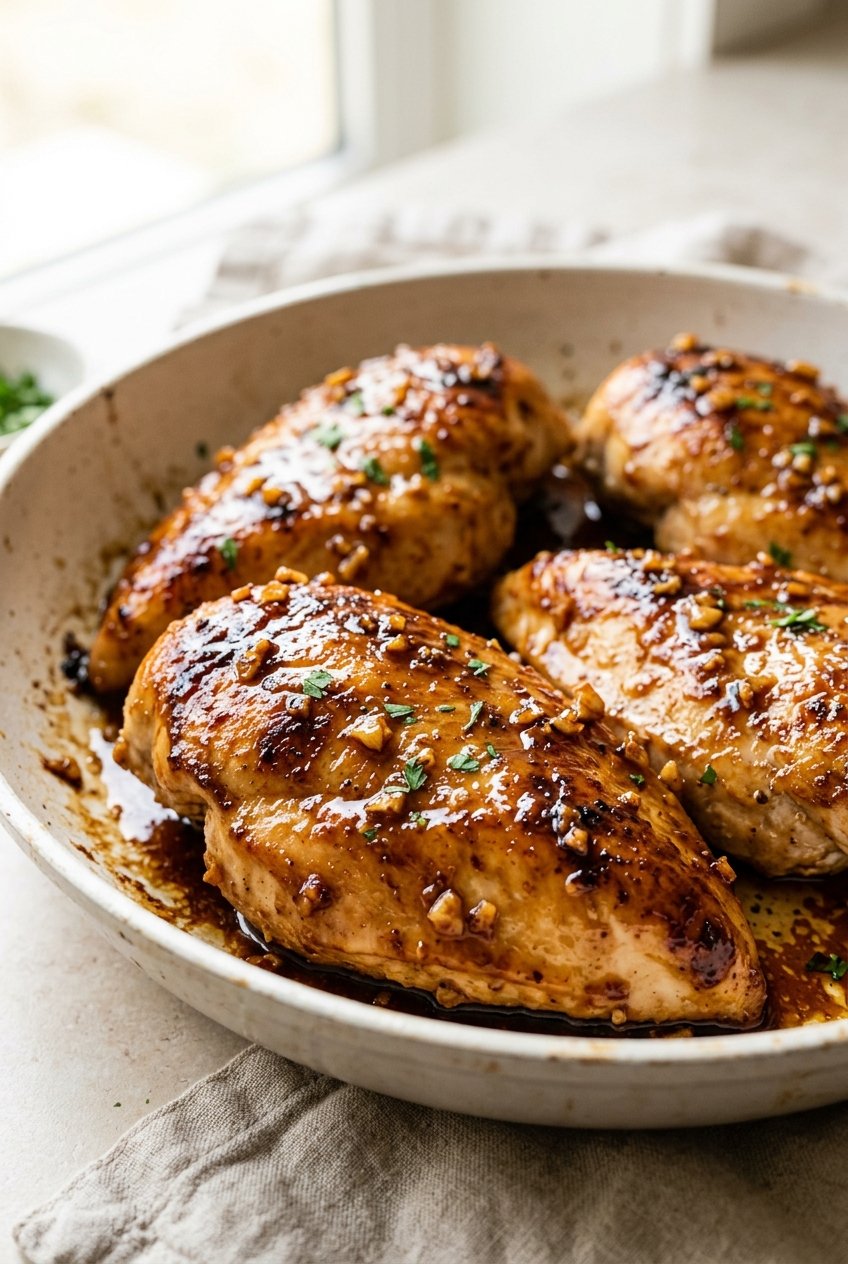
Sticky Brown Sugar Garlic Chicken Breast
Ingredients
Equipment
Method
- Preheat the oven to 400°F (205°C). If the chicken breasts are very thick, gently pound the thicker ends so each breast has a relatively even thickness.
- Pat the chicken completely dry. Season both sides with kosher salt, black pepper, garlic powder, and smoked paprika.
- Heat olive oil in a large oven-safe skillet over medium-high heat. Add the chicken breasts and sear for 3–4 minutes without moving them, until the first side develops a rich golden crust.
- Flip the chicken and cook the second side for about 2 minutes. Transfer the chicken temporarily to a plate.
- Reduce the heat to medium-low and add the butter. Once melted, add the minced garlic and cook for approximately 30 seconds, stirring constantly, until fragrant but not dark brown.
- Add the brown sugar, soy sauce, Dijon mustard, apple cider vinegar, Worcestershire sauce, smoked paprika, optional red pepper flakes, and chicken broth. Stir over medium-low heat for approximately 1–2 minutes until the sugar dissolves and the mixture becomes glossy.
- Return the chicken to the skillet and turn each breast once in the glaze. Arrange them presentation-side up, spoon plenty of the brown sugar garlic mixture over each piece, then transfer the skillet to the oven.
- Bake for approximately 12–16 minutes depending on thickness, until the thickest portion reaches 165°F (74°C).
- Transfer the chicken to a plate and rest. If the skillet sauce is still thin, simmer it over medium heat for 2–3 minutes, stirring frequently, until it reduces to a shiny glaze.
- Spoon or brush the reduced garlic glaze generously over the chicken. Let the chicken rest for approximately 5 minutes before slicing.
- Sprinkle lightly with fresh parsley and, if desired, freshly ground black pepper. Slice and serve while the glaze is sticky and glossy.
