
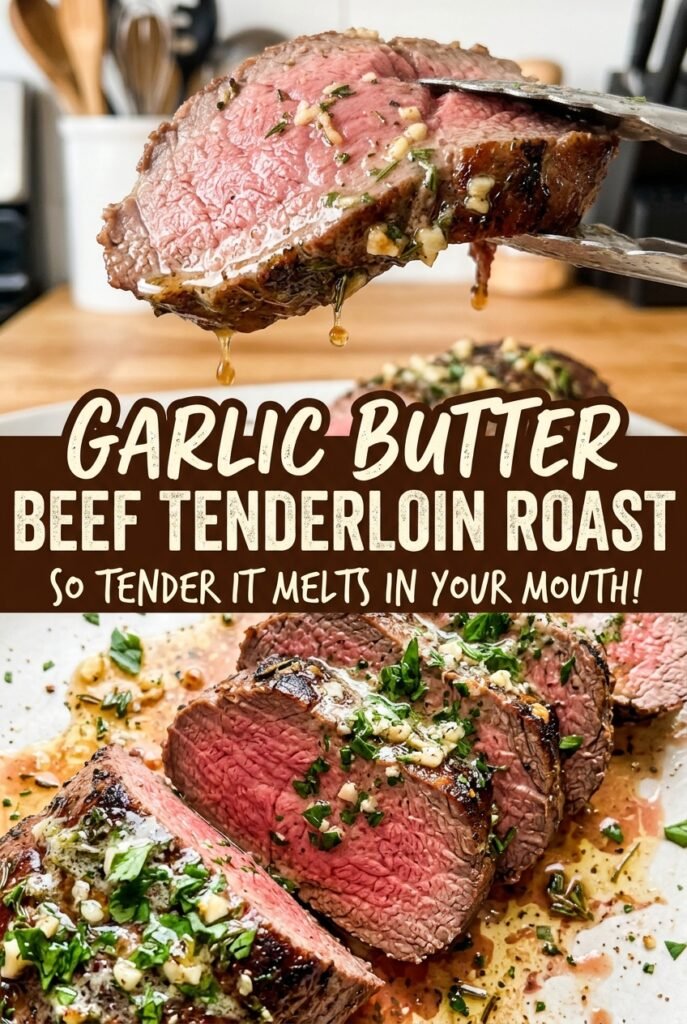
Garlic Butter Beef Tenderloin Roast
At the first temperature check, the outside of the roast is already fragrant with garlic and thyme, but the center still needs its own say in when dinner is ready.…
Tip: save now, read later.
At the first temperature check, the outside of the roast is already fragrant with garlic and thyme, but the center still needs its own say in when dinner is ready. That’s why I don’t rely on the clock alone for this garlic butter beef tenderloin roast. The roast serves six, and a quick check in its thickest part keeps the timing tied to the actual piece of beef in the pan.
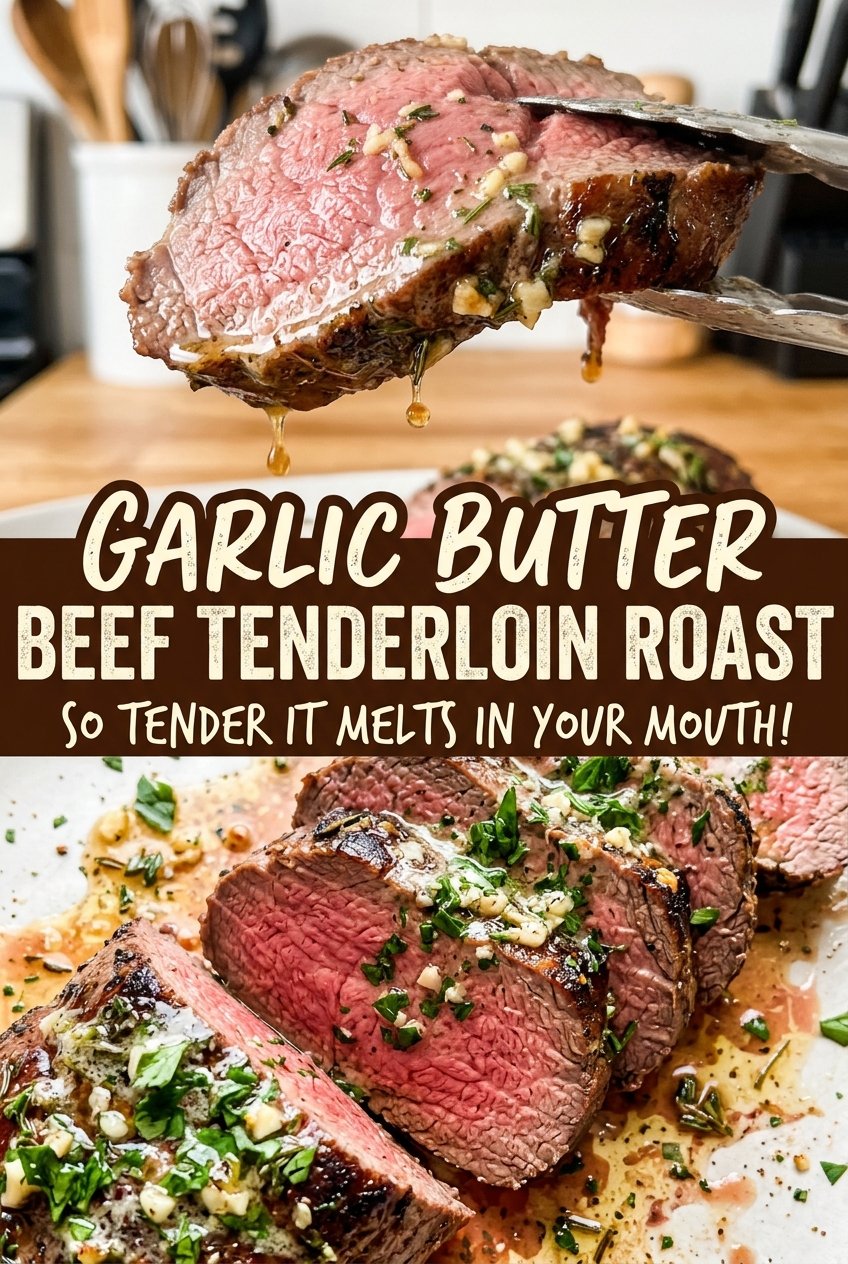
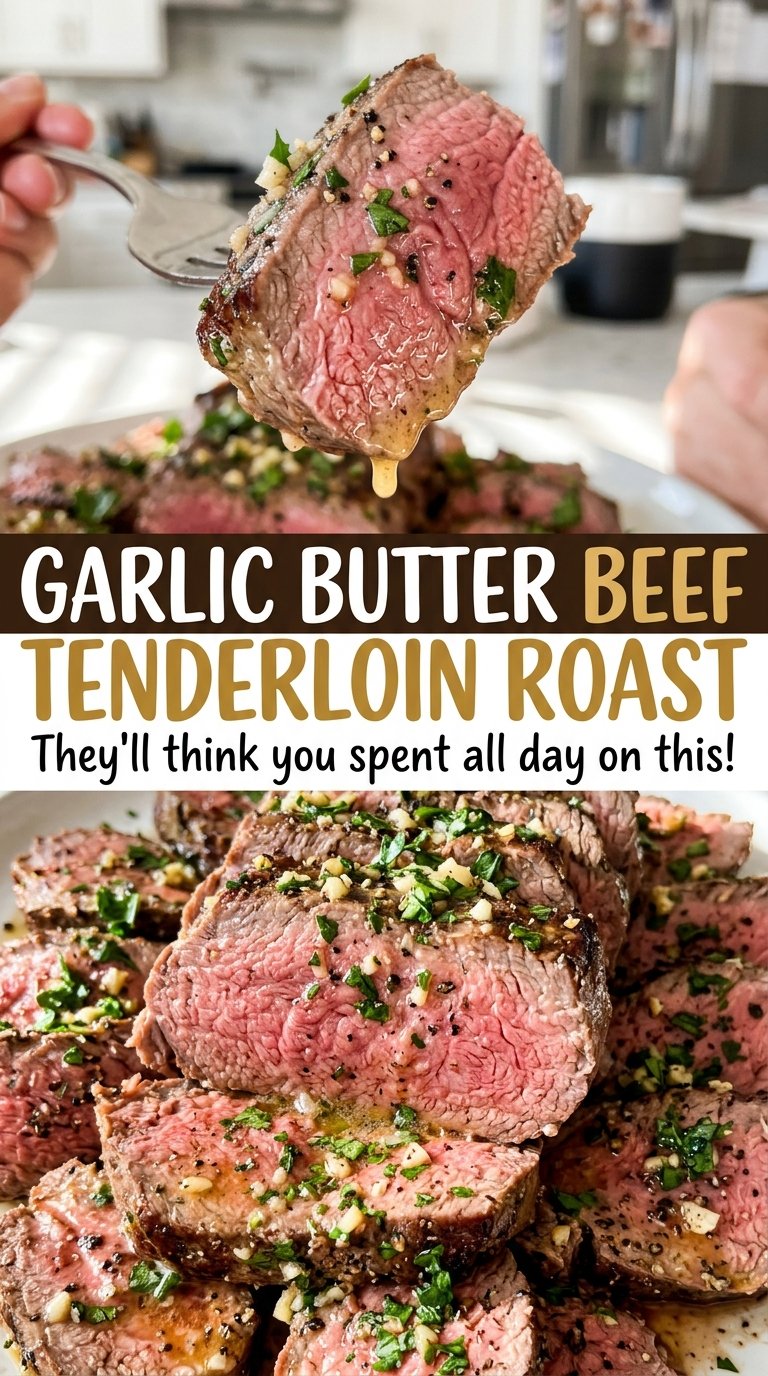
Softened butter makes a savory coating that clings to the tenderloin instead of sliding straight into the roasting pan. Minced garlic and fresh thyme get worked through it, so each slice carries a little of that buttery, herbal crust. Once the roast has rested and the twine comes off, the center cuts cleanly into tender slices with garlic butter still tucked around the edges.
Kitchen Note
Don’t melt the butter to make mixing faster. Softened butter stays thick enough to coat the beef, while melted butter runs off before the roast goes into the oven.
Save this garlic butter beef tenderloin roast for a special dinner with a golden garlic-and-thyme coating and simple oven timing.
Why the Thickest Part, Not the Clock, Decides When Tenderloin Comes Out
A tenderloin isn’t a uniform cylinder from end to end. Even when it’s trimmed and tied, its thick center and narrower ends won’t warm at exactly the same pace. The clock gives you a useful window, but the thickest section gives you the reading that matters for deciding when to pull the roast.
Start checking after 30 minutes, then use an instant-read thermometer in the thickest part. Keep the probe away from the roasting pan so you’re reading the beef rather than the hot metal underneath it. If you check only the narrow end, it can give you a misleading idea of how far the center has cooked. The roast comes out at 145°F, then rests for 10 minutes before you slice it. That pause also gives you time to remove the twine without rushing the carving.
There’s no need to chase a particular number on the timer once the thermometer gives you the right reading. Tenderloin is a lean, tender cut, so careful checking is more useful than adding extra oven time just because the roast looks small or large in the pan.
Why Softened Butter Is the Right Partner for Tenderloin
- Beef tenderloin — Choose a roast that’s already trimmed and tied. Its mild flavor leaves room for the garlic butter, while the tied shape helps it hold together for roasting and slicing. Since tenderloin is the centerpiece, buy it fresh from a butcher or a well-stocked meat counter if you have that option.
- Unsalted butter — Unsalted butter lets the measured kosher salt season the beef without adding an unknown amount from the butter. Use it softened, not melted, so it mixes evenly with the garlic and thyme. A good-quality butter is pleasant here, but the fresh herbs and garlic bring plenty of character even with a standard supermarket brand.
- Garlic — Fresh cloves give the butter a sharper, more fragrant taste than jarred minced garlic. Mince the cloves finely so they disperse through the butter rather than landing in a few large pieces.
- Fresh thyme — Chopped fresh thyme gives the butter a clean, woodsy aroma that suits the mild beef. Pick leaves from any tough stems before chopping; tender little stems are fine if they’re easy to chop through.
- Kosher salt and black pepper — Freshly ground pepper has a more aromatic bite than pre-ground pepper. Keep the kosher salt as measured so the seasoning stays balanced with the butter and garlic.
From Tied Roast to Even Slices: Three Decisions That Matter
Season the Beef Before Adding the Butter
Heat the oven to 425°F with a rack in the center. Pat the tied tenderloin dry, then season all over with kosher salt and freshly ground black pepper. Drying the surface first gives the seasoning a chance to cling instead of dissolving into moisture on the outside of the beef. Set out a 9×13-inch roasting pan for the roast.
Mix a Garlic-Thyme Coating
Stir the softened butter, minced garlic, and chopped fresh thyme together until the garlic and herbs are spread throughout. Work the mixture over the beef so the surface has an even coating rather than one thick patch and bare spots elsewhere. If a little butter gathers at the bottom of the pan, that’s fine; there’s no need to scrape the roast clean. Transfer the coated tenderloin to the roasting pan.
Check the Center, Then Give It a Rest
Roast for 30 to 45 minutes, checking the thickest part with an instant-read thermometer after 30 minutes. Once that spot reaches 145°F, take the pan out of the oven rather than relying on the color of the outside. Move the beef to a cutting board and let it rest for 10 minutes. Remove the twine, then slice across the grain for tender pieces that hold together on the platter.
Three Ways to Shift the Garlic-Thyme Roast
Trade the Thyme for Rosemary
Use chopped fresh rosemary in place of the thyme in the butter. Rosemary has a stronger, piney aroma, so the roast will taste more woodsy and bold while keeping the same buttery garlic base.
Use Dried Thyme When Fresh Isn’t Handy
Replace the fresh thyme with 1 teaspoon dried thyme in the butter mixture. Dried thyme tastes more concentrated and less leafy, but it still seasons the coating well; stir it in thoroughly so it doesn’t clump.
Make the Coating Dairy-Free
Replace the butter with 4 tablespoons olive oil and stir in the garlic and thyme. Brush the mixture over the beef rather than trying to spread it like a butter paste. The result is less rich and won’t have the same buttery coating, but the garlic and herbs still season the roast.
Storage and Reheating
- Refrigerator: Store leftover beef in a covered container for 3 to 4 days. Chilled slices will be firmer and won’t have the same freshly carved texture.
- Freezer: Freeze sliced or unsliced leftovers tightly wrapped for up to 2 to 3 months. Thaw them in the refrigerator before reheating.
- Reheating: Place slices in a covered oven-safe dish and warm at 300°F until the center reaches 165°F. Gentle, covered reheating helps limit moisture loss; avoid leaving thin slices uncovered in a hot oven.
Questions That Come Up Before Roasting Tenderloin
Garlic Butter Beef Tenderloin Roast
Ingredients
Equipment
Method
- Preheat the oven to 425°F.
- Position a rack in the center.
- Pat the beef dry.
- Season the beef all over with the salt and pepper.
- Stir the butter, garlic, and thyme together.
- Spread the mixture over the beef.
- Place the beef in a 9x13-inch roasting pan.
- Roast for 30 to 45 minutes, checking the thickest part with an instant-read thermometer after 30 minutes; remove the roast when it reaches 145°F.
- Transfer the beef to a cutting board and rest for 10 minutes.
- Remove the twine.
- Slice across the grain.
