
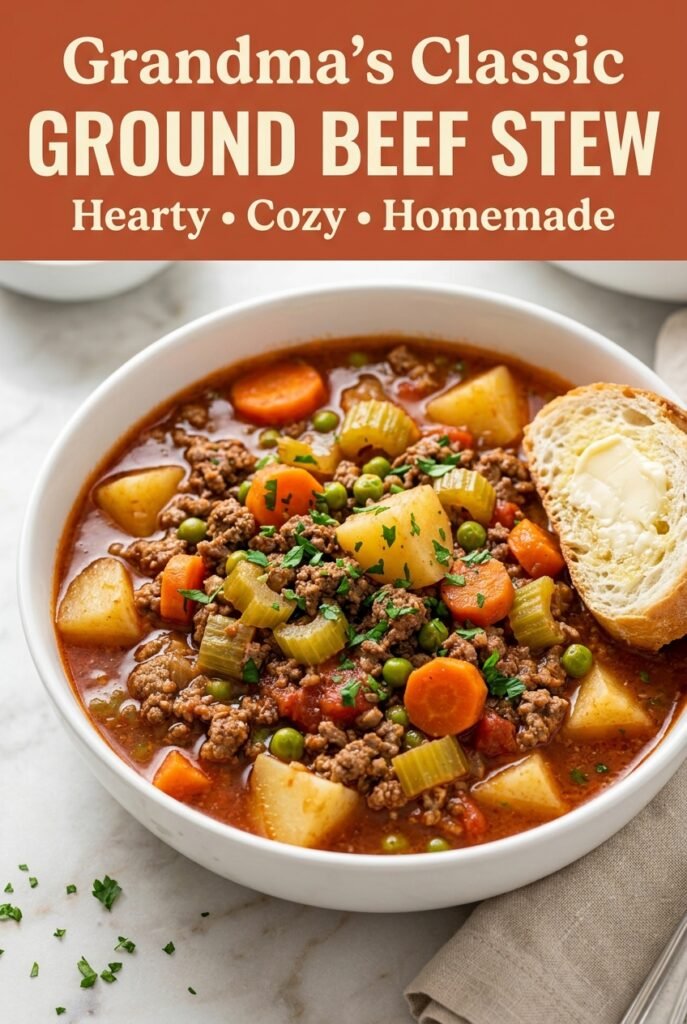
Grandma’s Ground Beef Stew
Grandma's Ground Beef Stew lands with the kind of slow-cooked comfort that feels bigger than the effort it asks of you. The broth turns savory and rich, the potatoes hold…
Tip: save now, read later.
Grandma’s Ground Beef Stew lands with the kind of slow-cooked comfort that feels bigger than the effort it asks of you. The broth turns savory and rich, the potatoes hold their shape without going chalky, and the carrots soften into the pot just enough to sweeten the whole thing. It eats like a meal that simmered all afternoon, even though the active work is mostly browning beef and letting the pot do the rest.
What makes this version work is the balance. Tomato paste gets cooked with the vegetables before any liquid goes in, which deepens the flavor instead of leaving the stew tasting flat and canned. Worcestershire and smoked paprika push the broth into that old-fashioned, beefy place that makes a simple pot of ground beef taste like a real stew rather than soup with vegetables floating in it.
Below, you’ll find the small details that matter most: how to brown the beef so the pot starts with flavor, when to add the peas so they stay bright, and the one simmering habit that keeps the potatoes from turning mushy.
The potatoes held their shape, the broth thickened up beautifully, and the leftovers tasted even better the next day.
Grandma’s Ground Beef Stew is the kind of one-pot dinner that stays hearty from the first bowl to the leftovers.
The Secret to Keeping Ground Beef Stew Rich Instead of Watery
Ground beef stew can turn thin fast if the vegetables and broth are added before the base has any depth. The move that changes everything is cooking the tomato paste with the meat and vegetables long enough for it to darken a shade and cling to the bottom of the pot. That step removes the raw tomato edge and gives the broth a fuller, beefier body.
The other thing that matters is the simmer. A hard boil tosses the potatoes around and breaks them down before the carrots are tender. Keep it at a gentle bubble with the lid on, and the stew stays thick enough to spoon without losing the texture of the vegetables.
What Each Ingredient Is Actually Doing in This Stew
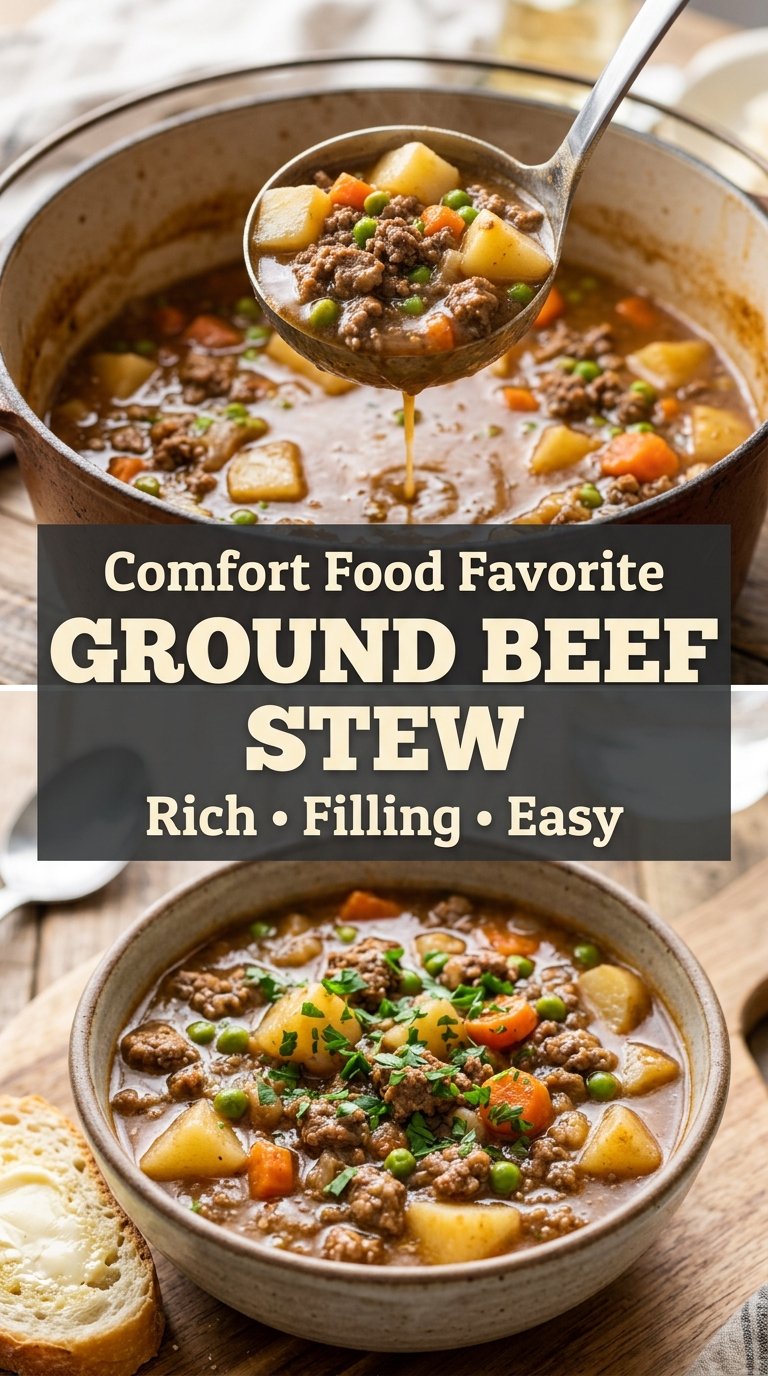
- Lean ground beef — This is the backbone of the stew, so use beef with enough fat to brown well but not so much that the pot turns greasy. If yours is higher than 85/15, drain the excess after browning. If you use very lean beef, a tablespoon of extra olive oil helps keep the flavor from tasting flat.
- Tomato paste — This is what builds body. Cooking it in the pot before adding broth concentrates the flavor and helps the stew taste slow-simmered. Don’t skip the brief cooking time here; raw tomato paste can make the finished broth taste sharp.
- Yukon Gold potatoes — They hold their shape better than russets and give the stew a naturally creamy texture at the edges. If you only have russets, cube them a little larger and watch the simmer closely, since they break down faster.
- Worcestershire sauce — A small amount gives the broth depth and a subtle tang that plain broth can’t match. It’s one of those ingredients that disappears into the background but changes the whole pot.
- Frozen peas — Add them at the end so they stay bright and a little sweet. If they go in too early, they lose their color and turn mealy.
The Pot-Building Steps That Matter Most
Browning the Beef First
Heat the olive oil in a large Dutch oven and let the beef cook undisturbed for a minute or two before breaking it up. That pause helps it brown instead of steam. You want deep brown bits on the bottom of the pot, not just gray crumbles, because those bits carry the flavor of the whole stew.
Softening the Onion and Garlic
Once the beef is browned, add the onion and cook it until the edges look translucent and the pieces slump a little. Stir in the garlic only at the end of this stage, and keep it moving so it doesn’t scorch. Burnt garlic gives the stew a bitter note that never cooks out.
Coating the Vegetables With Tomato Paste
Add the carrots, celery, potatoes, and tomato paste together, then stir until everything looks stained a deep orange-red. This is the point where the stew starts to build its body. If the paste looks dry or sticks to the pan too aggressively, a splash of broth loosens it, but let it cook long enough to lose that raw edge before you add the liquid.
Simmering Until Tender, Not Mushy
After the broth and seasonings go in, bring the pot just to a gentle boil, then drop it to low. The surface should move in slow bubbles, not churn. Check the potatoes with a fork at 35 minutes; they should pierce cleanly but still hold their shape. Stir in the peas near the end so they warm through without losing their color.
How to Adapt This for Different Tables and Different Pantries
Make It Gluten-Free Without Losing Body
This stew is naturally close to gluten-free as written, but check the Worcestershire sauce and broth labels since some brands include gluten. Once you use certified gluten-free versions, the texture stays the same because the stew gets its thickness from the potatoes and tomato paste, not flour.
Swap In Ground Turkey for a Lighter Pot
Ground turkey works if you want a lighter version, but it needs help where beef naturally brings richness. Add an extra teaspoon of olive oil and don’t skip the tomato paste browning step, since that’s what keeps the pot from tasting thin.
Use Frozen Mixed Vegetables When You’re Out of Fresh Carrots and Celery
Frozen mixed vegetables can stand in for some of the produce, but add them during the last 10 minutes so they don’t collapse. You’ll lose a little of the layered flavor from the fresh onion, carrot, and celery base, but the stew still tastes hearty and complete.
Storage and Reheating
- Refrigerator: Keeps well for up to 4 days. The broth thickens as it sits, so the leftovers will look a little denser.
- Freezer: Freezes well for up to 3 months. Cool it completely first, then freeze in portions; the potatoes may soften slightly after thawing, but the stew still reheats nicely.
- Reheating: Warm it gently on the stovetop over medium-low heat with a splash of broth or water if needed. A hard boil can break the potatoes and make the beef grainy.
Answers to the Questions Worth Asking
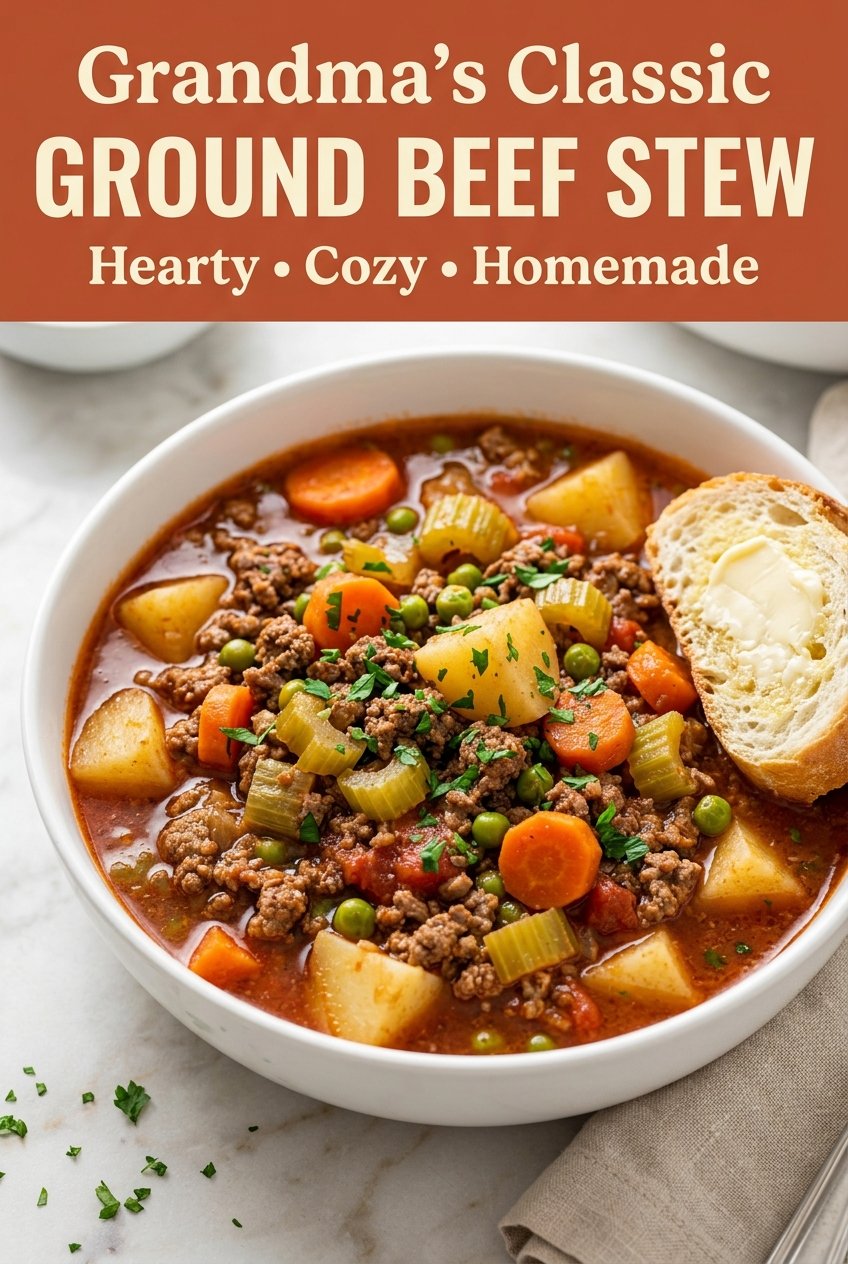
Grandma's Ground Beef Stew
Ingredients
Equipment
Method
- Heat the olive oil in a large Dutch oven over medium-high heat. Add the lean ground beef and cook for 6–8 minutes until browned and no pink remains; drain excess grease if needed.
- Add the diced yellow onion to the Dutch oven and cook for 4 minutes until softened. Stir to lift browned bits from the bottom.
- Stir in the minced garlic and cook for 30 seconds until fragrant. Keep it moving so it doesn’t brown.
- Add the carrots, celery, Yukon Gold potatoes, and tomato paste, then stir for 2 minutes to coat the vegetables. The tomato paste should start to darken slightly.
- Pour in the diced tomatoes, low-sodium beef broth, Worcestershire sauce, Italian seasoning, smoked paprika, salt, black pepper, and bay leaf, then stir well. Make sure everything is evenly distributed.
- Bring the stew to a gentle boil, then reduce the heat to low and cover. Simmer for 35–40 minutes until the potatoes and carrots are fork-tender, with occasional bubbling under the lid.
- Stir in the frozen peas during the last 5 minutes of cooking until heated through. Look for bright green peas throughout the pot.
- Remove the bay leaf and sprinkle with chopped fresh parsley before serving. Serve hot with crusty bread or buttered rolls.
