
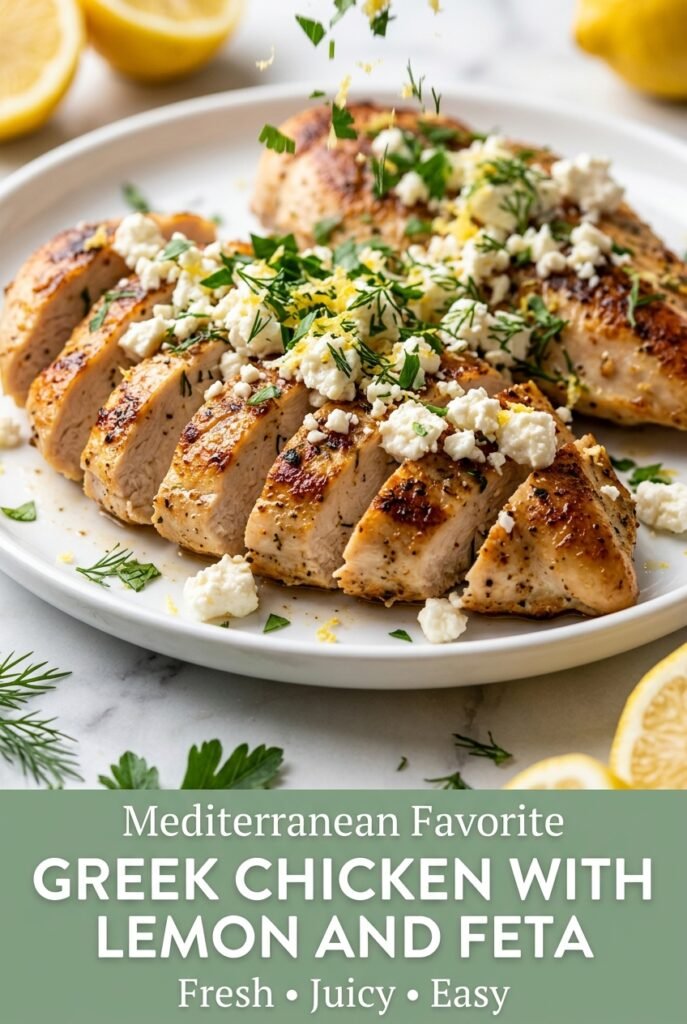
Greek Chicken with Lemon and Feta
Juicy chicken, bright lemon, and salty feta hit the table here in a way that feels fresh without being fussy. The marinade does two jobs at once: it seasons the…
Tip: save now, read later.
Juicy chicken, bright lemon, and salty feta hit the table here in a way that feels fresh without being fussy. The marinade does two jobs at once: it seasons the chicken all the way through and leaves enough surface moisture to help the outside brown instead of drying out. The feta topping finishes the dish with a cool, creamy bite that melts just slightly over the warm chicken and keeps every forkful lively.
The trick is keeping the flavors separate until the end. Lemon juice and garlic go into the marinade with olive oil and dried herbs so the chicken gets punchy, but the feta stays untouched until serving time, where it can keep its crumbly texture instead of turning into a paste. A short marinating window is enough here; longer isn’t better once the lemon is in the mix, since too much time can start to tighten the meat.
Below you’ll find the exact timing that gives you browned chicken without overcooking, plus a few smart swaps for the herbs and serving sides if you want to build this into a weeknight meal prep plan.
The chicken stayed juicy and the lemon-feta topping was the best part — I used the full 2-hour marinade and it browned beautifully in the skillet without sticking.
Save this Greek Chicken with Lemon and Feta for a fast dinner with crisp herbs, tangy cheese, and a bright finish that works with rice, potatoes, or salad.
The Marinade Timing That Keeps Chicken Juicy Instead of Tight
With lemon-based marinades, timing matters more than people think. The acid in the lemon juice starts changing the texture of the chicken fairly quickly, which is great up to a point and then turns against you if it sits too long. For boneless chicken breasts, 30 minutes to 2 hours is the sweet spot: long enough to season, short enough to keep the meat tender.
The other thing that helps is drying the excess marinade on the surface before the chicken hits the pan or grill pan. You want a thin coating of oil, herbs, and garlic, not a puddle. Too much wet marinade on the outside steams the chicken and keeps you from getting those browned edges that give the dish its best flavor.
What Each Ingredient Is Actually Doing in This Dish

- Chicken breasts — Boneless, skinless breasts cook quickly and give you a clean surface for the lemon-herb marinade and feta topping. If you prefer thighs, they work too and stay a little more forgiving, but you’ll need a few extra minutes on the heat.
- Olive oil — This carries the garlic, herbs, and lemon across the chicken and helps the outside brown instead of drying out. Use a decent everyday olive oil here; this is not the place for your most delicate finishing oil.
- Lemon juice and zest — Juice brings the tang, while zest adds the part of the lemon flavor that tastes fragrant instead of sharp. Don’t skip the zest if you can help it, because it’s what keeps the marinade from tasting one-note.
- Feta cheese — Crumbled feta is the piece that makes the dish feel complete. Buy a block and crumble it yourself if you can, since pre-crumbled feta is often drier and less creamy.
- Fresh parsley, dill, and oregano — These herbs keep the topping bright and green, and they give the feta enough freshness to balance the salt. If you only have one fresh herb, use parsley first and let the dried oregano stay in the marinade where it belongs.
Getting the Sear Right Before the Feta Goes On
Mix the Marinade Until It Looks Emulsified
Whisk the oil, lemon juice, zest, garlic, oregano, thyme, paprika, salt, and pepper until the liquid looks slightly thickened and cloudy. That tells you the oil and lemon are combining enough to coat the chicken evenly. If the garlic sits in clumps, the flavor ends up patchy instead of balanced.
Marinate Just Long Enough
Coat the chicken well, cover it, and refrigerate for 30 minutes to 2 hours. At the lower end, you get a clean citrus-herb flavor; at the upper end, the chicken takes on more depth without turning mushy. Go much past that and the lemon starts working against the texture, especially with thinner breasts.
Cook Over Medium-High Heat Without Moving It Too Soon
Set the skillet or grill pan over medium-high heat and let it get properly hot before the chicken goes in. You should hear an immediate, steady sizzle. If the chicken sticks when you try to turn it, give it another minute — it usually releases on its own once the surface browns.
Rest Before Topping
Pull the chicken when it reaches 165°F at the thickest part and rest it for 5 minutes. That pause keeps the juices from running out the second you slice in. Spoon the feta mixture over the warm chicken after resting so it softens just enough without disappearing into the pan.
Three Smart Ways to Adapt This Greek Chicken
Dairy-Free Version With the Same Bright Finish
Skip the feta topping and finish the chicken with chopped parsley, dill, a little extra lemon juice, and a drizzle of olive oil. You lose the creamy-salty bite, but you keep the freshness and the dish still feels complete over rice or potatoes.
Use Chicken Thighs for a More Forgiving Texture
Boneless thighs can replace breasts one-for-one here, and they stay juicier if you tend to cook chicken a little too long. They do need a few extra minutes in the pan, but the richer meat stands up well to the lemon and feta.
Make It Gluten-Free Without Changing a Thing
This recipe is naturally gluten-free as written, so the only thing to watch is what you serve beside it. Keep the sides simple with rice, roasted potatoes, or a salad, and you don’t need to change the chicken at all.
Storage and Reheating
- Refrigerator: Store the chicken and feta separately for up to 4 days. The herbs stay brightest if you add a little fresh parsley after reheating.
- Freezer: The cooked chicken freezes well for up to 2 months, but skip freezing the feta topping because it turns crumbly and grainy after thawing.
- Reheating: Warm the chicken gently in a covered skillet over low heat or in the oven at 300°F until just hot. High heat dries out the breasts fast, so don’t blast them in the microwave unless you’re okay with a tougher texture.
Answers to the Questions Worth Asking
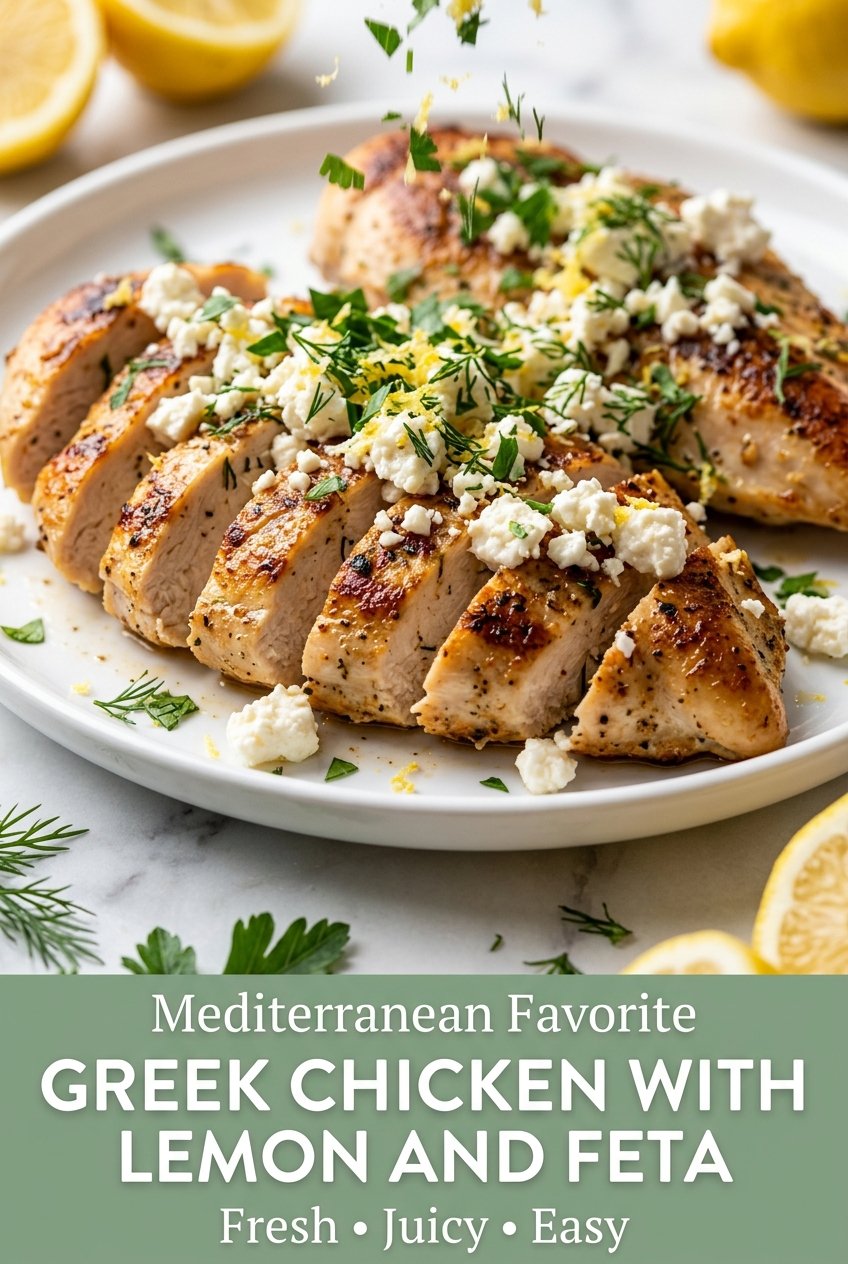
Greek Chicken with Lemon and Feta
Ingredients
Equipment
Method
- Whisk together olive oil, lemon juice, lemon zest, garlic, oregano, thyme, smoked paprika, kosher salt, and black pepper in a large bowl until combined.
- Add the chicken breasts and coat them evenly with the marinade, then cover and refrigerate for 30 minutes to 2 hours.
- Preheat a large skillet or grill pan over medium-high heat until hot.
- Cook the chicken for 6–7 minutes per side, or until nicely browned and the internal temperature reaches 165°F.
- Transfer the chicken to a serving platter and let it rest for 5 minutes before topping.
- Combine the feta cheese, chopped parsley, dill, oregano, olive oil, and lemon juice in a small bowl until evenly mixed.
- Spoon the feta mixture generously over the warm chicken.
- Garnish with additional parsley and lemon wedges, and serve with cucumber slices if using.
