
Old Fashioned Pumpkin Bread
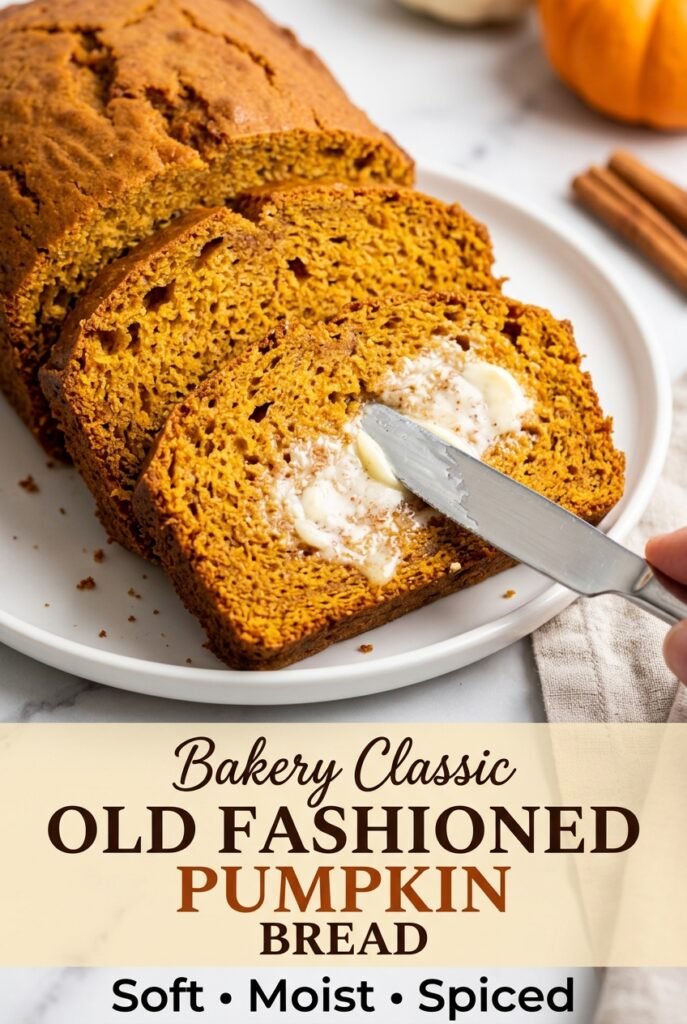
Old Fashioned Pumpkin Bread should slice cleanly, stay moist for days, and carry enough spice to taste like a real loaf, not a cake pretending to be one. The best…
Tip: save now, read later.
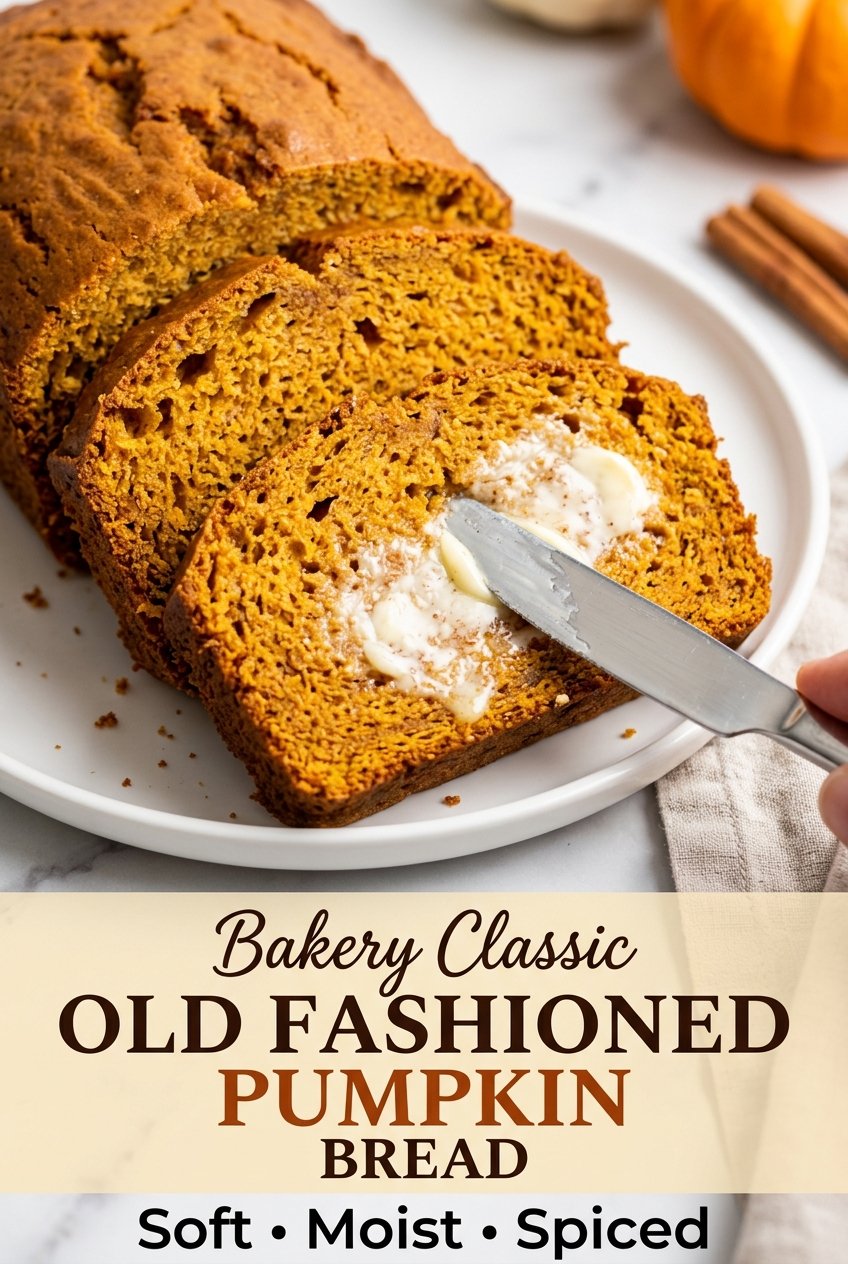
Old Fashioned Pumpkin Bread should slice cleanly, stay moist for days, and carry enough spice to taste like a real loaf, not a cake pretending to be one. The best versions have a tender crumb and a deep pumpkin color with a top that cracks just enough as it bakes. That’s what this loaf does when the batter is mixed gently and the pan is pulled at the right moment.
The combination of oil and applesauce keeps the bread soft without making it heavy, and the mix of cinnamon, pumpkin pie spice, nutmeg, and cloves gives it that classic bakery-style warmth. Pumpkin purée adds moisture, but it also slows down browning, which is why the loaf needs the full bake time for the center to set properly. If you rush it, the middle stays gummy even when the top looks done.
Below, I’ve added the little details that keep this recipe reliable: how to avoid overmixing, what the loaf should look like when it’s ready, and a few smart swaps if you need to adjust for what’s in your pantry.
The loaf baked up with a beautiful crack on top and stayed moist for days. I loved that the pumpkin flavor came through without being too sweet, and the crust had just enough texture.
Save this old fashioned pumpkin bread for the days when you want a moist loaf with warm spice and a crackly golden top.
The Reason This Loaf Stays Moist Without Turning Heavy
Pumpkin bread gets tricky when the batter is overloaded with flour or stirred too much. The loaf starts out looking fine, then bakes into something dense and wet in the middle. This version stays tender because the wet ingredients are built to carry the bread without needing extra mixing to come together.
The other thing working in its favor is the balance between oil and applesauce. Oil gives a soft crumb that stays supple after cooling, while applesauce adds moisture without making the loaf greasy. That matters here because pumpkin purée already brings a lot of water to the batter. If you add too much flour to compensate, the bread turns tight and dry instead of plush.
- The batter should look thick but still spoonable. If it’s stiff like cookie dough, too much flour went in.
- Don’t beat the batter after the dry ingredients are added. A few streaks disappear as it bakes, and overmixing tightens the crumb.
- The loaf is done when the center springs back lightly and a tester comes out clean or with a few moist crumbs, not raw batter.
What Each Ingredient Is Actually Doing in This Pumpkin Bread
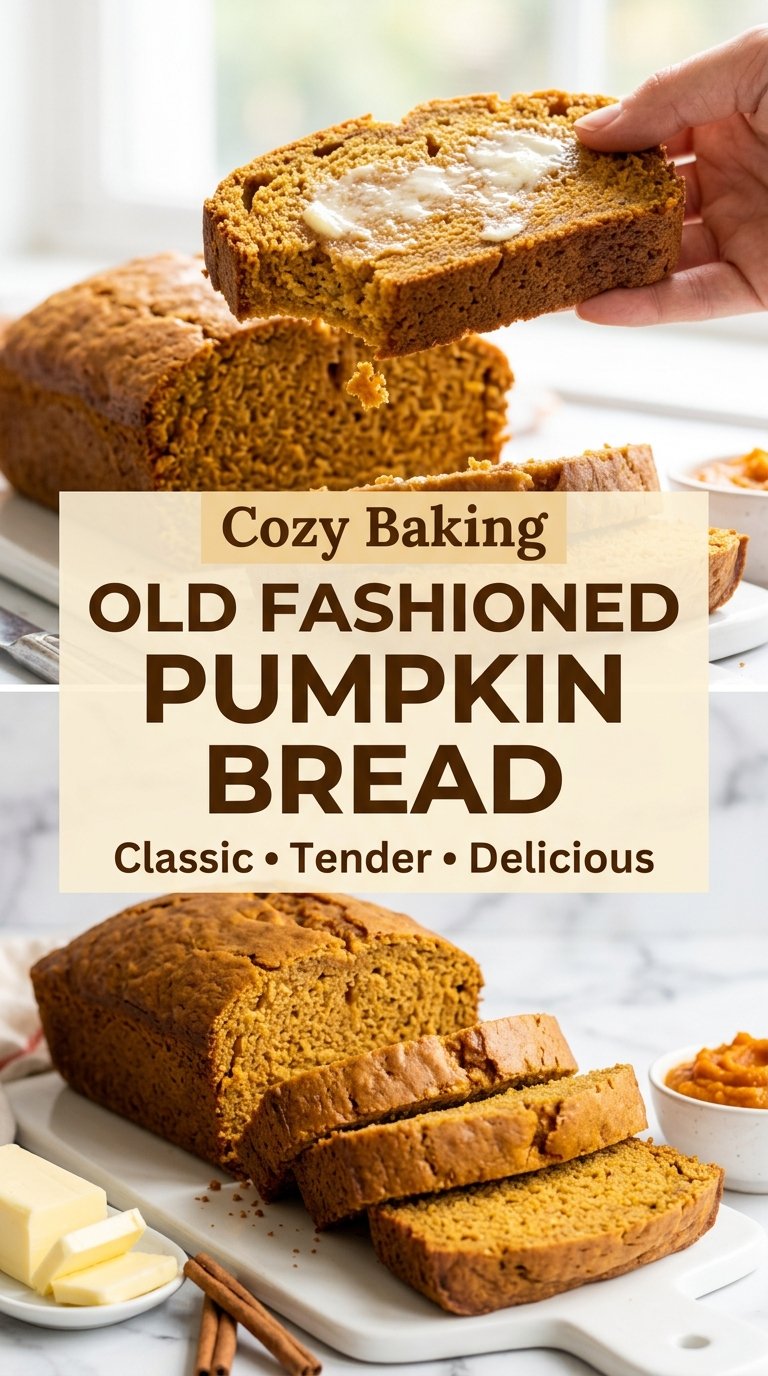
Every ingredient here has a job, and the loaf works because they all pull in the same direction. The pumpkin purée is the backbone of the bread, but canned pumpkin and homemade purée don’t always behave the same way. Canned pumpkin is the safer choice because it’s consistent and usually less watery.
- All-purpose flour — This gives the loaf its structure without making it chewy. Spoon and level it instead of scooping straight from the bag, or you’ll pack in too much and end up with a dry crumb.
- Vegetable oil — Oil keeps pumpkin bread soft even after a day or two. Melted butter adds flavor, but it also firms up more as the loaf cools, so the texture won’t stay quite as tender.
- Unsweetened applesauce — This adds moisture and helps the bread stay plush without extra fat. If you swap it out, the loaf will lose some of that soft, almost velvety middle.
- Pumpkin purée — Use pure pumpkin, not pumpkin pie filling. Pie filling already contains sugar and spice, which throws off both the flavor and the texture.
- Brown sugar — This deepens the flavor and keeps the crumb moist. Light brown sugar is fine; dark brown sugar will give you a little more molasses note.
- Milk — Just enough to loosen the batter so it bakes evenly. Any milk works here, including dairy-free milk with no added sweetness.
Building the Batter So the Loaf Bakes Evenly
Mix the dry ingredients first
Whisk the flour, baking soda, baking powder, salt, and spices together until the color looks even and there are no little pockets of cinnamon or cloves. Those spices need to be spread through the flour before the wet ingredients go in, or you’ll get one bitter bite and one bland one. The baking soda and baking powder also need that even distribution so the loaf rises in a steady way instead of doming oddly or sinking in the center.
Whip the sugars and wet ingredients until smooth
Beat the eggs with both sugars until the mixture loosens and looks glossy. Then add the oil, applesauce, pumpkin purée, vanilla, and milk, stirring until the batter looks thick and uniform. If the pumpkin has a few lumps, press them out with the spoon now; they won’t smooth out later, and they can leave little dense pockets in the finished bread.
Fold, don’t work the batter
Add the dry ingredients in two or three additions and fold just until the flour disappears. The batter will look heavy, and that’s normal. If you keep stirring to make it perfectly smooth, the gluten tightens and the bread turns tough instead of soft. Stop as soon as there are no dry streaks left, then pour it into the pan and smooth the top.
Bake until the center is set, not just the top
The loaf needs enough time for the middle to cook through, so don’t pull it the minute the top looks dark. Pumpkin bread often browns slowly on top while the center finishes, which is why a tester in the very middle matters more than the crust color alone. Cool it in the pan for a short rest, then lift it out so the bottom doesn’t steam and get soggy.
Three Ways to Make This Pumpkin Bread Fit What You Need
Dairy-Free Version
This loaf already leans dairy-free as written if you use a plant-based milk. Almond, oat, or soy milk all work well because they add liquid without changing the structure. Just avoid flavored versions, since vanilla or sweetened milk can push the bread too far into dessert territory.
Less Sweet, More Spice
Cut the granulated sugar by 1/4 cup if you want the pumpkin and spice to come forward more. The loaf will still bake up moist because the applesauce and pumpkin carry plenty of moisture, but the crumb will taste a little more breakfast-like and a little less cake-like.
Add-Ins That Still Keep the Texture Soft
A handful of chopped pecans, walnuts, or chocolate chips works well here, but keep the total to about 3/4 cup so the loaf doesn’t get crowded. Toss add-ins with a spoonful of flour before folding them in. That keeps them from sinking to the bottom of the pan.
Storage and Reheating
- Refrigerator: Store in an airtight container for up to 5 days. The crumb stays moist, though the spices soften a little after the first day.
- Freezer: This freezes well. Wrap the cooled loaf or individual slices tightly in plastic, then foil, and freeze for up to 3 months.
- Reheating: Warm slices in the microwave for 10 to 15 seconds or in a low oven until just heated through. Don’t overheat it or the bread dries out fast, especially on the edges.
Answers to the Questions Worth Asking
Old Fashioned Pumpkin Bread
Ingredients
Equipment
Method
- Preheat the oven to 350°F. Grease and line a 9×5-inch loaf pan with parchment paper.
- Whisk together the all-purpose flour, baking soda, baking powder, salt, ground cinnamon, pumpkin pie spice, ground nutmeg, and ground cloves in a large bowl until evenly combined. Stop mixing once the spices are uniformly distributed.
- Beat the eggs, granulated sugar, and light brown sugar until smooth. Mix in the vegetable oil, unsweetened applesauce, pumpkin purée, vanilla extract, and milk until fully combined.
- Fold the dry ingredients into the wet ingredients until no dry streaks remain, and do not overmix. Scrape the bowl as needed to keep the batter thick and uniform.
- Pour the batter into the prepared loaf pan and smooth the top. Tap the pan gently once to help level the surface.
- Bake at 350°F for 60–70 minutes, or until a toothpick inserted into the center comes out clean and the loaf is deeply golden. If the top darkens too quickly, loosely tent with foil for the remaining time.
- Cool in the pan for 15 minutes. Transfer the bread to a wire rack to cool completely before slicing for clean, tender slices.
