
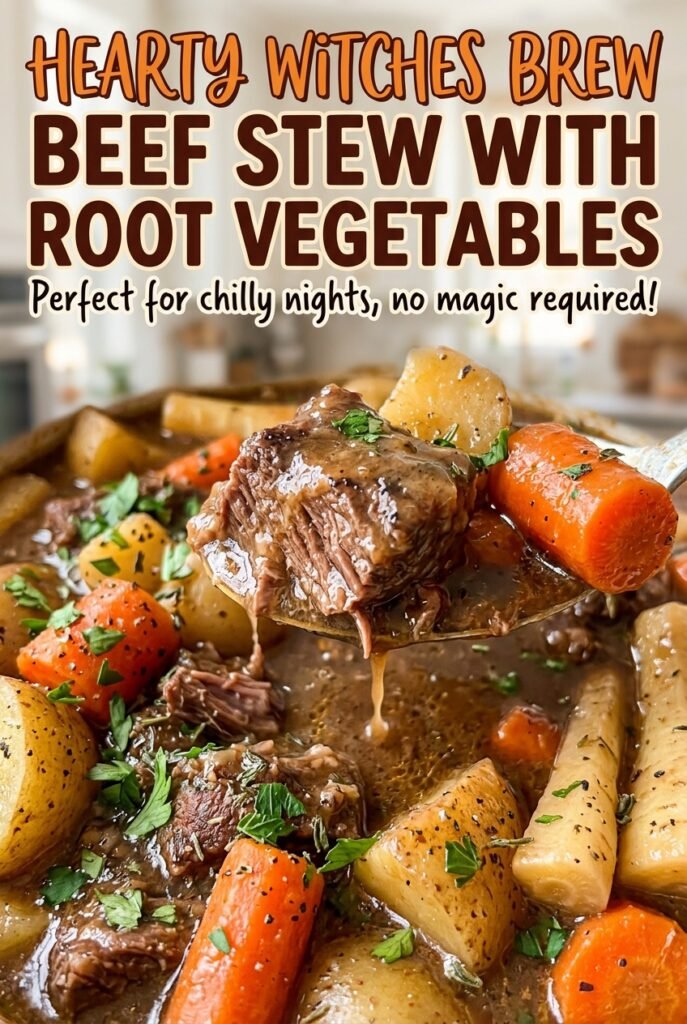
Hearty Witches Brew Beef Stew with Root Vegetables
The beef needs room to brown, so I work in batches and let each piece sit against the hot pot until a deep crust forms. If the Dutch oven is…
Tip: save now, read later.
The beef needs room to brown, so I work in batches and let each piece sit against the hot pot until a deep crust forms. If the Dutch oven is crowded, the meat steams instead, and you lose the browned bits that make the broth taste like it’s been cooking all day. That first sear is worth the extra few minutes in this Hearty Witches Brew Beef Stew with Root Vegetables.
After the wine loosens those savory bits from the bottom, the beef simmers gently until it’s nearly tender. The vegetables go in later, so they have time to soften without spending the entire braise in the pot. I cut them into generous chunks, then let the covered stew finish slowly until the beef pulls apart easily and the roots are tender. The result is a full-bodied, cozy stew with tender beef in every bowl.
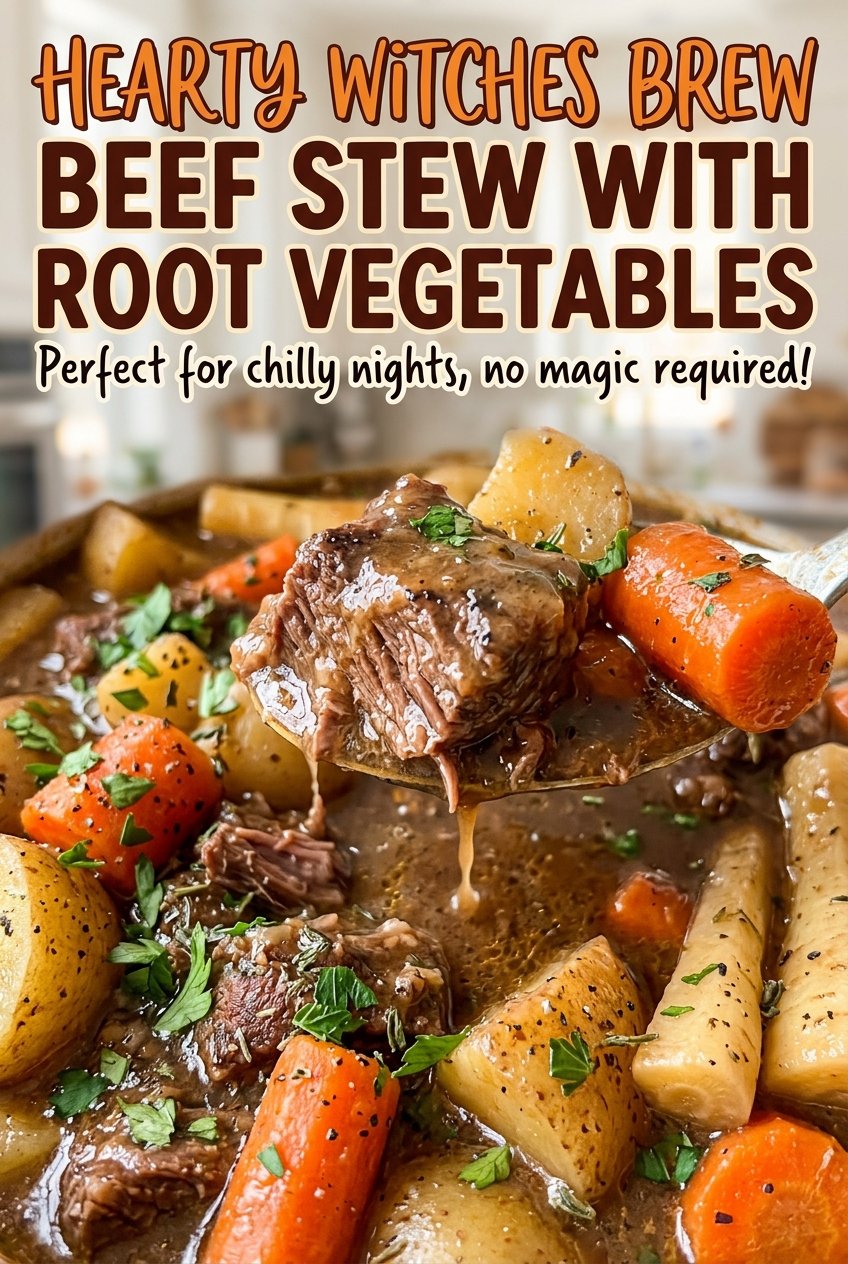
Kitchen Note
When you pour in the wine, scrape the bottom of the pot until the browned bits lift into the liquid. Those bits are concentrated beef and onion flavor, and leaving them stuck to the pot means leaving flavor behind.
Save this Hearty Witches Brew Beef Stew with Root Vegetables for a slow-simmered dinner with fork-tender beef and plenty of root vegetables.
Why the Root Vegetables Go In After the Beef Is Nearly Tender
Beef chuck needs a long, gentle simmer to soften, while cut vegetables need much less time. If everything goes into the pot together, the vegetables sit through the whole beef braise and can turn soft before the meat is ready. Adding them when the beef is nearly tender gives each part the time it needs.
The chunks are intentionally generous, not diced small. Yukon Gold potatoes, carrots, and parsnips are cut into chunks, while the turnip pieces are a little smaller. That sizing helps the vegetables hold their shape through the final covered simmer. Keep the liquid at a gentle simmer rather than a hard boil; a rolling boil can break up the potatoes and make the beef cook less evenly. The goal is a steady, quiet bubble around the edges of the pot.
What the Wine, Chuck, and Root Vegetables Bring to the Pot
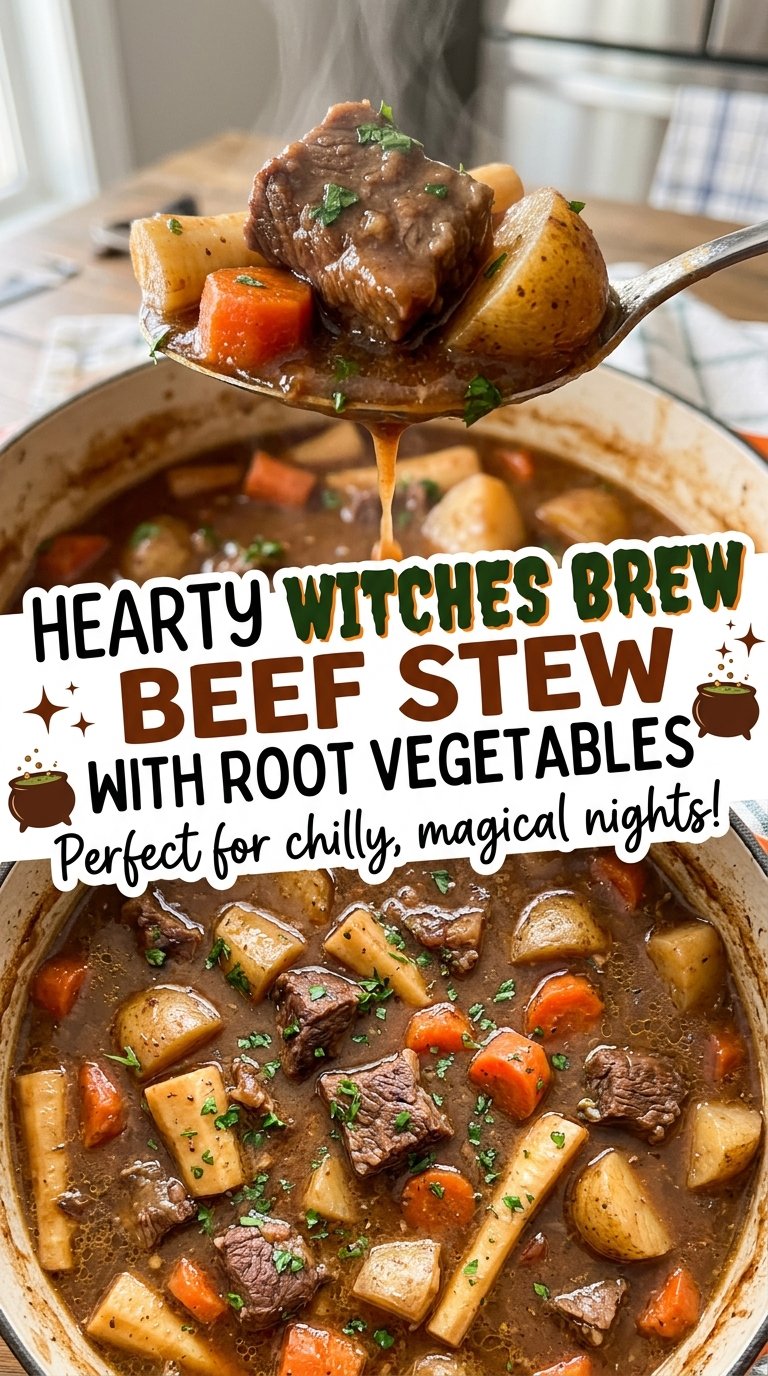
- Beef chuck — Chuck has enough connective tissue to become tender during the long simmer, while leaner cuts are more likely to turn dry. Ask for chuck cut into even pieces, or cube it yourself so it browns at a similar pace.
- All-purpose flour — The light coating helps the beef brown and gives the broth a little body as it cooks. Toss until the pieces look evenly dusted; thick clumps of flour can brown unevenly in the pot.
- Dry red wine and tomato paste — The wine brings acidity and helps lift the browned bits, while tomato paste adds a deeper savory note. Choose a dry red rather than a sweet wine; an expensive bottle isn’t needed for cooking.
- Yukon Gold potatoes — Their creamy texture suits a covered braise, and they hold their shape better than a potato that readily breaks down. Cut the chunks evenly so they soften at about the same rate.
- Carrots, parsnips, and turnip — Together they give the stew a mix of sweetness and earthy bite. Peel the parsnips and turnip, and keep the pieces large enough to stand up to the final simmer.
- Beef broth, Worcestershire, thyme, and bay leaves — These build the savory liquid around the beef. A good everyday broth works well here; the Worcestershire and herbs add depth without needing a specialty stock.
Build the Stew in Four Stages, Then Let the Simmer Do the Work
Brown the Beef Without Crowding the Pot
Toss the beef with the kosher salt and black pepper, then coat it evenly with the flour. Heat the vegetable oil in a 6-quart Dutch oven over medium-high heat. Brown the beef in batches for 3 to 4 minutes per side, then transfer each batch to a plate. If the pieces are touching all around, give them more room; crowding keeps the surfaces from browning properly.
Soften the Onion and Wake Up the Tomato Paste
Add the chopped onion to the pot and cook over medium heat for 5 minutes, stirring occasionally. It should soften and start to look glossy, rather than take on a dark color. Stir in the minced garlic and tomato paste and cook for 1 minute. Keep stirring during that minute so the garlic doesn’t scorch against the hot pot.
Deglaze and Start the Covered Braise
Pour in the dry red wine and scrape up the browned bits from the bottom. Stir in the beef broth, Worcestershire sauce, dried thyme, bay leaves, and browned beef, then bring the mixture to a simmer over medium-high heat. Cover the pot and lower the heat so it simmers gently for 1 1/2 to 2 hours. The beef should be nearly tender before the vegetables go in; a hard boil is not needed.
Add the Roots for the Final Simmer
Stir in the potatoes, carrots, parsnips, and turnip, then cover the Dutch oven again. Simmer gently for 30 to 40 minutes, until the vegetables are tender and the beef pulls apart easily. Check that the larger pieces are soft all the way through, not just at the edges. Remove and discard the bay leaves before serving.
Easy Changes for a Different Pantry or Dietary Need
Make the Stew Gluten-Free
Use a cup-for-cup gluten-free flour blend in place of the all-purpose flour, and choose gluten-free beef broth and Worcestershire sauce. The coating may brown a little differently, but it still seasons the beef and adds body to the broth.
Leave Out the Red Wine
Replace the wine with the same amount of beef broth. You’ll lose the wine’s acidity and some of its depth, but the stew will still have a savory broth from the browned beef, tomato paste, and Worcestershire.
Use Extra Carrots Instead of Parsnips
If parsnips aren’t available, use an equal amount of additional carrots cut into chunks. The stew will be a little sweeter and less earthy, but the carrots work well with the beef and potatoes.
Storage and Reheating
- Refrigerator: Refrigerate in an airtight container within 2 hours and use within 3 to 4 days. The broth may thicken as it chills, and the potatoes will soften a little.
- Freezer: Freeze in airtight containers for up to 3 months. Thaw overnight in the refrigerator; the potatoes may be softer after freezing and thawing.
- Reheating: Warm gently on the stovetop, stirring now and then, until the stew reaches 165°F. Avoid a hard boil, which can break up the softened potatoes.
Questions That Come Up While the Stew Simmeres
Hearty Witches Brew Beef Stew with Root Vegetables
Ingredients
Equipment
Method
- In a large bowl, toss the beef with the salt and pepper.
- Toss the beef with the flour until evenly coated.
- Heat the vegetable oil in a 6-quart Dutch oven over medium-high heat.
- Brown the beef in batches for 3 to 4 minutes per side, then transfer the browned beef to a plate.
- Add the onion to the pot and cook over medium heat for 5 minutes, stirring occasionally.
- Stir in the garlic and tomato paste and cook for 1 minute.
- Pour in the wine and scrape up the browned bits.
- Stir in the beef broth, Worcestershire sauce, thyme, bay leaves, and browned beef.
- Bring to a simmer over medium-high heat.
- Cover and simmer gently over low heat for 1 1/2 to 2 hours, until the beef is nearly tender.
- Stir in the potatoes, carrots, parsnips, and turnip.
- Cover and simmer gently for 30 to 40 minutes, until the vegetables are tender and the beef pulls apart easily.
- Remove and discard the bay leaves before serving.
