
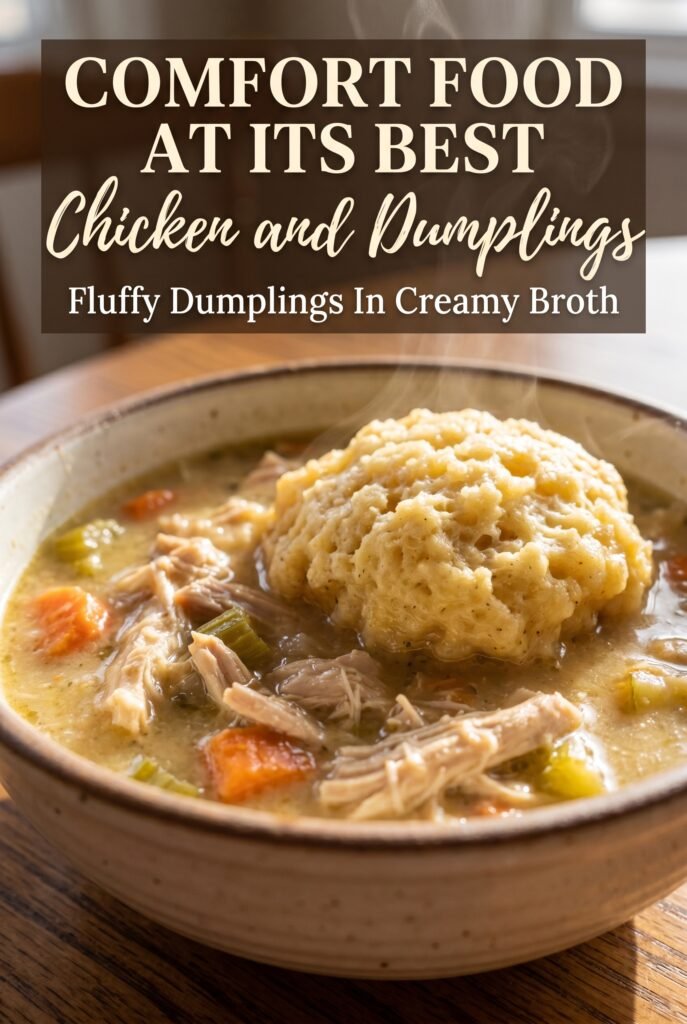
Homestyle Chicken and Dumplings
Tender chicken, soft vegetables, and fluffy dumplings floating in a creamy broth is the kind of bowl that stops conversation for a minute. The best chicken and dumplings don’t taste…
Tip: save now, read later.
Tender chicken, soft vegetables, and fluffy dumplings floating in a creamy broth is the kind of bowl that stops conversation for a minute. The best chicken and dumplings don’t taste heavy or gluey; they taste cozy, with a broth that stays silky and dumplings that turn out pillowy instead of dense. That balance is what keeps this dish in the rotation.
The broth starts with a quick vegetable base and a little flour, which gives it body without turning it pasty. The dumplings are stirred together just until combined and then cooked under a tight lid, which is the part that matters most. That trapped steam is what puffs them up and cooks the tops at the same time, so lifting the lid too early is how people end up with dumplings that are wet in the middle and flat on top.
Below you’ll find the exact method that keeps the broth creamy, plus the few small details that make the dumplings light instead of tough. There’s also a practical note on what to swap when you’re missing an ingredient, because this is the kind of dinner people actually make on a weeknight.
The dumplings came out fluffy all the way through, and the broth stayed creamy instead of getting thick and gummy. I followed the lid rule and they were perfect.
Save this chicken and dumplings recipe for the night you want a creamy broth and fluffy homemade dumplings without a lot of fuss.
The Lid Stays Down for a Reason
The dumplings are the make-or-break part of this dish, and the biggest mistake is treating them like biscuits. They don’t need to brown, and they don’t need to be checked halfway through. They need steady steam. Once the dough goes onto the simmering broth, the pot should be covered tightly so the tops cook from trapped heat instead of drying out on top while the centers stay wet.
The other common problem is boiling the soup too hard before the dumplings go in. A hard boil breaks the broth into aggressive bubbles that can tear the dumplings and make them heavy. Keep the soup at a gentle simmer with small bubbles moving across the surface. That gives the dumplings a soft landing and keeps the broth creamy.
- Gentle simmer: A rolling boil is too rough here. Small, steady bubbles are all you need.
- Tight lid: If steam escapes, the dumplings lose the heat that cooks their tops.
- Don’t overmix the dough: Stir until the flour disappears. A shaggy dough makes tender dumplings; a smooth, beaten dough makes tough ones.
- Simmer before serving: If the broth is too thin after the dumplings cook, give it a few extra minutes uncovered, but do that only after they’re done.
What Each Ingredient Is Actually Doing in This Dish

- Butter: This starts the vegetables and gives the broth a richer base. You can use olive oil in a pinch, but you’ll lose some of that round, classic comfort-food flavor.
- Onion, carrots, and celery: This is the backbone of the soup. Dice them small so they soften evenly and don’t stay crunchy under the dumplings.
- Flour: A little flour in the soup thickens the broth just enough to coat a spoon. For the dumplings, all-purpose flour gives the right structure; bread flour makes them tighter and less tender.
- Chicken broth: Use a broth you’d actually drink on its own. A thin, bland broth stays thin and bland after the cream goes in.
- Cooked shredded chicken: Rotisserie chicken works well here because it stays moist and shreds easily. If you cook your own, pull it while it’s still juicy; dry chicken gets even drier in the simmer.
- Heavy cream: This gives the broth its soft, velvety finish. Half-and-half works if that’s what you have, but the soup will be a little lighter and less rich.
- Baking powder: This is what lifts the dumplings. Old baking powder is a common reason dumplings come out flat and heavy, so check the date if yours has been in the pantry for a while.
- Whole milk: The fat in whole milk helps the dumplings stay tender. Lower-fat milk works, but the texture is a little less soft.
Building the Soup Before the Dumplings Go In
Softening the Vegetables
Start by cooking the onion, carrots, and celery in butter until the onion turns translucent and the edges of the carrots look slightly glossy. You’re not trying to brown them; you’re trying to take the raw edge off and build a sweet base. If the vegetables are still hard when the broth goes in, they’ll stay a little underdone even after the simmer.
Thickening Without Lumps
Sprinkle the flour over the vegetables and stir until everything looks pasty and coated. That quick roux needs a minute to cook so the soup doesn’t taste floury. Whisk the broth in slowly, especially at the beginning, because that’s where lumps form. If you pour it all in at once, the flour clings to itself instead of dissolving into the liquid.
Adding the Chicken and Cream
Once the broth is smooth, add the chicken, salt, pepper, and thyme and let the soup simmer until the flavors come together. Stir in the cream after the chicken has heated through, not before. Cream can handle heat, but it behaves best when the soup isn’t boiling hard. That keeps the broth silky instead of grainy.
Dropping and Steaming the Dumplings
Mix the dumpling dough just until combined. It should look a little rough and sticky. Drop spoonfuls onto the surface of the simmering soup, then cover the pot immediately and leave it alone for 15 minutes. If you lift the lid, even for a second, you let out the steam that cooks the dumplings from the top down.
Make It a Little Richer
Add a small splash of white wine after the vegetables soften and let it cook down before the flour goes in. It gives the broth a deeper savory note without making it taste sharp. This works especially well if your chicken broth is on the mild side.
Dairy-Free Version
Use olive oil instead of butter, unsweetened dairy-free milk in the dumplings, and a plain unsweetened plant cream or coconut cream in the soup. The texture stays comforting, though the flavor shifts a little away from the classic creamy finish.
Gluten-Free Adaptation
Use a 1:1 gluten-free flour blend in both the soup and the dumplings. The dumplings may be a touch more delicate, so keep the lid on and resist stirring after they go into the pot. That extra steam is what helps them hold together.
Vegetable-Heavy Shortcut
Add peas, corn, or chopped green beans during the last few minutes of the chicken simmer. They bring color and a little sweetness without changing the texture of the dumplings. Frozen vegetables work fine here and go straight into the pot.
Storage and Reheating
- Refrigerator: Store leftovers for up to 3 days. The dumplings will absorb more broth as they sit, so expect a thicker texture the next day.
- Freezer: The soup base freezes better than the finished dish. For best results, freeze the soup without dumplings, then make fresh dumplings when you reheat it.
- Reheating: Warm it gently on the stove over low heat with a splash of broth or water. High heat can make the dairy separate and turn the dumplings gummy.
Answers to the Questions Worth Asking
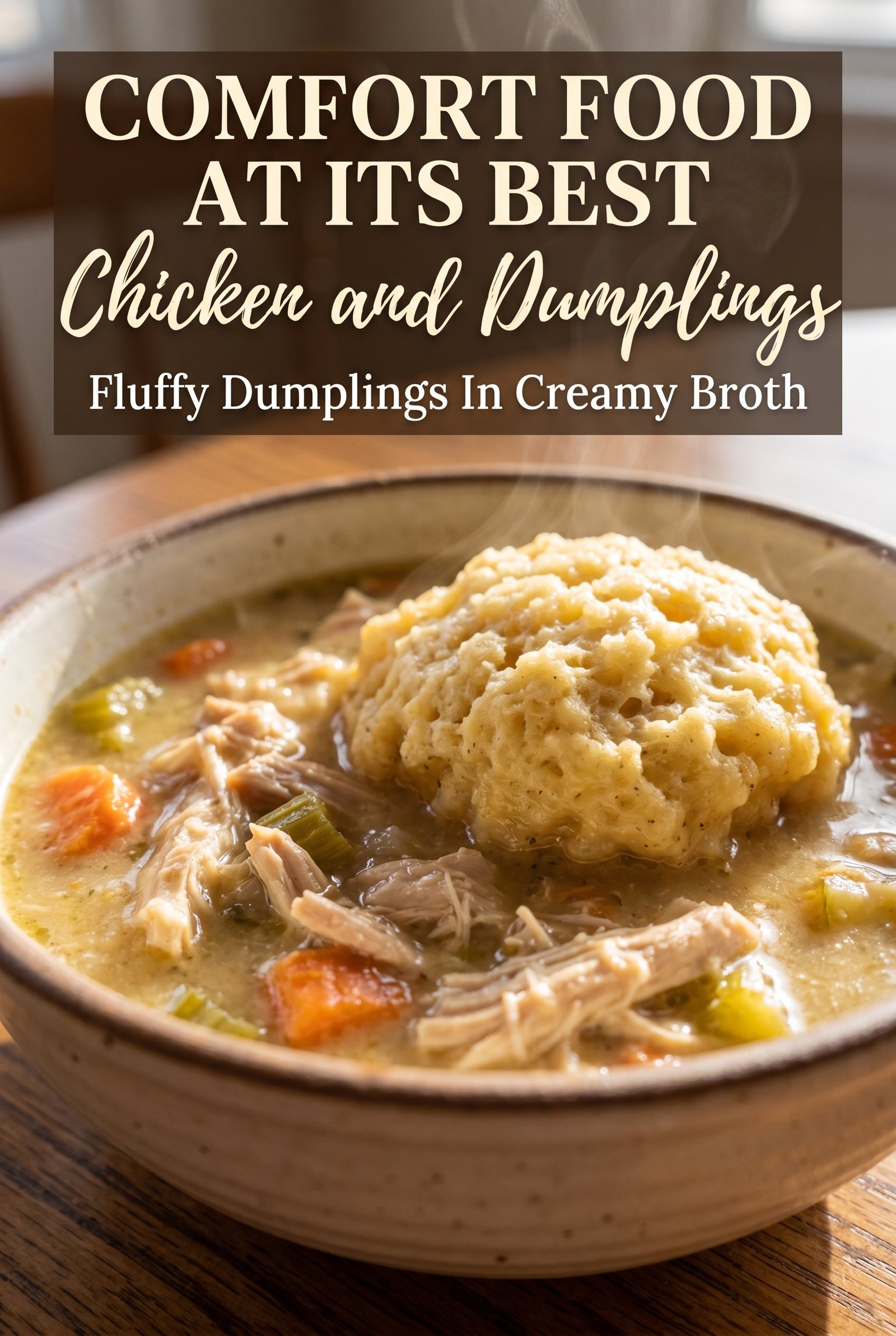
Homestyle Chicken and Dumplings
Ingredients
Equipment
Method
- Melt the butter in a large Dutch oven over medium heat until fully melted and foamy.
- Add the diced onion, sliced carrots, and sliced celery, then cook for 5 minutes, stirring once or twice, until beginning to soften.
- Stir in the minced garlic and cook for 30 seconds, just until fragrant.
- Sprinkle the all-purpose flour over the vegetables and stir well to coat, cooking for 1 minute to remove raw flour taste.
- Slowly whisk in the chicken broth until smooth, keeping the mixture free of lumps.
- Add the shredded chicken, salt, black pepper, and dried thyme, then bring to a simmer.
- Simmer for 15 minutes, stirring occasionally, until the flavors meld and the soup thickens slightly.
- Stir in the heavy cream and simmer for 2 minutes to warm through.
- In a bowl, combine the flour, baking powder, and salt for the dumpling dough.
- Mix the melted butter and whole milk into the dry ingredients until just combined, with no dry flour left.
- Drop spoonfuls of dumpling dough onto the simmering soup, keeping space between each dumpling.
- Cover tightly and cook for 15 minutes at a gentle simmer without lifting the lid.
- Finish by sprinkling with chopped parsley and serve hot after confirming the dumplings are fluffy and cooked through.
