

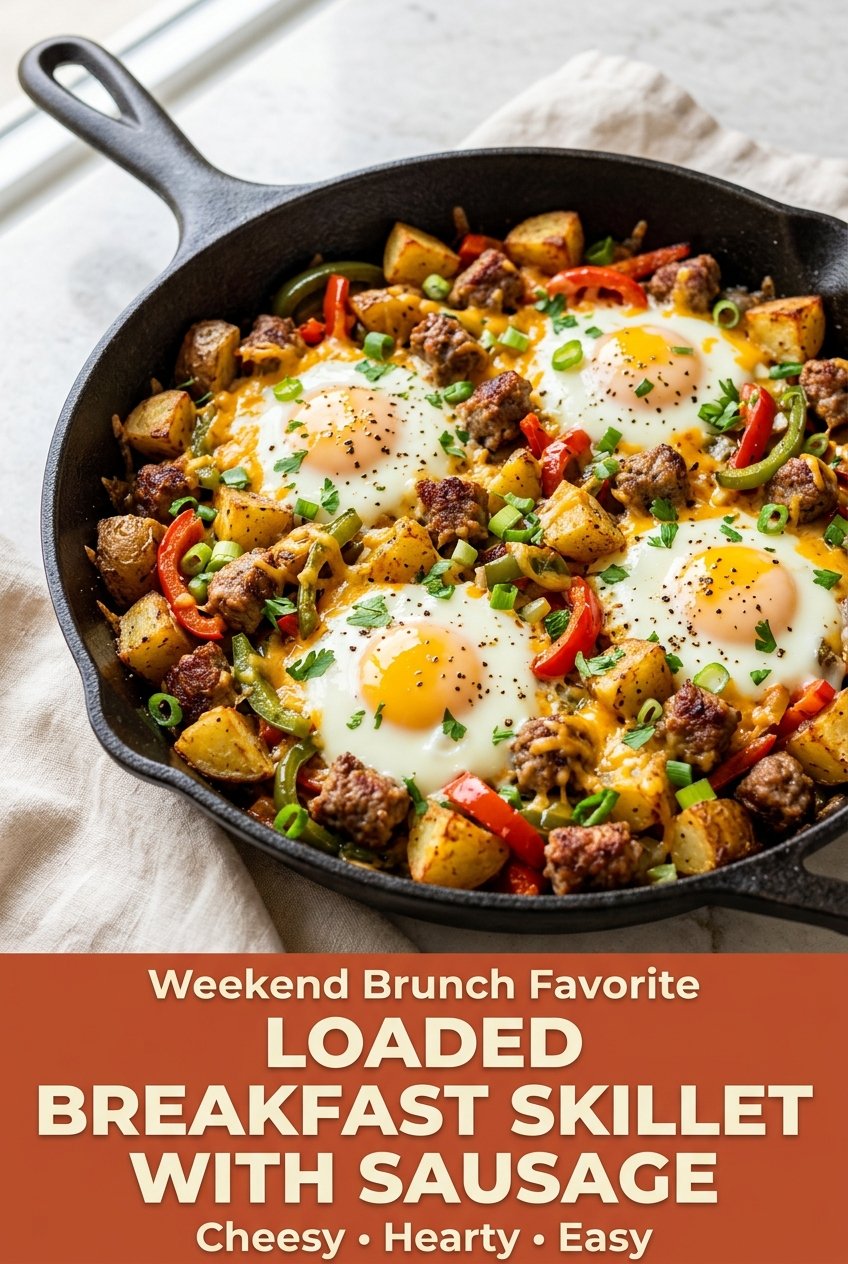
Loaded Breakfast Skillet with Sausage and Peppers
Crispy potatoes, browned sausage, sweet peppers, and just-set eggs all in one skillet is the kind of breakfast that disappears fast. The best part is the contrast: the potatoes get…
Tip: save now, read later.
Crispy potatoes, browned sausage, sweet peppers, and just-set eggs all in one skillet is the kind of breakfast that disappears fast. The best part is the contrast: the potatoes get deeply golden on the bottom, the sausage brings salt and spice, and the eggs turn the whole pan into something you can scoop up with a fork straight from the skillet.
What makes this version work is the order. The sausage goes first so it leaves flavorful drippings behind, and the potatoes get time to brown before the peppers and onions go in. If you rush the potato stage, they soften before they ever crisp. A heavy cast-iron skillet helps a lot here because it holds heat steady and gives you that good crust instead of a soft, steamed pile.
Below, I’ve included the small details that matter most: how to get the potatoes tender and browned at the same time, when to cover the pan so the eggs set without drying out, and a few swaps that still keep the skillet hearty.
The potatoes came out crisp on the edges and the eggs set perfectly under the cheese. I used hot sauce on top and my husband kept going back for another scoop.
Love the crispy potatoes and runny eggs in this loaded breakfast skillet? Save it to Pinterest for a hearty one-pan brunch that eats like a full meal.

The Trick to Crisp Potatoes Before the Eggs Go In
The potatoes are the part that can make or break the skillet. If they go into the pan and get stirred too often, they never get the chance to brown; they just soften and start to fall apart. Give them enough space, enough heat, and enough time to sit against the pan so the cut sides can turn golden before you add anything wet.
The other common failure is adding the peppers and onions too early. They release moisture, and that moisture turns the potatoes limp. Cook the potatoes first, then add the vegetables once the edges are already browned. That keeps the skillet tasting roasted instead of soggy.
- Baby Yukon Gold potatoes — Their waxy texture holds shape after dicing, and they brown with a creamy center instead of turning mealy. Russets can work, but they break down more easily and need more careful stirring.
- Breakfast sausage — This seasons the whole pan and leaves enough fat behind to help the vegetables cook. If your sausage is very lean, add a touch more oil before the potatoes go in.
- Sharp cheddar — Sharp cheese stands up to the sausage and peppers without disappearing. Mild cheddar melts fine, but it gives the skillet a softer, less defined finish.
- Green onions and parsley — These finish the dish with freshness after the heavy, savory layers. Skip them and the skillet still works, but the top tastes flatter.
Building the Skillet in the Right Order
Brown the Sausage First
Start the sausage in a hot skillet and break it into crumbles as it cooks. You want browned edges, not pale cooked meat, because that browning becomes part of the flavor in the potatoes and peppers that follow. If the pan looks dry before the sausage is finished, the heat is too low; it should sizzle steadily and render enough fat to coat the bottom.
Let the Potatoes Sit Long Enough to Crisp
Add the diced potatoes and leave them alone for a minute or two at a time so one side can develop color. Stirring constantly keeps them moving and prevents that crust from forming. They’re ready for the vegetables when they’re fork-tender with deep golden patches on the outside, not when they look fully browned all over.
Cook the Peppers and Onions After the Potatoes
Once the potatoes are browned, add the peppers, onion, garlic, and spices. The goal here is softened vegetables with a little bite left, not a puddle in the pan. If the garlic starts to darken too fast, lower the heat immediately; burnt garlic turns the whole skillet bitter.
Set the Eggs Under a Lid
After the sausage goes back in, make six wells and crack the eggs into them. Sprinkle the cheese over the top, cover the skillet, and cook over medium-low heat until the whites are set and the yolks are where you want them. High heat will overcook the bottoms before the tops catch up, so keep the temperature gentle once the eggs go in.
Swap the Sausage for Bacon or Ham
Bacon gives you a smokier skillet and a little more crisp texture, while diced ham makes the dish milder and saltier. If you use either one, cook it first and keep enough fat in the pan to help the potatoes brown. Chicken sausage works too, but it needs a little extra oil because it won’t render as much fat.
Make It Dairy-Free
Skip the cheddar or use a dairy-free shredded cheese that melts well. The skillet still works because the eggs and sausage carry the richness, though you lose a little of the creamy, salty finish on top. Add a few extra green onions and a splash of hot sauce to keep the dish lively.
Turn It Into a Vegetarian Breakfast Skillet
Leave out the sausage and use extra olive oil or butter to help the potatoes brown. Add mushrooms or extra peppers for more substance, and season a little more aggressively because you’re losing the salt and spice from the meat. A vegetarian sausage also works if you want to keep the same hearty feel.
Storage and Reheating
- Refrigerator: Store leftovers in an airtight container for up to 4 days. The potatoes soften a little, but the flavor holds up well.
- Freezer: It freezes, but the potatoes and eggs both change texture after thawing, so I don’t recommend it unless you’re okay with a softer result.
- Reheating: Reheat in a skillet over medium-low heat with a lid on for the first few minutes so the eggs warm through without drying out. The microwave works in a pinch, but the potatoes stay much better in a pan.
Questions I Get Asked About This Recipe
Loaded Breakfast Skillet with Sausage and Peppers
Ingredients
Equipment
Method
- Heat 2 tbsp olive oil in a large cast-iron skillet over medium-high heat until shimmering. Add the breakfast sausage and cook for 6–8 minutes, breaking it into crumbles until browned and visibly cooked through.
- Transfer the browned sausage to a plate, leaving any drippings in the skillet so the potatoes can crisp.
- Add the diced baby Yukon Gold potatoes to the skillet and cook for 12–15 minutes, stirring occasionally. Continue until the potatoes are golden brown and fork-tender.
- Stir in the diced bell peppers, onion, and minced garlic, along with smoked paprika, garlic powder, onion powder, kosher salt, and black pepper. Cook for 5 minutes until the vegetables soften and turn glossy.
- Return the cooked sausage to the skillet and stir everything together so the seasoning coats the mixture evenly.
- Make six small wells in the mixture and crack one egg into each well. Keep the eggs centered so they cook without running into the potatoes.
- Sprinkle the shredded sharp cheddar cheese over the skillet. Cover and cook over medium-low heat for 5–7 minutes until the egg whites are set and the yolks reach your preferred doneness, indicated by firm whites and yolks that jiggle or set to your liking.
- Garnish with chopped green onions and chopped fresh parsley. Serve immediately while the cheese is melted and the potatoes are crisp, with hot sauce on the side if desired.
