
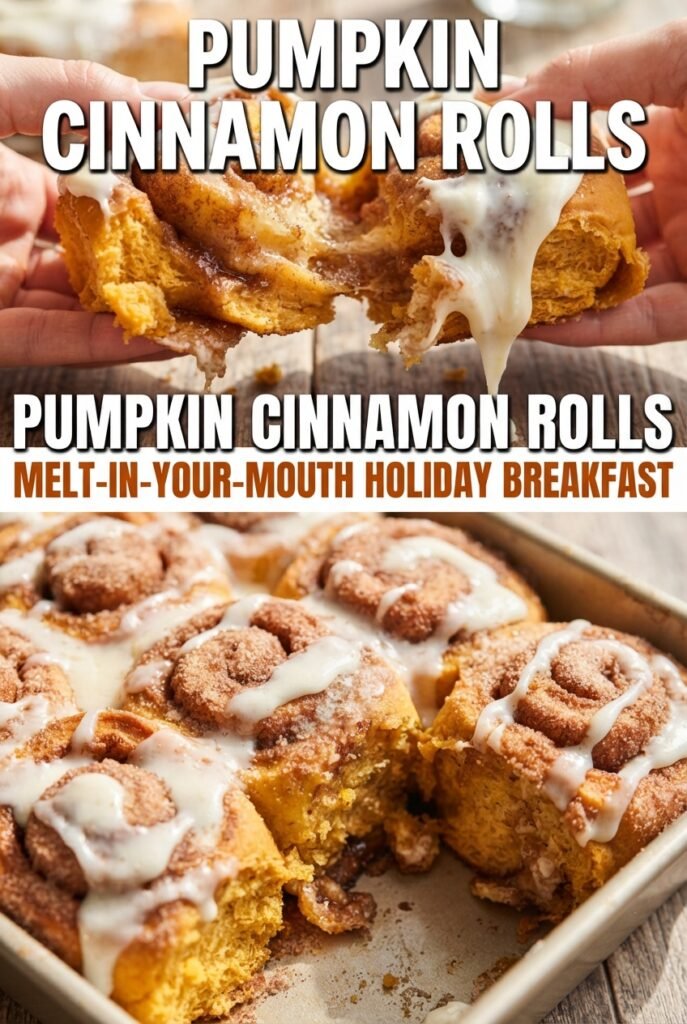
Soft Pumpkin Cinnamon Rolls with Cream Cheese Frosting
Pillowy pumpkin cinnamon rolls have a way of disappearing fast because they hit that sweet spot between soft bread and sticky, cinnamon-laced pastry. The dough bakes up tender and plush…
Tip: save now, read later.
Pillowy pumpkin cinnamon rolls have a way of disappearing fast because they hit that sweet spot between soft bread and sticky, cinnamon-laced pastry. The dough bakes up tender and plush instead of bready, and the cream cheese frosting melts into the spirals while the rolls are still warm enough to soak it in. You get all the comfort of classic cinnamon rolls, with pumpkin bringing a little extra moisture and a gentle, earthy sweetness that makes each bite feel rich without being heavy.
The trick is keeping the dough soft and only slightly tacky, then rolling it tightly enough that the swirls hold after baking. Pumpkin puree adds moisture, so the flour amount matters more here than in a standard roll dough. Too much and the rolls turn dense. Too little and they’ll spread instead of rise into tall, fluffy spirals. The filling also needs truly soft butter so it spreads cleanly to the edges and helps the sugar melt into a proper ribbon rather than clumping in pockets.
Below, I’ll walk you through the part that matters most: getting the dough smooth, shaping the rolls neatly, and knowing exactly when they’re baked through. I’ve also included the overnight make-ahead option, because these are even better when the prep is done the night before and all you have to do in the morning is bake and frost.
The rolls were unbelievably soft, and the centers baked all the way through without drying out. The frosting melted into the spirals just enough that every bite tasted like pumpkin and cinnamon together.
Save these soft pumpkin cinnamon rolls for a weekend breakfast with pillowy dough and thick cream cheese frosting.
The Difference Between Soft Rolls and Heavy Ones Starts With the Dough
Pumpkin cinnamon roll dough behaves differently from a plain sweet dough because the puree brings both moisture and weight. If you add flour until the bowl looks clean, the rolls will bake up tight and dry. The better signal is the feel: soft, supple, and just barely tacky, with enough structure to knead without sticking to every surface. That gives you rolls that rise into tall spirals instead of spreading into squat spirals in the pan.
The other place people lose softness is in the first rise. This recipe uses instant yeast and a short rest before shaping, which keeps the dough moving without overworking it. If your kitchen is cool and the dough doesn’t look much bigger after the rest, give it time. A warm, puffy dough makes a dramatic difference in the oven, and rushing this stage is how you end up with compact centers and thick, doughy edges.
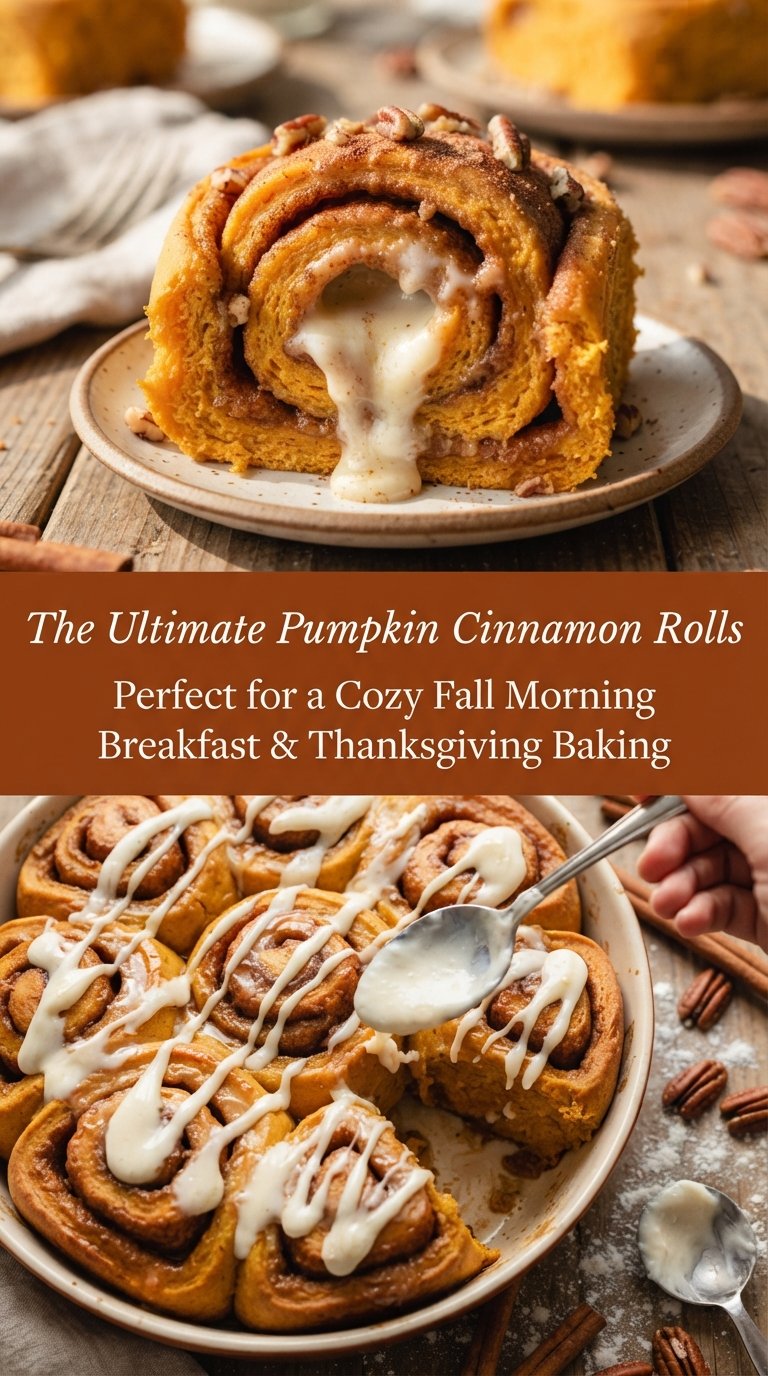
What Each Ingredient Is Doing in This Dish
- Whole milk — Warm milk wakes up the yeast and helps the dough mix into a soft, elastic mass. It should feel warm, not hot; anything above 120°F can slow or kill the yeast.
- Instant yeast — This is what makes the one-rise method work. You can swap active dry yeast, but it should be bloomed first and may take a little longer to rise.
- Pumpkin puree — Use plain pumpkin puree, not pumpkin pie filling. The puree gives the dough moisture and color without making it cakey, but it also means you may not need the full amount of flour.
- Brown sugar — It appears in both the dough and the filling, and it matters in both places. In the dough, it helps the crumb stay tender; in the filling, it melts into that caramel-like spiral.
- Butter — Melted butter goes into the dough for softness, while very soft butter in the filling spreads evenly. Cold butter in the filling tears the dough and leaves dry patches of cinnamon sugar.
- Pumpkin pie spice and cinnamon — The pumpkin pie spice gives the dough a warm background note, while the cinnamon in the filling does the loud work. Don’t overload either one; the pumpkin should still taste like pumpkin.
- Cream cheese — Softened cream cheese gives the frosting its tang and thickness. If it’s cold, the frosting turns lumpy and won’t melt smoothly over warm rolls.
How to Keep the Spirals Tight and the Centers Baked Through
Let the Yeast Wake Up First
Stir the warm milk, yeast, and brown sugar together until the sugar dissolves, then wait for the foam to form. That foamy top tells you the yeast is alive and ready. If nothing happens after 5 minutes, the milk was probably too hot, too cold, or the yeast is past its prime, and the dough won’t rise with much energy.
Build a Soft Dough, Not a Dry One
Whisk in the pumpkin, butter, egg, salt, and spice, then add the flour gradually. Stop when the dough pulls together and still feels a little tacky, because the flour will tighten as you knead. If you add all 4 cups automatically, the rolls can turn dense once baked. A soft dough is the difference between tender spirals and something that bakes up chewy in the middle.
Roll, Fill, and Cut Without Squeezing Out the Layers
Roll the dough into a neat rectangle and spread the butter all the way to the edges. Sprinkle the filling evenly, then roll from the long side into a tight log without stretching the dough thin. For clean cuts, use floss or a serrated knife in a gentle sawing motion. If you press straight down, you’ll squash the layers and the rolls won’t rise evenly in the pan.
Bake Until the Centers Reach the Right Temperature
These rolls should look deeply golden on top and feel set in the center, not wet or doughy. The most reliable sign is temperature: 190°F in the middle. If the tops color before the centers are done, tent loosely with foil for the last few minutes. That keeps the sugar from overbrowning while the middle finishes baking.
How to Adapt These Rolls for Different Mornings
Overnight Pumpkin Cinnamon Rolls
Shape the rolls, place them in the pan, cover tightly, and refrigerate overnight instead of doing the final rise at room temperature. In the morning, let them sit out for about 1 hour before baking so they can take the chill off and puff up a little. This keeps the texture light and makes breakfast feel effortless.
Dairy-Free Version
Use a plain unsweetened non-dairy milk and a good dairy-free butter substitute in both the dough and filling. The rolls will still be soft, but the frosting will need a dairy-free cream cheese that’s thick enough to hold its shape. Expect a slightly softer set in the frosting, which is normal.
Less Sweet Frosting
Cut the powdered sugar back a little and add just enough milk to keep the frosting spreadable. You’ll get a tangier topping that tastes less like icing and more like a true cream cheese glaze. That works well if you want the pumpkin and spice to stay front and center.
Storage and Reheating
- Refrigerator: Store frosted or unfrosted rolls in an airtight container for 3 to 4 days. The dough stays soft, but the frosting will firm up in the fridge.
- Freezer: Freeze baked rolls without frosting for best results. Wrap them well and freeze for up to 2 months, then thaw overnight in the refrigerator.
- Reheating: Warm individual rolls in the microwave for 20 to 30 seconds or cover a pan of rolls with foil and heat in a 300°F oven until softened. Don’t blast them too long or the frosting and dough will both turn greasy and dry out at the edges.
Answers to the Questions Worth Asking
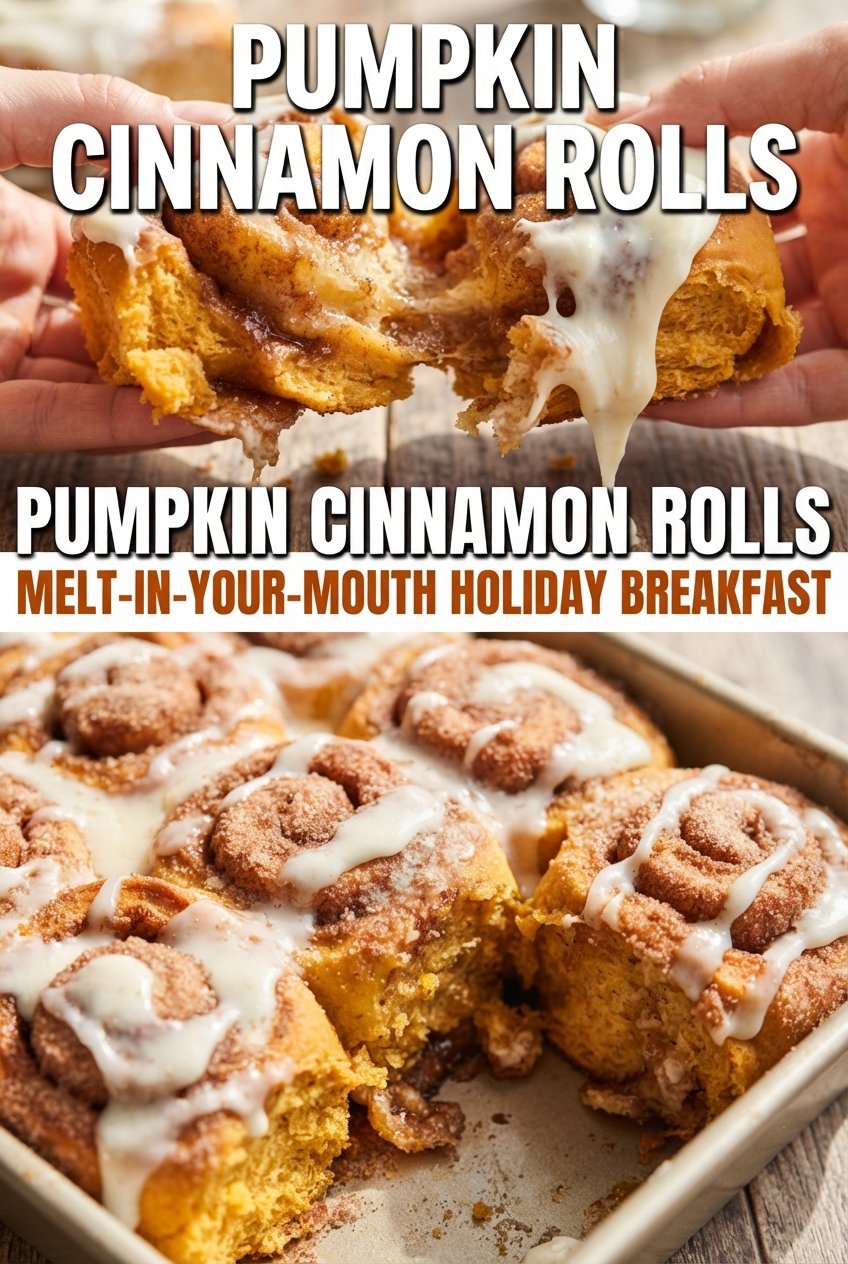
Soft Pumpkin Cinnamon Rolls with Cream Cheese Frosting
Ingredients
Equipment
Method
- In a large bowl, stir the warm milk, instant yeast, and light brown sugar, then let it sit for 5 minutes until foamy.
- Whisk in the pumpkin puree, melted unsalted butter, egg, salt, and pumpkin pie spice, then add all-purpose flour 1 cup at a time until a soft dough forms that is slightly tacky but doesn’t stick to your fingers.
- Knead by hand on a floured surface for 6–8 minutes until smooth and elastic.
- Cover the dough and rest it for 10 minutes.
- Roll the dough into a 12x18-inch rectangle, then spread the very soft unsalted butter to the edges.
- Sprinkle the brown sugar and ground cinnamon evenly over the butter-covered dough.
- Roll it up tightly from the long side, then cut into 12 even rolls and arrange them in a greased 9x13-inch pan.
- Cover and let the rolls rise in a warm spot for 60 minutes, until puffy and touching.
- To make ahead, refrigerate the shaped rolls overnight, then let them sit out for 1 hour before baking.
- Bake at 350°F for 22–26 minutes until golden brown and the centers reach 190°F.
- Cool the rolls for 10 minutes before frosting.
- Beat the cream cheese, softened unsalted butter, powdered sugar, and vanilla extract until fluffy, then add milk 1 tbsp at a time to loosen.
- Spread the frosting over the rolls while they are warm, so it melts into every spiral, then serve.
