
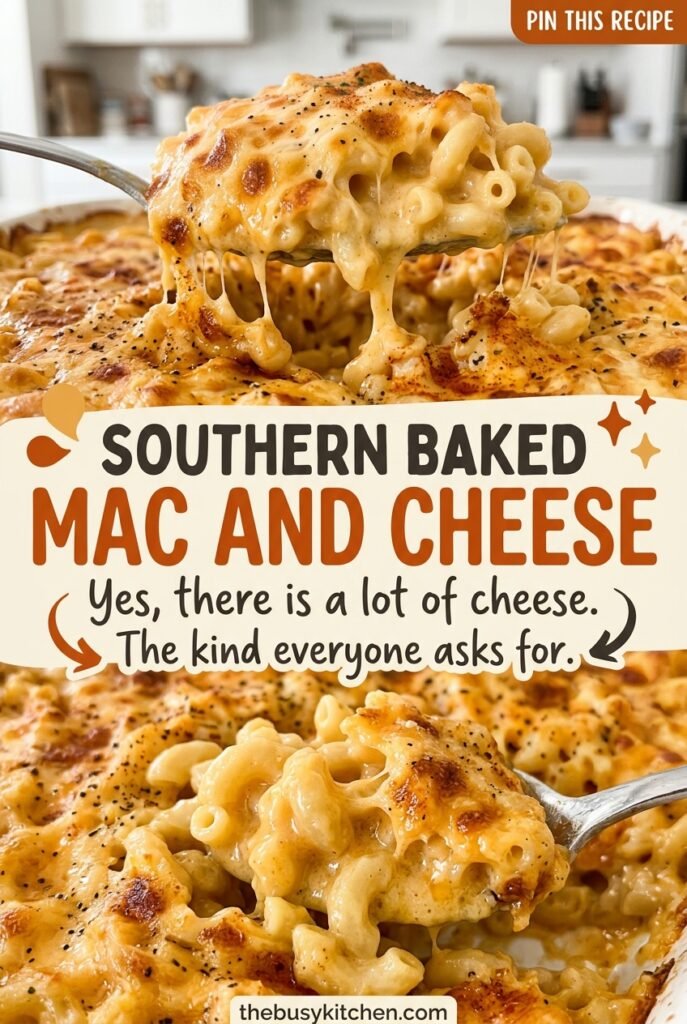
Southern Baked Mac and Cheese
When the milk mixture runs between the elbows, it can look like there’s too much liquid in the pan. That’s exactly what you want before Southern Baked Mac and Cheese…
Tip: save now, read later.
When the milk mixture runs between the elbows, it can look like there’s too much liquid in the pan. That’s exactly what you want before Southern Baked Mac and Cheese goes into the oven. The pasta absorbs some of that custard as it bakes, and the eggs help the middle set instead of leaving you with a loose pile of noodles.
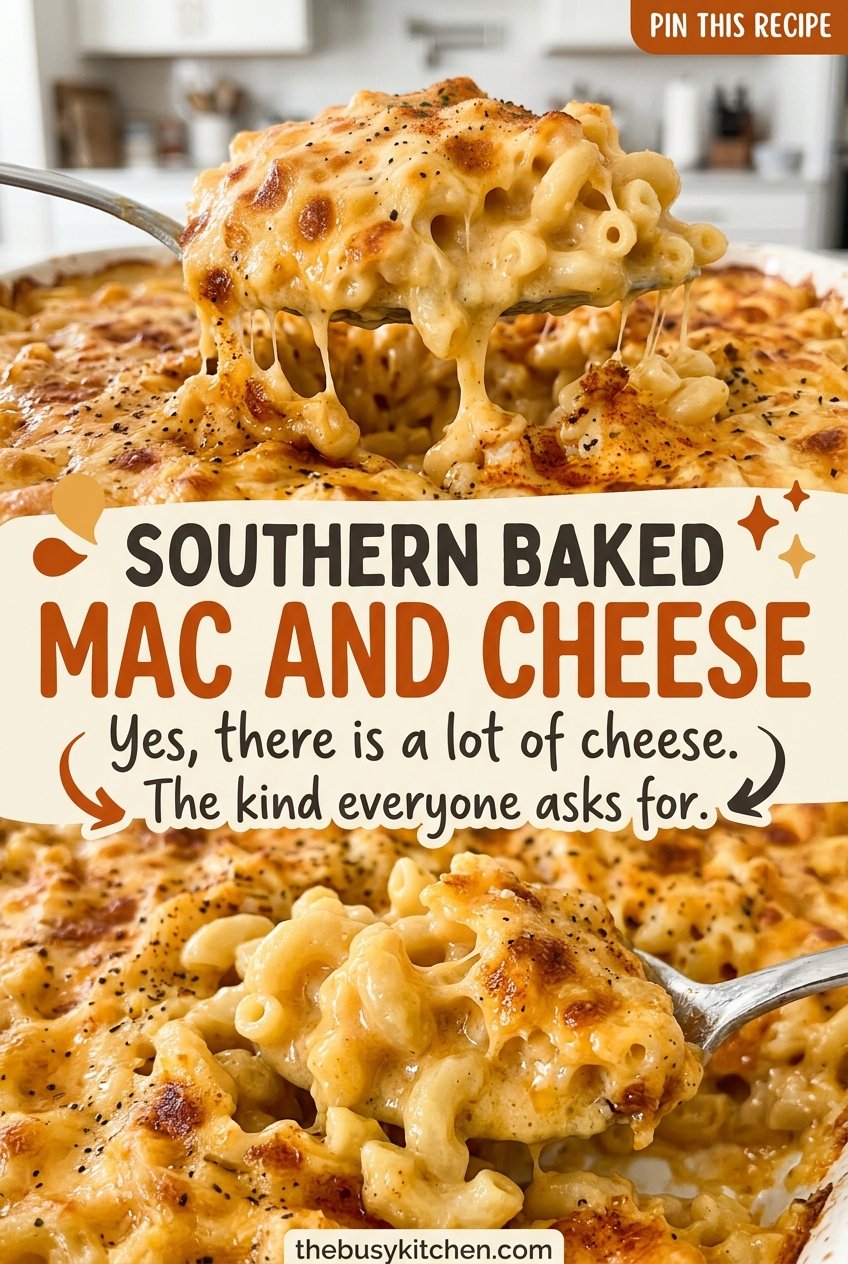
I cook the macaroni just shy of al dente, then toss it with butter and most of the cheddar before adding the milk and egg mixture. That order coats the pasta and spreads the cheese through the dish, while the last handful of cheddar melts across the top. The result is a firm, sliceable center with a cheesy top and tender elbows—not a stovetop-style sauce. Give it a short rest after baking, and each scoop holds together beautifully.
Kitchen Note
Stop cooking the elbows about a minute before they’re fully al dente. They’ll keep softening in the oven, so taking them out early is what keeps the finished casserole tender instead of mushy.
Save Southern Baked Mac and Cheese for a hearty, sliceable casserole with a golden cheddar top and a custardy center.
Why This Baked Mac and Cheese Sets Like a Casserole, Not a Sauce
Some baked macaroni starts with a stovetop cheese sauce. This one takes a different route: eggs whisked with evaporated milk and whole milk make a custard that sets around the pasta as it bakes. That’s what gives the center enough structure to scoop neatly after resting. It should be creamy and tender, but it won’t have the loose, flowing texture of macaroni served straight from a saucepan.
That custard also explains why the baking cues matter more than a browned top. A golden surface is lovely, but it doesn’t tell you whether the middle has set. I check the center with an instant-read thermometer and look for a casserole that no longer jiggles like liquid. Once it reaches at least 160°F, take it out; baking it well past that point can dry the pasta and make the egg-set texture firm. The 10-minute rest gives the middle time to settle before you serve it.
What the Cheddar, Evaporated Milk, and Eggs Each Bring

- Sharp cheddar — Its pronounced, savory taste carries through the milk and pasta, so the casserole still tastes distinctly cheesy in every bite. A block you shred yourself melts into the macaroni more smoothly; pre-shredded cheddar is convenient and works, though the texture may be a little less cohesive.
- Evaporated milk and whole milk — Evaporated milk brings a concentrated milky quality, while whole milk loosens the mixture enough to coat the pasta. They work together here; replacing the evaporated milk with more whole milk changes the balance and can leave the casserole softer.
- Eggs — Whisked into the milk, they give the baked center its set, custardy structure. They aren’t just a richness boost, so leaving them out changes how the casserole holds together.
- Elbow macaroni — The curved shape catches the milk mixture and sits neatly in the baking dish. Choose a pasta that holds its shape during boiling; cook it just shy of fully al dente because it continues to soften in the oven.
- Dry mustard and paprika — Dry mustard adds a subtle savory lift that keeps the cheddar from tasting flat, while paprika brings a mild warmth and a little color. Fresh, well-stored spices have the clearest flavor, but there’s no need to seek out a specialty brand.
From Boiling the Elbows to a Set, Golden Center
Get the Dish and Pasta Ready
Heat the oven to 350°F and grease a 9×13-inch baking dish with 1 tablespoon of the butter. Bring a large pot of water to a boil and cook the macaroni according to the package directions, stopping about 1 minute before it is fully al dente. The pasta should bend but still have a little firmness at the center. Drain it well so excess water doesn’t thin the milk mixture.
Coat the Pasta and Melt in the First Cheddar
Melt the remaining 3 tablespoons of butter in the pot, add the drained macaroni, and toss until the elbows are coated. Stir in 3 cups of the shredded cheddar while the pasta is warm. The cheese should be scattered through the macaroni rather than clumped in one place. If a few bits don’t melt completely, that’s fine; they’ll continue to soften as the casserole bakes.
Whisk the Egg-and-Milk Mixture
In a large bowl, whisk together the evaporated milk, whole milk, eggs, kosher salt, black pepper, dry mustard, and paprika until combined. Keep whisking until the yolks and whites are blended into the milk, with no streaks of egg remaining. This helps the seasoning disperse through the dish instead of collecting in one spot. Whisk just until everything is evenly mixed.
Assemble and Bake Until the Middle Sets
Spread the macaroni mixture in the prepared dish, pour the milk mixture evenly over it, and sprinkle the remaining 1 cup of cheddar across the top. Bake uncovered for 35 to 45 minutes. Start checking the center at the shorter end of that range; the casserole is ready when the center is set and an instant-read thermometer inserted there reads at least 160°F. Rest it for 10 minutes before serving so portions hold their shape.
Two Useful Ways to Adapt the Cheddar-and-Custard Base
Make It Gluten-Free With Elbow Pasta
Replace the wheat elbow macaroni with 1 pound of gluten-free elbow macaroni. Cook it according to its package directions, stopping about a minute before it is fully al dente, then use the same assembly and baking method. Gluten-free pasta can soften more quickly, so keep a close eye on its texture while boiling; the finished casserole may be a little less firm.
Turn Up the Cheddar Sharpness
Use extra-sharp cheddar in place of sharp cheddar, keeping the same total amount and dividing it between the pasta and the topping as usual. The cheese flavor will come through more assertively against the mild milk-and-egg custard. Shred it finely so it distributes through the elbows and melts evenly across the top.
Storage and Reheating
- Refrigerator: Store covered for 3 to 4 days. The pasta will absorb some of the custard as it sits, so leftovers will be firmer than freshly baked portions. Refrigerate within 2 hours.
- Freezer: Freeze cooled portions in airtight containers for up to 2 months. Thaw overnight in the refrigerator; the texture may be a little less creamy after freezing.
- Reheating: Cover a portion loosely and microwave in short bursts until hot throughout, adding a small splash of whole milk if it looks dry. Reheat leftovers to 165°F, and avoid one long blast of high heat, which can make the pasta tough.
Questions That Come Up When Baking Southern Mac and Cheese
Southern Baked Mac and Cheese
Ingredients
Equipment
Method
- Preheat the oven to 350°F.
- Grease a 9x13-inch baking dish with 1 tablespoon of the butter.
- Cook the macaroni in a large pot of boiling water according to package directions, stopping about 1 minute before it is fully al dente.
- Drain the macaroni.
- Melt the remaining 3 tablespoons butter in the pot.
- Add the drained macaroni and toss to coat.
- Stir in 3 cups of the cheddar.
- In a large bowl, whisk the evaporated milk, whole milk, eggs, salt, black pepper, dry mustard, and paprika until combined.
- Spread the macaroni mixture in the prepared dish.
- Pour the milk mixture evenly over the macaroni.
- Sprinkle with the remaining 1 cup cheddar.
- Bake uncovered for 35 to 45 minutes, until the center is set and an instant-read thermometer inserted in the center reads at least 160°F.
- Rest for 10 minutes before serving.
