

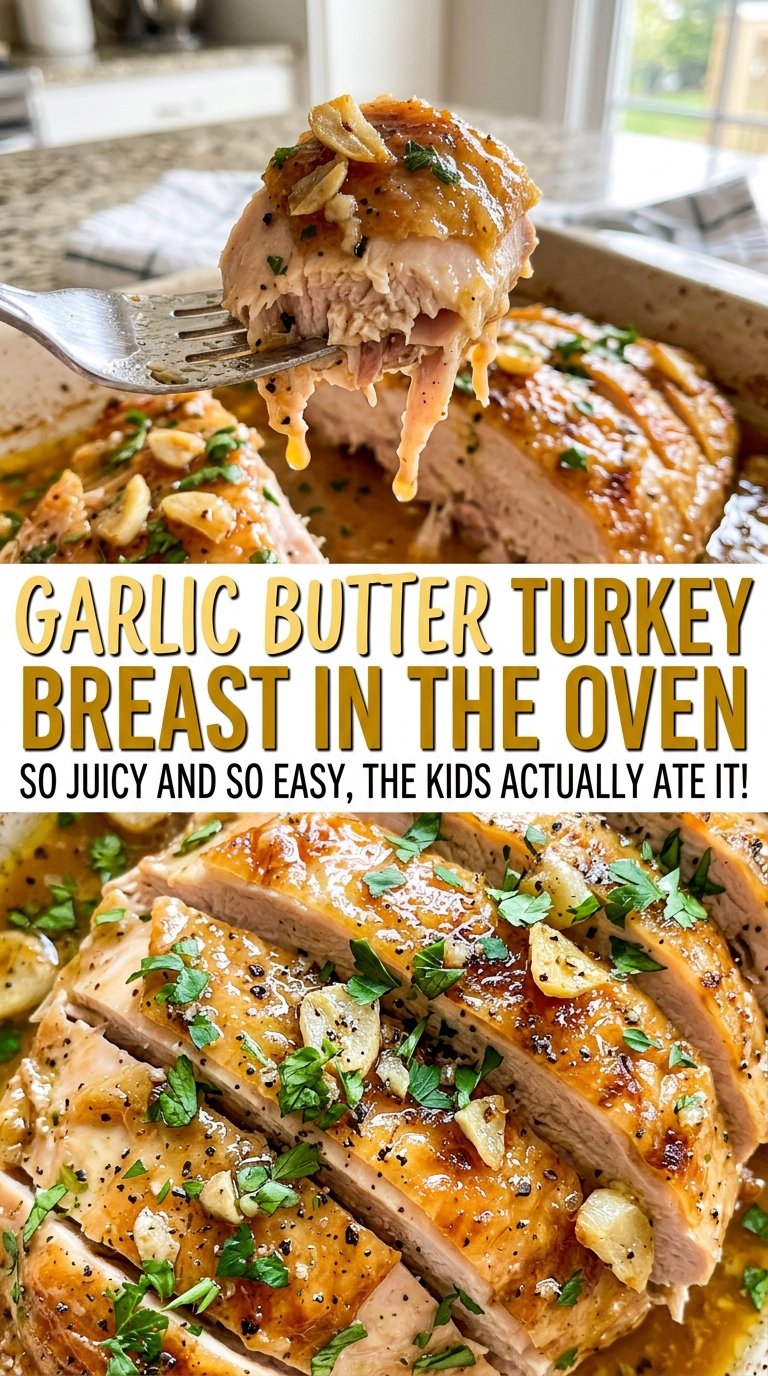
Garlic Butter Turkey Breast in the Oven
The skin tells you how the roast is going before the timer does: it turns golden while the garlic butter starts to smell warm and savory. A bone-in turkey breast…
Tip: save now, read later.
The skin tells you how the roast is going before the timer does: it turns golden while the garlic butter starts to smell warm and savory. A bone-in turkey breast makes a satisfying centerpiece without the size and extra roasting time of a whole turkey. This Garlic Butter Turkey Breast in the Oven keeps the seasoning simple, but gets plenty of flavor right onto the meat.
I spread softened butter beneath the skin as well as over it. That puts the garlic, parsley, and thyme against the breast meat, where they stay in place instead of sliding off the skin in the roasting pan. Patting the turkey dry first gives the skin a better chance to brown, and a thermometer—not a guess based on color—tells you when the thickest part is ready. The result is tender slices with fragrant herb butter and crisp, bronzed skin.

Kitchen Note
Use softened—not melted—butter so it spreads beneath the skin instead of running off. Loosen the skin gently with your fingers, and stop if it resists rather than tearing it.
Save this garlic butter turkey breast for a dinner with crisp herb-scented skin and juicy slices.
Why a Turkey Breast Needs a Thermometer More Than a Timer
A turkey breast isn’t a uniform block of meat. The thick center takes longer to cook than the thinner edges, and a 4-pound breast won’t necessarily roast at the same pace as a 6-pound one. That’s why the roasting time is a range, not a promise that the turkey will be ready at a particular minute.
Color can be misleading, too. Golden skin looks appealing, but it doesn’t tell you whether the thickest meat is cooked through. A thermometer touching bone can also give you a reading that doesn’t represent the meat itself. Check in the thickest part and keep the probe away from bone; this gives you a more useful reading than judging the breast by its surface or the clock. If the skin gets ahead of the center, a loose foil tent protects it while the meat continues to roast.
That combination—watch the browning, then trust the thermometer—is especially helpful with a bone-in breast. You get the browned skin you want without asking the thinner edges to keep cooking just because the center needs more time.
What the Garlic, Herbs, and Butter Each Bring to the Roast
- Bone-in, skin-on turkey breast — The bone-in cut gives the breast its shape on the roasting rack, while the skin holds the butter on the surface. A plain grocery-store turkey breast works well; a pre-seasoned one can make the measured salt harder to control. Start with a fully thawed breast so it roasts evenly.
- Unsalted butter — Butter carries the garlic and herbs across both the meat and the skin, and unsalted butter lets the kosher salt stay in charge. A standard-quality butter is fine here; softened butter matters more than buying a specialty brand. For a dairy-free version, use an unsalted plant-based butter stick as described below.
- Garlic — Fresh minced cloves give the butter a sharper, more aromatic garlic flavor than powdered garlic. If fresh garlic isn’t available, use 1/2 teaspoon garlic powder in its place; the flavor will be softer and less pungent.
- Parsley and thyme — Fresh herbs bring a clean, green note that keeps the butter from tasting heavy. If you need to use dried herbs, replace the fresh parsley with 1 teaspoon dried parsley and the fresh thyme with 1/3 teaspoon dried thyme. Dried herbs taste more concentrated, so measure carefully.
- Kosher salt and black pepper — Kosher salt seasons the breast, while black pepper adds a gentle bite to the butter. Stick with unsalted butter so the salt level stays predictable, and use freshly ground pepper if you have it; pre-ground pepper is perfectly workable.
Getting the Herb Butter Under the Skin and the Breast Cooked Through
Set Up a Dry, Skin-Side-Up Breast
Heat the oven to 350°F and position a rack in the lower-middle of the oven. Remove the thawed breast from its packaging and take out any giblets. Pat the turkey dry with paper towels, then set it skin side up on a rack in a 9×13-inch roasting pan. Dry skin helps the surface brown instead of steaming against leftover moisture.
Mix and Spread the Garlic Butter
Stir the softened butter with the minced garlic, chopped parsley, thyme leaves, kosher salt, and black pepper. Gently loosen the skin over the breast meat, taking care not to puncture it. Spread about half of the butter mixture underneath the skin, then rub the rest over the outside. If the butter is cold and stiff, it will be harder to spread evenly; softened butter moves across the meat with less pressure.
Roast Until the Thickest Part Is Ready
Roast the turkey breast for 1 1/2 to 2 1/4 hours. If the skin browns too quickly, tent it loosely with foil so it doesn’t darken further while the middle finishes cooking. Insert a thermometer into the thickest part of the breast without touching bone; the turkey is ready when it reads 165°F. Don’t use browned skin or the estimated roasting time as a substitute for that reading.
Rest Before Carving
Transfer the turkey to a carving board and let it rest for 20 minutes before slicing. Resting gives the hot juices time to settle back through the meat, so they don’t run straight onto the board when you carve. Use a sharp carving knife and cut across the breast into slices, keeping the skin attached where you can.
Two Simple Ways to Change the Garlic Butter
Make It Dairy-Free with Plant-Based Butter
Swap the unsalted butter for the same amount of unsalted plant-based butter from a stick, rather than a soft tub spread. It will carry the garlic and herbs in the same way, though the finished skin may brown a little differently and the butter flavor won’t be quite as rich.
Let Garlic and Thyme Take the Lead
Leave out the parsley and keep the garlic, thyme, salt, and pepper in the butter. The result tastes more savory and less herbaceous, with thyme’s earthy note coming through clearly. This is a good adjustment if parsley isn’t on hand or you prefer a simpler herb flavor.
Storage and Reheating
- Refrigerator: Store carved turkey in an airtight container for 3 to 4 days. The skin softens in storage, but the meat stays good for sandwiches or another warm meal.
- Freezer: Freeze carved slices in an airtight freezer-safe container for up to 2 to 3 months. Separate portions so you can thaw only what you need.
- Reheating: Warm covered portions gently in the microwave, checking between short bursts, or use a covered dish in a low oven until hot throughout. Avoid prolonged high heat, which dries the breast out quickly.
Questions That Come Up When Roasting a Turkey Breast
Garlic Butter Turkey Breast in the Oven
Ingredients
Equipment
Method
- Preheat the oven to 350°F and position a rack in the lower-middle of the oven.
- Remove the turkey breast from its packaging and remove any giblets.
- Pat the turkey dry with paper towels.
- Set the turkey skin side up on a rack in a 9x13-inch roasting pan.
- Stir together the butter, garlic, parsley, thyme, salt, and pepper in a small bowl.
- Gently loosen the skin over the breast meat and spread about half the butter mixture underneath.
- Rub the rest of the butter mixture over the skin.
- Roast for 1 1/2 to 2 1/4 hours, loosely tenting with foil if the skin browns too quickly, until a thermometer inserted into the thickest part of the breast without touching bone reads 165°F.
- Transfer the turkey to a carving board.
- Rest for 20 minutes before carving.
